Umberto Boccioni
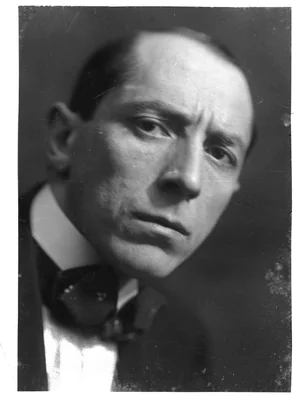
Umberto Boccioni (1882-1916) stands as one of the most intellectually rigorous and visually forceful figures of Italian Modernism. As a principal catalyst for the Futurism movement, he helped define a revolutionary aesthetic centered on speed, technology, and the dynamic energy of the urban experience. Despite the brevity of his life, cut short during military service, his theoretical and pictorial output shaped avant-garde strategies across Europe and guided artists long after his death.
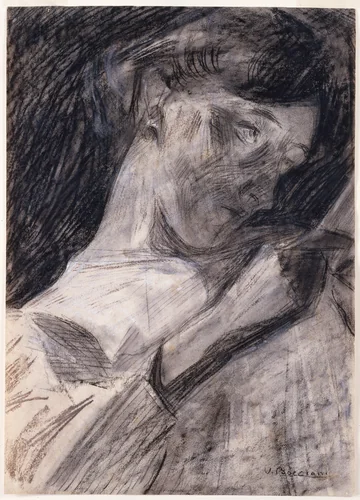
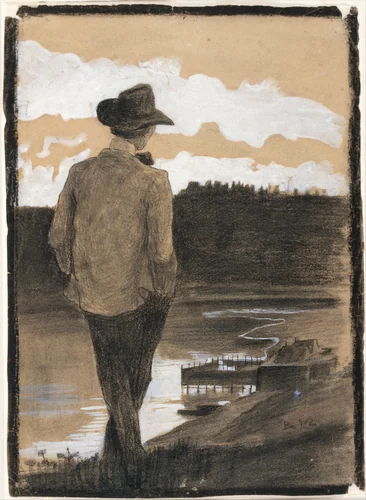
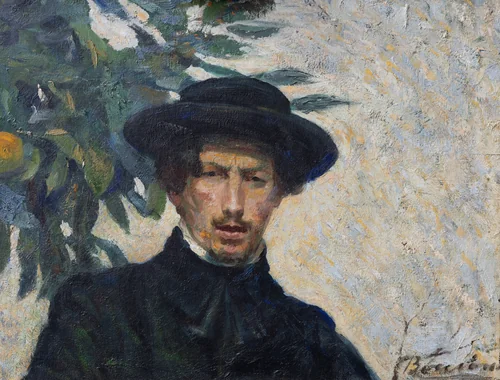
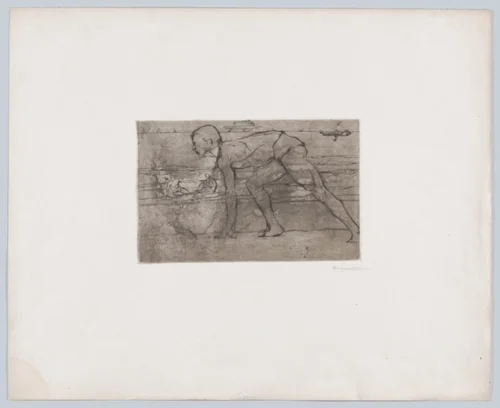
Boccioni's critical contribution lay in translating the velocity and chaos of the 20th century into palpable visual terms. His philosophical approach was defined by the synthesis of time and space, fundamentally challenging traditional representation. He sought to demonstrate "the dynamism of form and the deconstruction of solid mass," rejecting static realism in favor of simultaneous perception. This intense quest for energy is evident even in his early career, exemplified by the contemplative Self-Portrait and the compelling preparatory study Young Man on a Riverbank (recto); Study of a Wagnerian Scene (verso). It is perhaps one of history’s great ironies that the artist most dedicated to capturing the velocity of the modern age died before the age of thirty-four.
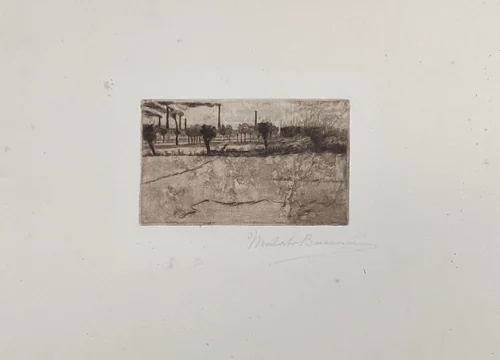
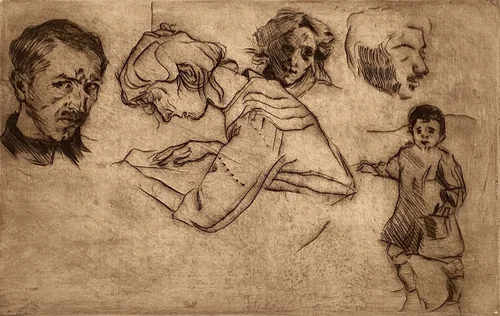
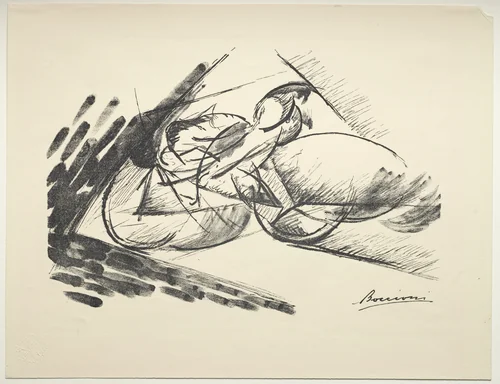
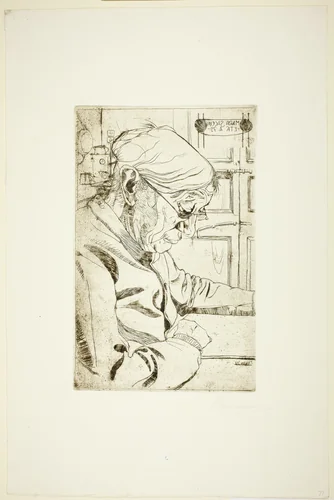
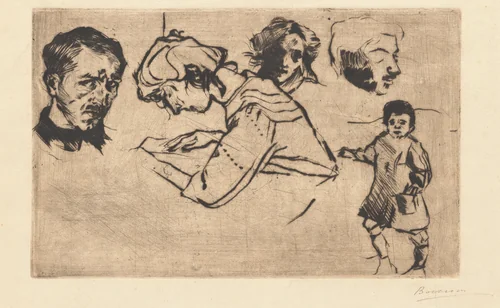
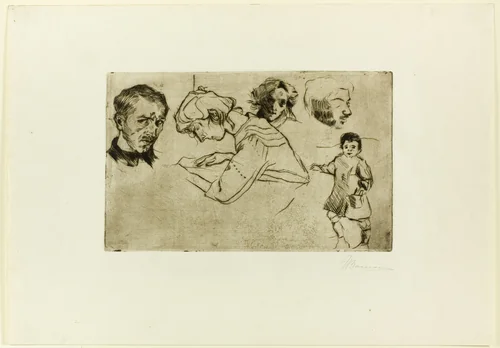
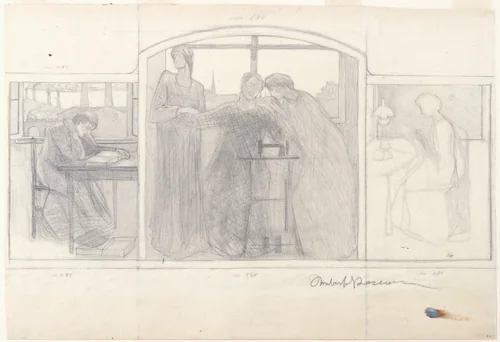
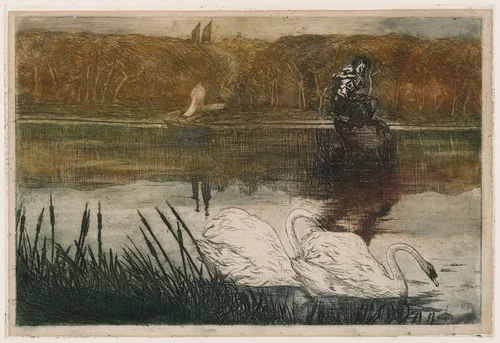
Although Boccioni is widely celebrated for the iconic Futurism paintings and sculptures of his final years, he maintained a robust practice in drawing and printmaking throughout his active period between 1900 and 1908. His early catalog includes a significant number of detailed figurative studies, portraits such as La Signora Sacchi, and experimental high-quality prints like Movement. His historical importance is confirmed by major holdings in global institutions, including the National Gallery of Art, the Cleveland Museum of Art, and the Metropolitan Museum of Art, which organized a significant retrospective of his work in 1988. Today, many of Umberto Boccioni’s early works are in the public domain, offering access to downloadable artwork for scholars and enthusiasts worldwide.
Source: Wikipedia · CC BY-SA 4.0
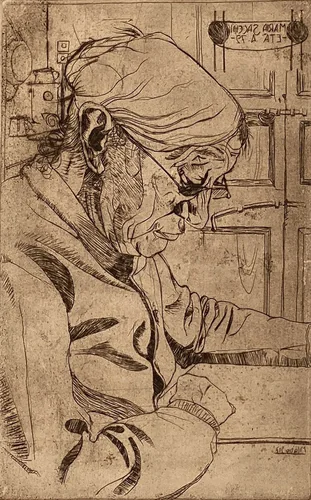
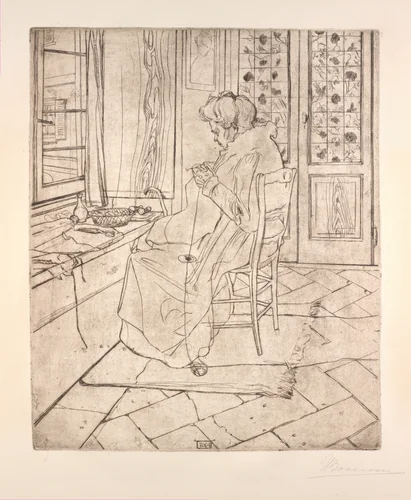
![Mia madre che lavora [My Mother Working] by Umberto Boccioni, print, 1907](https://img.artbee.org/82d32cad-ca40-4bef-a291-f28776288138/small.webp)
![Periphery [Periferia] by Umberto Boccioni, print, 1908](https://img.artbee.org/6d02777d-4185-4335-bf7c-ccb4919b9667/small.webp)