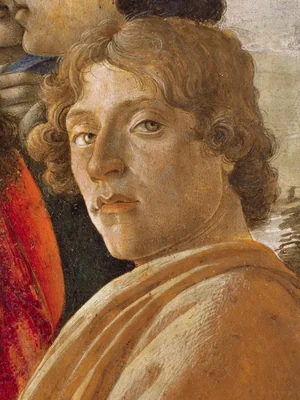
Sandro Botticelli
Alessandro di Mariano di Vanni Filipepi (1445-1510), universally recognized as Sandro Botticelli, stands as a pivotal figure of the Florentine Renaissance. Active from the mid-1460s, Botticelli developed a distinctive aesthetic that defined the period’s commitment to sophisticated humanism, yet his artistic vocabulary often drew upon earlier, more delicate forms. His career benefited directly from the fertile cultural environment of Florence, where the creation of key religious and mythological masterpieces cemented his status among the foremost painters of the era.
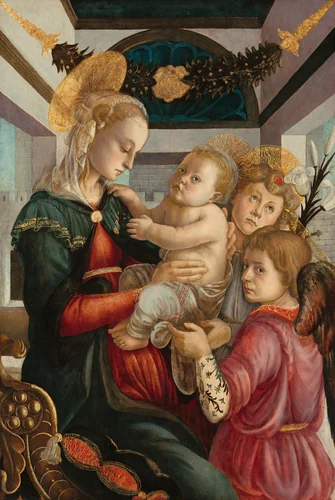
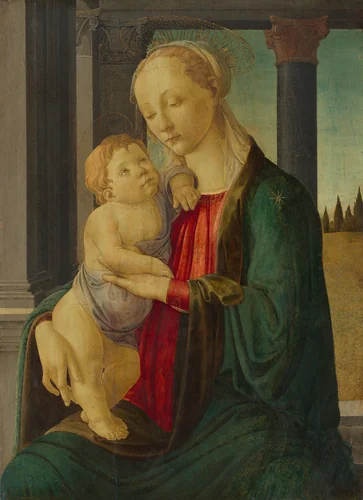
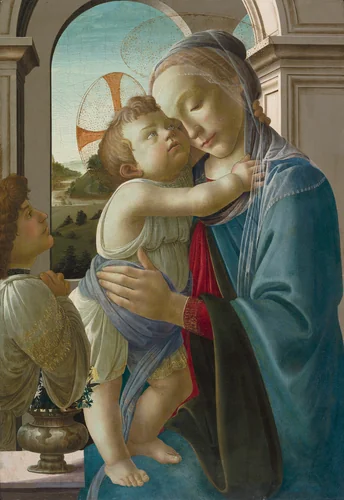
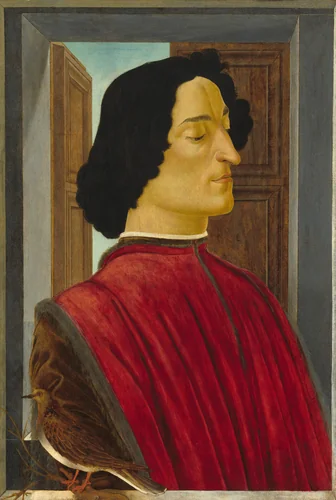
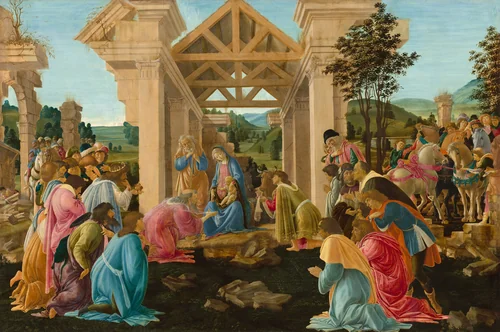
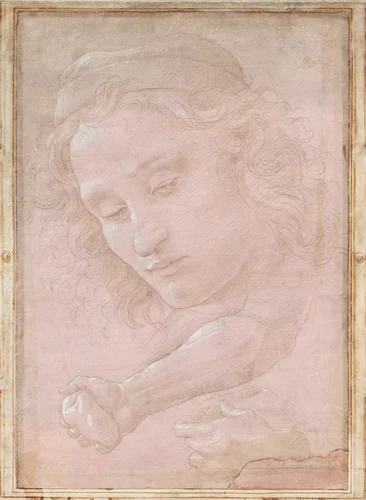
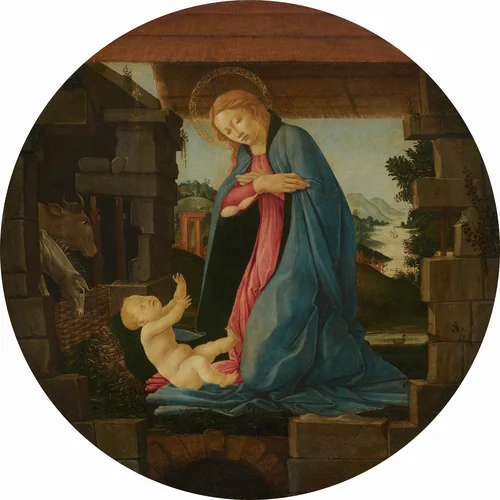
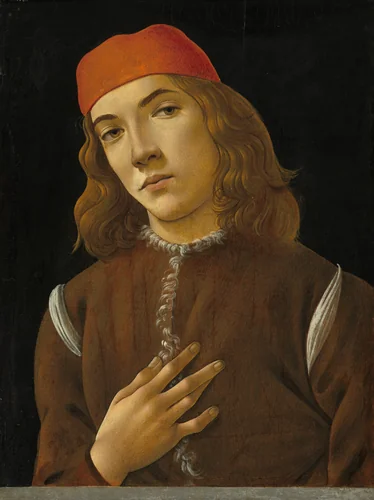
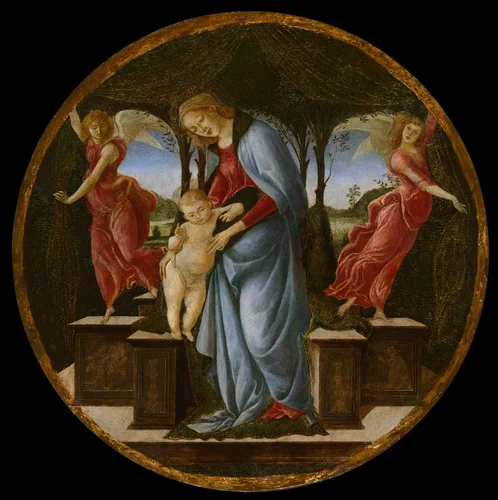
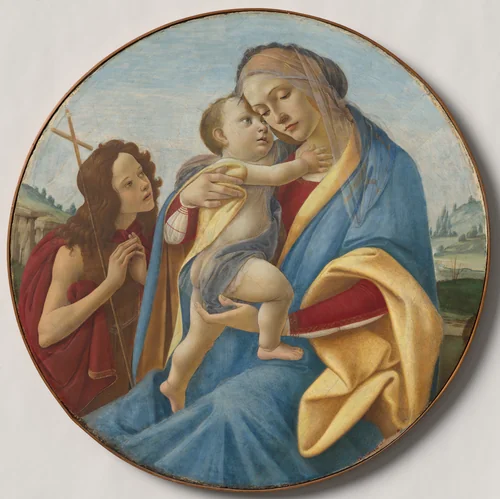
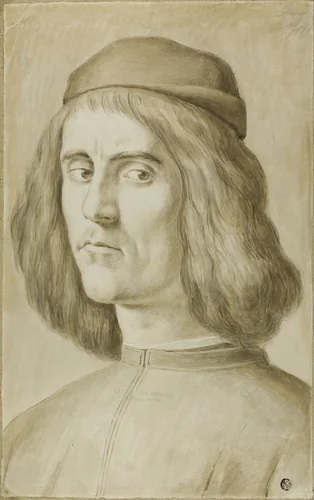
Botticelli’s style is characterized by an emphasis on refined draftsmanship and elegant linearity, prioritizing expressive line over purely naturalistic modeling. This quality is evident across his oeuvre, from private devotional pieces like Madonna and Child with Angels and Virgin and Child with an Angel, to the powerful portraiture seen in Giuliano de' Medici. Art historically, his technique presents a fascinating paradox: while his active years spanned the latter half of the Italian Renaissance period, his paintings fundamentally represent the flowing, linear grace associated with late Italian Gothic and early Renaissance sensibilities.
Despite his mastery during his lifetime, Botticelli’s reputation suffered profoundly following his death, resulting in a period of relative obscurity that lasted for nearly four centuries. This neglect was reversed dramatically in the late 19th century, when a radical reappraisal was initiated by the English Pre-Raphaelites. Their fascination with his ethereal, decorative qualities spurred a critical resurgence, effectively rescuing the Sandro Botticelli paintings from neglect and repositioning him as an essential master whose sophisticated symbolism warrants continuous study. The ability of an artist of this caliber to remain overlooked for so long remains one of the more curious episodes in the history of art patronage.
Today, Botticelli’s enduring impact is reflected in his presence within major global collections, including the Art Institute of Chicago and the Cleveland Museum of Art. His work is now accessible globally; many of his celebrated pieces are in the public domain, meaning high-quality prints and downloadable artwork are widely available, allowing for intimate examination of his mastery of line and form.
Source: Wikipedia · CC BY-SA 4.0