Tiziano Vecellio
Tiziano Vecellio, known internationally as Titian, was the undisputed master of the Venetian Renaissance and arguably the most influential painter of the sixteenth century. Born circa 1490 in Pieve di Cadore, near Belluno, Titian rapidly ascended from an apprentice in Giorgione's workshop to the most sought-after painter in Europe. He is uniquely identified as the most important artist of Renaissance Venetian painting, a title he earned through his profound command of color and light.
Titian’s approach was revolutionary, prioritizing colore (color and brushwork) over the Florentine devotion to disegno (line and composition). He developed an innovative technique characterized by dynamic layers of pigment, allowing him to achieve textural depth and atmospheric effects never before seen. This method, often described as “painterly,” endowed his subjects with vibrant naturalism and profound psychological resonance, fundamentally altering the trajectory of Western painting. His influence was immense and immediate, setting the standard for portraiture and mythology for succeeding generations of artists, including Rubens, Van Dyck, and Velázquez.
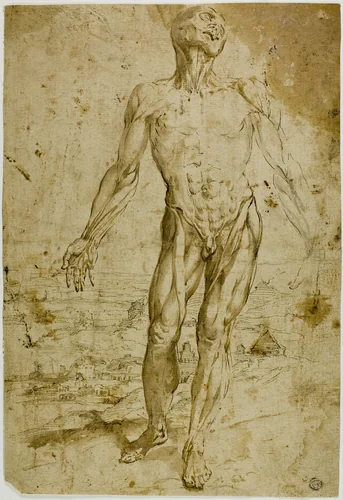
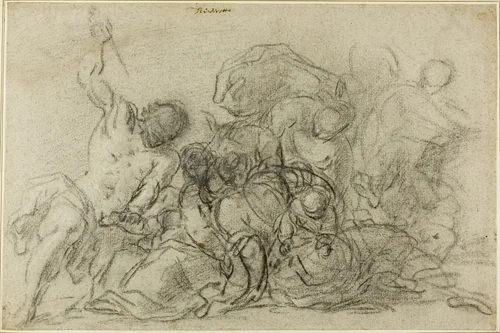
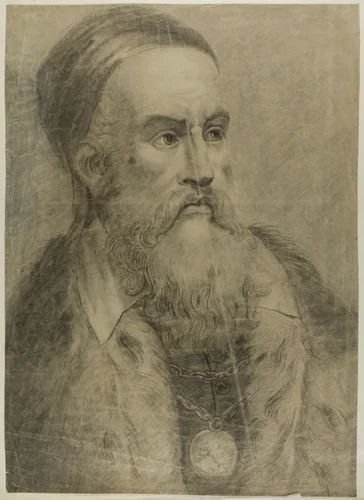
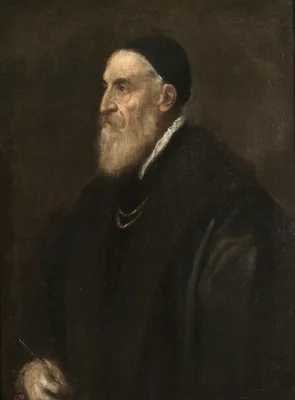
His extraordinary longevity contributed significantly to his legendary status; Titian worked actively until his death in 1576, a fact that amusingly stretches the definition of his “active period” to cover centuries of attributed works. His output was vast, spanning religious altarpieces, classical poesie, and penetrating portraits such as his own commanding Self-Portrait. Even in his preparatory works, such as the dramatic study Massacre of the Innocents or the academic drawing Écorché before Landscape, his commitment to form and narrative power is evident.
Titian’s mastery is continually studied globally. Today, the enduring appreciation for Tiziano Vecellio paintings is bolstered by access to high-quality prints and downloadable artwork derived from major collections worldwide. His work, available as royalty-free resource material, ensures that the dynamic palette and innovative technique of the great Venetian master remain accessible for scholarly review and public enjoyment.
Source: Wikipedia · CC BY-SA 4.0