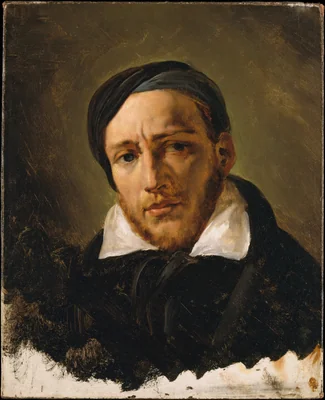
Théodore Géricault
Jean-Louis André Théodore Géricault (1791-1824) was a French painter and lithographer whose brief yet transformative career established him as one of the indispensable pioneers of the Romanticism movement. Rejecting the prevailing tenets of Neoclassicism, Géricault channeled profound emotional intensity and often unsettling contemporary events into his visual language. His magnum opus, the monumental The Raft of the Medusa, remains an enduring image of human suffering and political critique, setting a new standard for history painting in the modern era.
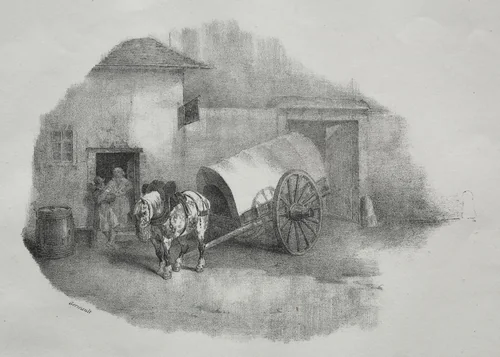
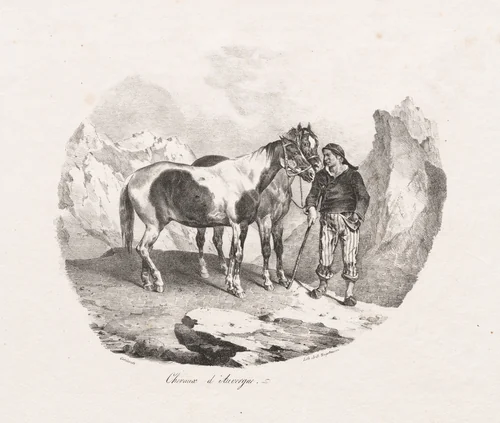
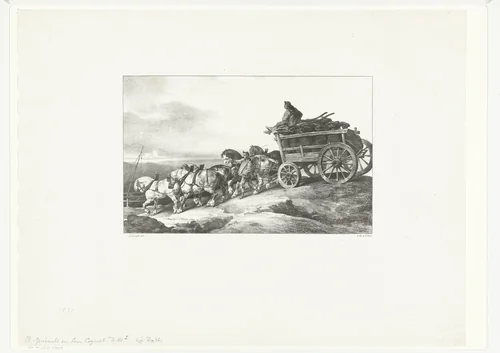
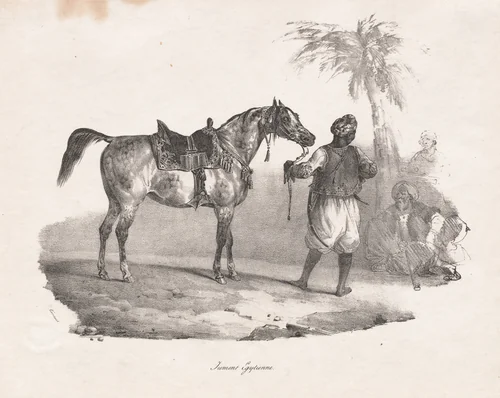
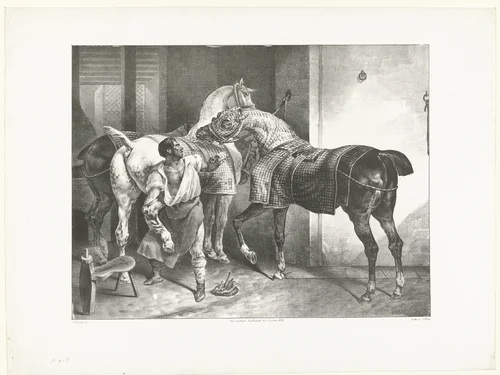
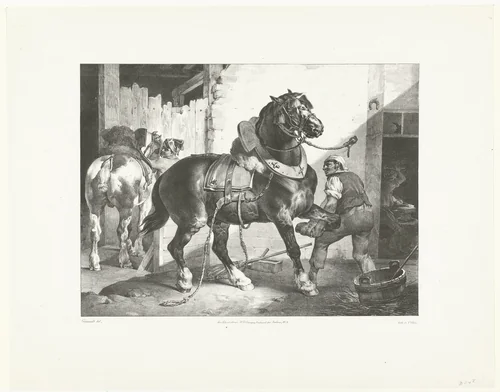
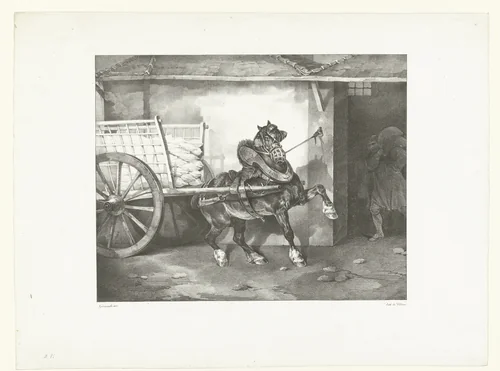
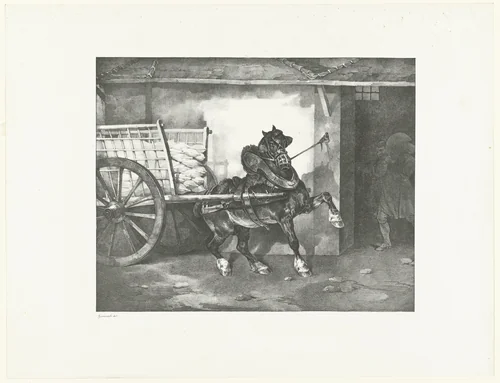
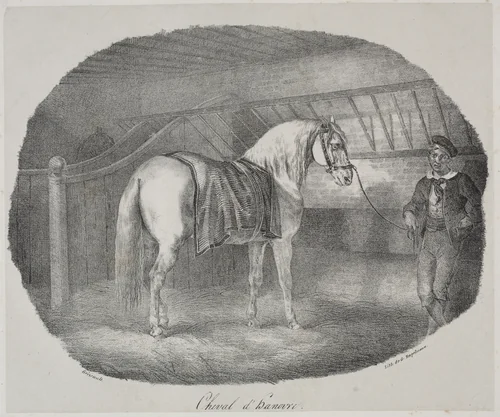
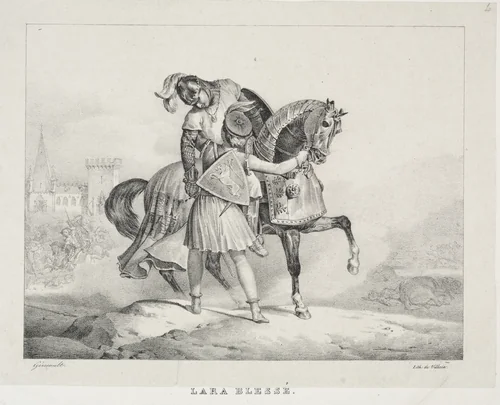
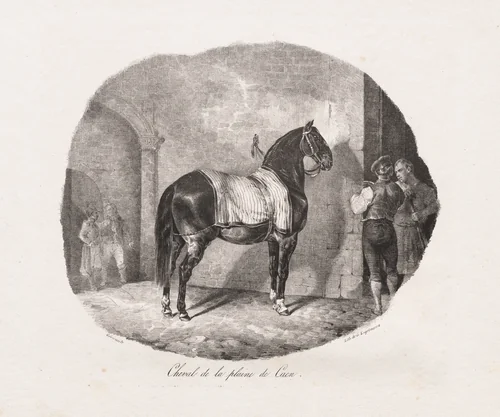
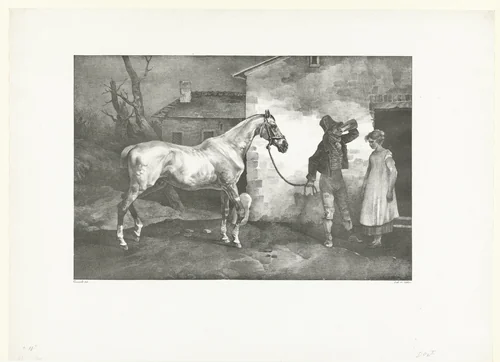
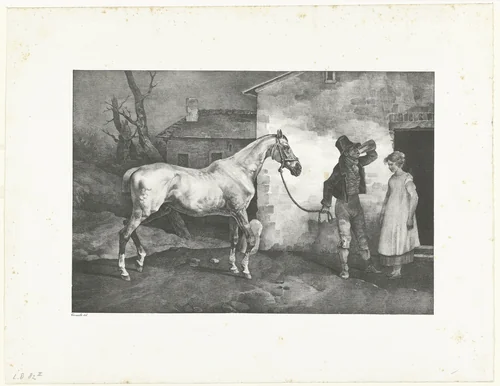
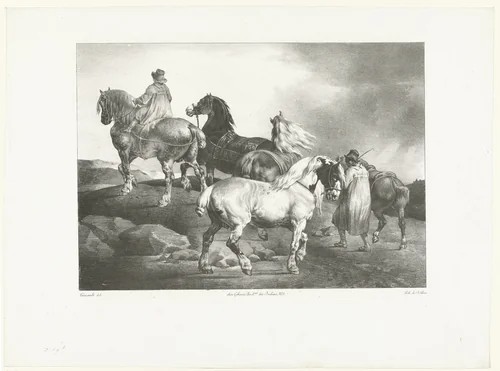
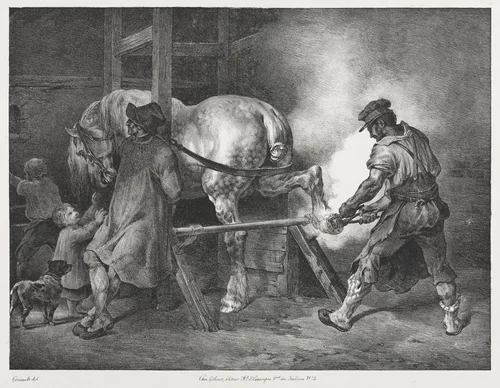
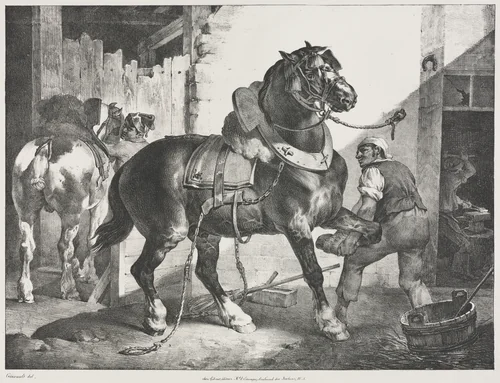
Though remembered primarily for his celebrated canvas work, Géricault’s technical mastery and psychological insight are meticulously cataloged in his extensive graphic output. His foundational commitment to anatomical accuracy and kinetic energy is evident in numerous studies dating back to the start of the century. It is a fascinating testament to his discipline that much of his meticulous study phase, focused on figures, equine anatomy, and complex compositions, predated his public fame by nearly two decades. The sheer volume of works, from the precise draftsmanship seen in Kop van een opziende man, met neerwaartse blik to vigorous charcoal sheets like Paardenstudies, underscore his relentless pursuit of naturalistic dynamism.
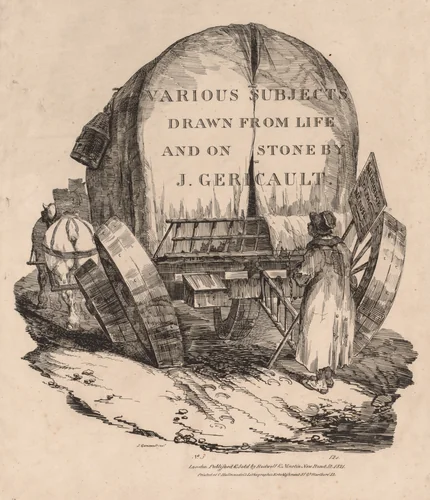
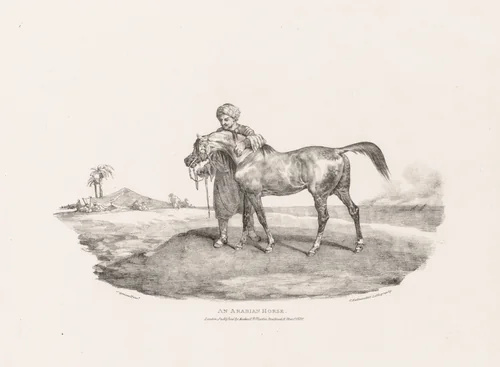
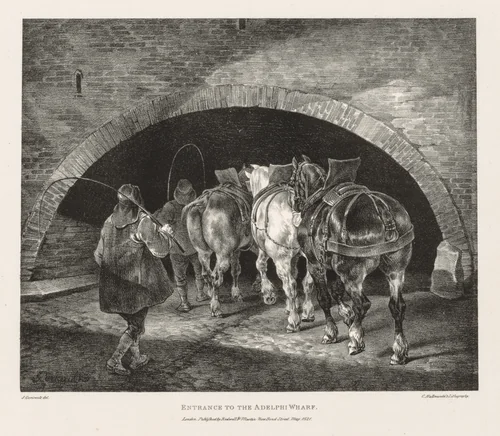
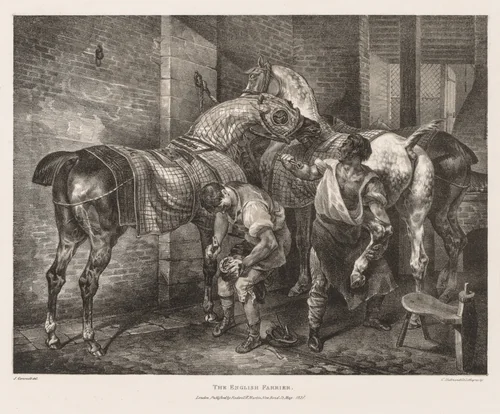
Géricault’s commitment to preparation extended beyond basic observation, encompassing direct intellectual engagement with the Old Masters. His compositional studies, such as the works related to Poussin’s Deluge, reveal an artist wrestling seriously with historical precedence while simultaneously striving for radical innovation. These drawings and preparatory Théodore Géricault prints are critical for understanding his development before his untimely death at the age of thirty-two.
Today, his oeuvre is a cornerstone of international art collections, housed in institutions such as the Rijksmuseum and the Art Institute of Chicago. For researchers and enthusiasts, many of these preparatory works and high-quality prints are now in the public domain, offering direct access to the genesis of the Romantic imagination.
Source: Wikipedia · CC BY-SA 4.0