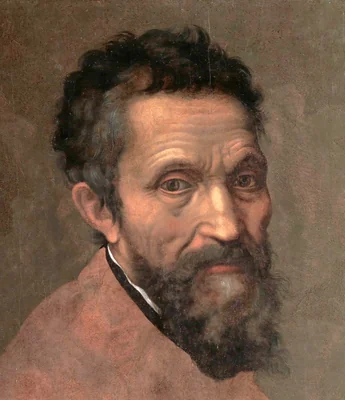
Michelangelo
Michelangelo di Lodovico Buonarroti Simoni (1475-1564) stands as the defining Italian master of the High Renaissance. His remarkable command across four major disciplines—sculptor, painter, architect, and poet—cemented his historical reputation as the archetypal uomo universale, or Renaissance man. His comprehensive mastery was such that contemporary biographers quickly designated him the most accomplished artist of his era, a critical judgment that has scarcely been adjusted over five centuries.
Born in the Republic of Florence, Michelangelo’s artistic foundation was deeply rooted in the revival of classical antiquity. His work provided a revolutionary synthesis of idealized forms derived from ancient models and a powerful emotional and physical dynamism unique to his era. Though trained in Florence, the core of his productivity, especially after his thirtieth year, was undertaken in Rome, where he executed several of his most celebrated and architecturally challenging commissions. This relentless output often pitted him, professionally and philosophically, against his elder contemporary and rival, Leonardo da Vinci.
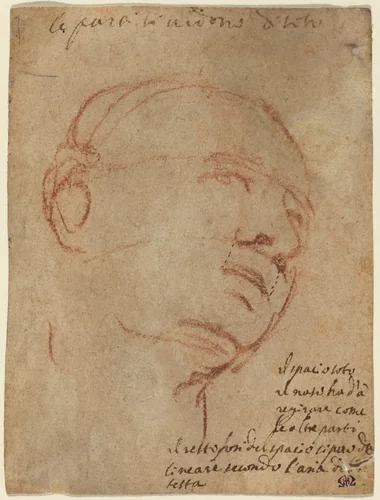
Michelangelo's enduring influence on the subsequent trajectory of Western art is unparalleled. His profound draftsmanship, the essential preliminary stage for all his major projects, reveals an intimate understanding of human anatomy and posture, moving far beyond mere observation into expressive invention. Given the sheer volume of surviving documentation—including extensive correspondence, sketches, and detailed contemporary reminiscences—Michelangelo is perhaps the best-documented artist of the 16th century, affording modern scholars an unusually clear portrait of the creative life during the peak of the Italian Renaissance.
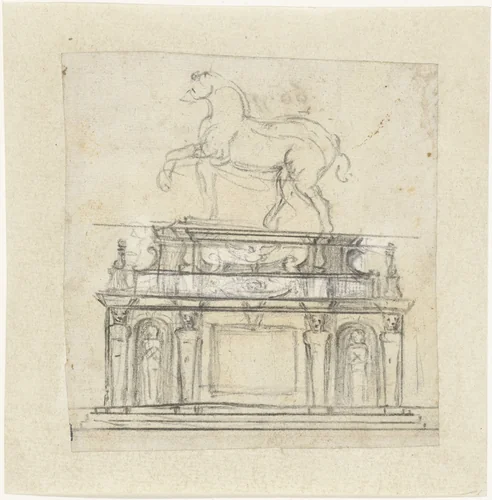
Today, access to this vital body of work is preserved by institutions such as the Rijksmuseum and the National Gallery of Art. Studies like Design for an Equestrian Statue of Henry II of France and detailed anatomical investigations such as Male Nude [recto] are crucial documents of his working method. Many of his preparatory drawings and secondary studies remain in the public domain, allowing enthusiasts globally to access high-quality prints and downloadable artwork. The sustained appetite for Michelangelo prints and paintings affirms the continuing dominance of his vision.
Source: Wikipedia · CC BY-SA 4.0
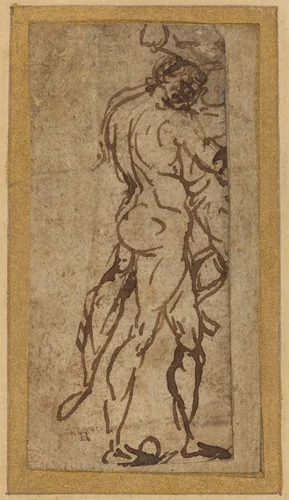
![Male Nude [recto] by Michelangelo, drawing, 1560](https://img.artbee.org/c27cd623-935e-431c-a435-1949460f42fd/small.webp)
![Male Nude [verso] by Michelangelo, drawing, 1560](https://img.artbee.org/da2c5ef8-05c4-444d-a4d8-c868524fc170/small.webp)