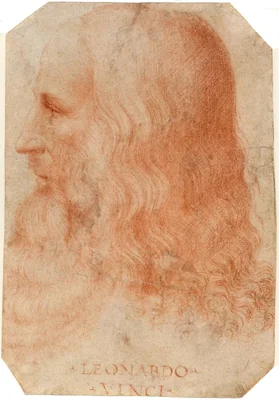
Leonardo da Vinci
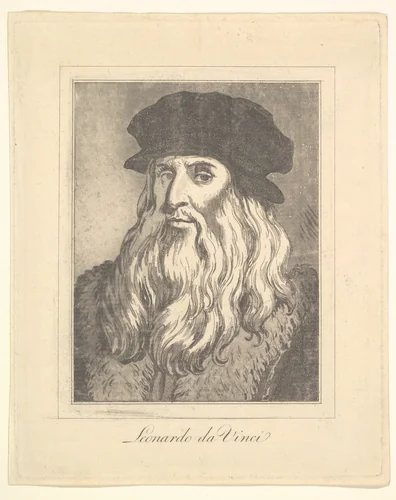
Leonardo da Vinci (1452-1519) stands as the singular embodiment of the High Renaissance humanist ideal. An Italian polymath active across painting, drawing, engineering, and scientific theory, his initial renown rested firmly on his achievements as a painter. However, his lasting historical weight derives equally from the extraordinary breadth of his inquiry, cataloged meticulously in thousands of pages of detailed notebooks.
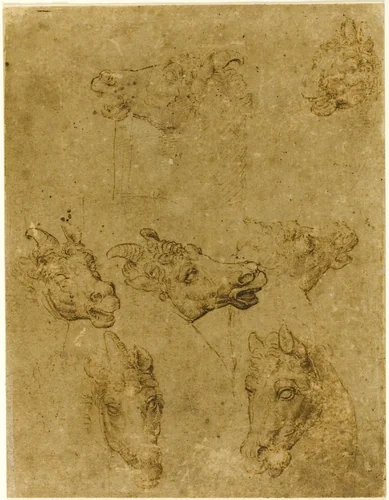
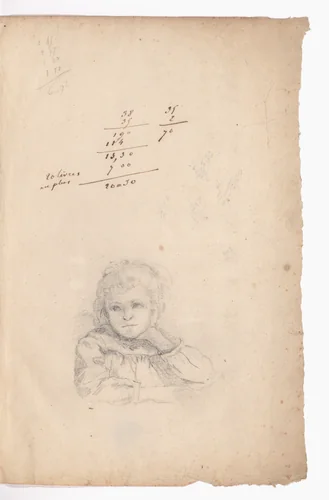
Although the corpus of surviving finished Leonardo da Vinci paintings is remarkably small, the influence of works like the portrait Ginevra de' Benci and the allegorical Two Putti with Lamb is immense, establishing new standards for psychological depth and atmospheric modeling. He was perhaps the most rigorous observer in the history of art. His notebooks, filled with preparatory studies like the Study of a Madonna and meticulous anatomical records, reveal an artist who considered drawing not merely a preparatory step, but a critical tool for scientific investigation. This commitment to observational mastery ensures that even simple preparatory pages, such as a Sheet of Studies, remain essential museum-quality works.
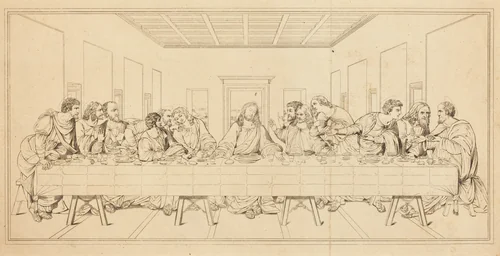
While painting brought him fame during his lifetime, his extensive collection of manuscripts covered astronomy, botany, cartography, and palaeontology, solidifying his status as a universal genius. One curious feature of his working method was his notorious difficulty in completing commissions, often prioritizing a new scientific query over the patron’s contractual deadline. This intellectual framework underpinned his revolutionary approach to art theory, notably his development of sfumato and his nuanced understanding of light and shadow.
His collective contribution to visual language set a benchmark for succeeding generations of artists matched solely by his younger contemporary, Michelangelo. Fortunately for scholars and enthusiasts alike, many of his masterful drawings and studies are now available in the public domain, allowing access to high-quality prints and royalty-free images of the master’s unparalleled vision.
Source: Wikipedia · CC BY-SA 4.0