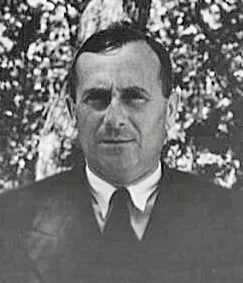
Joan Miró
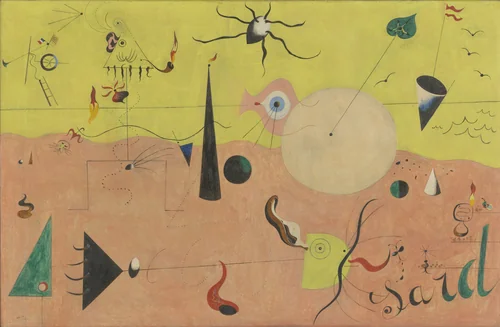
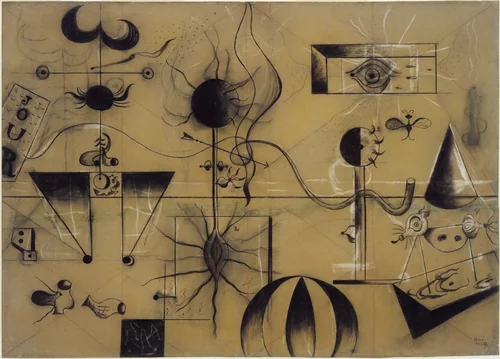
Joan Miró i Ferrà (1893-1983) stands as a monumental figure in the history of Modernism, a Catalan painter, sculptor, and ceramist whose relentless pursuit of a universal visual language established him as a pioneer of both Surrealism and post-war Abstract art. His work is characterized by the inventive reduction of subject matter to primal, biomorphic signs, set against fields of vibrant, flat color. He famously sought to "assassinate painting," intending not destruction, but purification and return to an elemental sincerity.
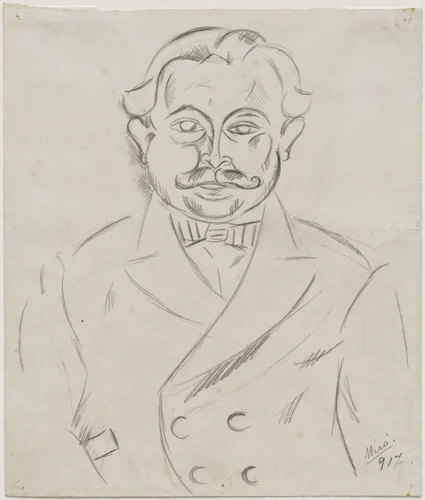
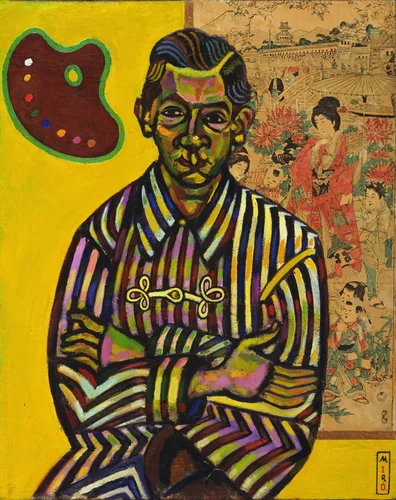
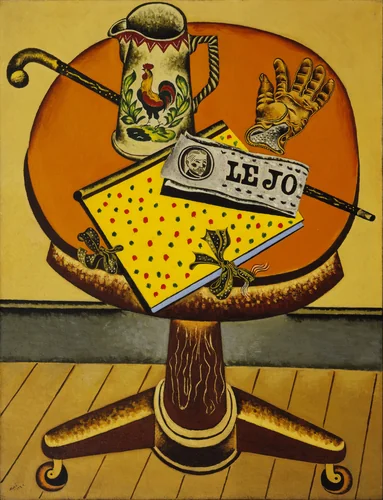
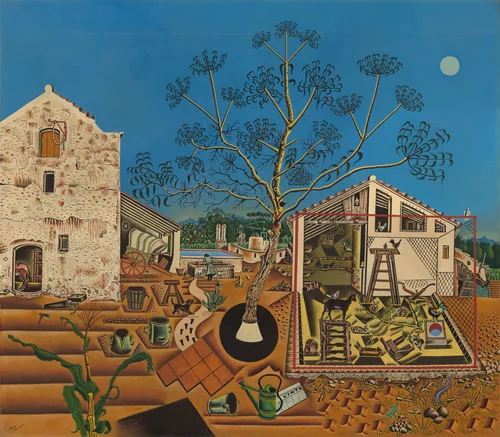
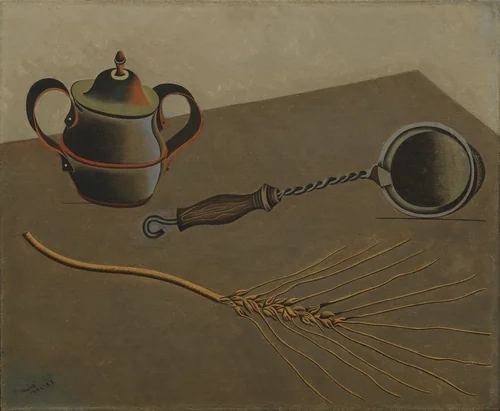
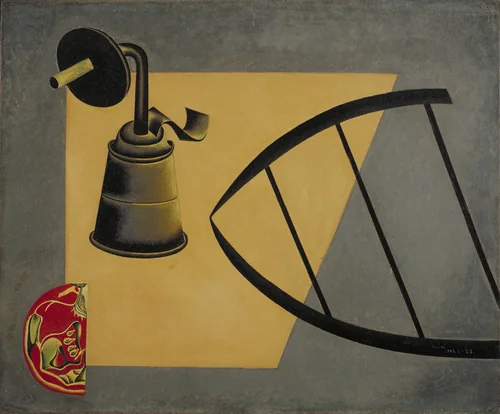
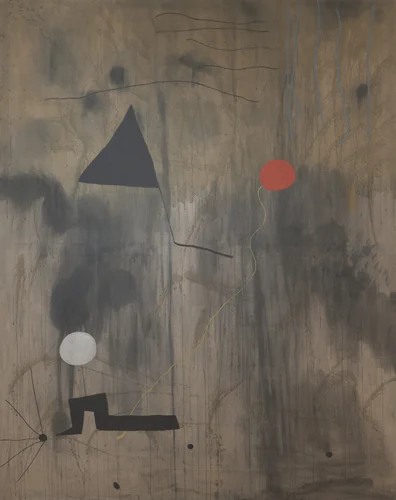
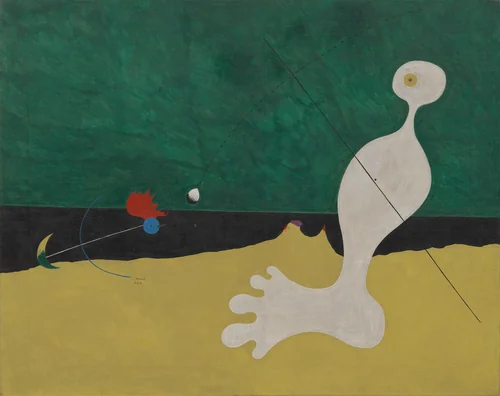
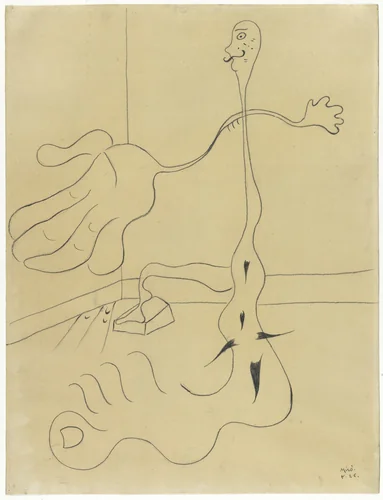
The foundational period of his career, spanning 1917 to 1927, reveals a swift transition from rigorous figuration to radical experimentation. Early works, such as the hyper-detailed The Farm, reflect an almost magical realism steeped in his Catalan heritage. This intensity of observation was quickly redirected toward conceptual exploration, producing pivotal transitional pieces like Portrait of Enric Cristòfol Ricart. By the mid-1920s, Miró was dismantling traditional compositional logic, favoring visual poetry and subconscious associations, often utilizing humor and unexpected juxtapositions, evidenced in works like Still Life -- Glove and Newspaper, Man with a Moustache, and Still Life I. These works solidified the abstract symbolic vocabulary that would define his later career, moving definitively toward non-objective Joan Miró paintings.
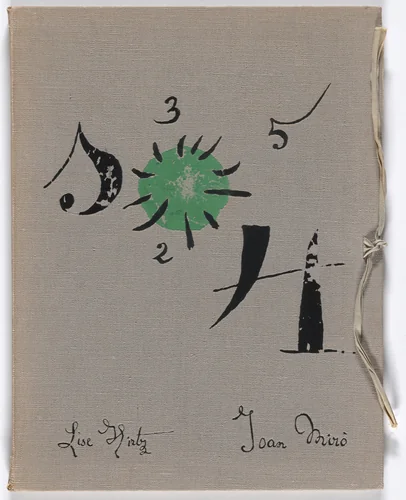
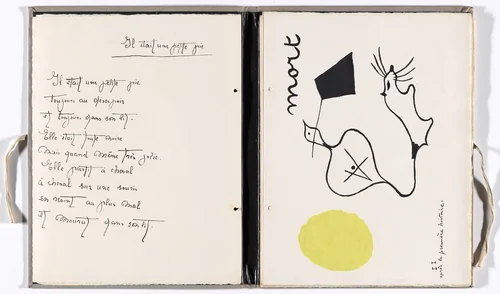
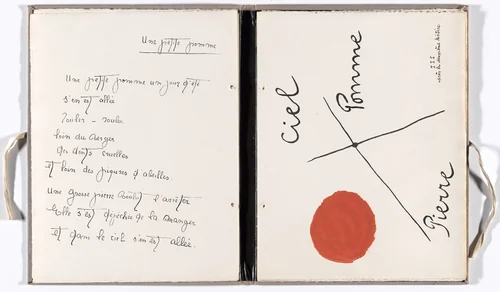
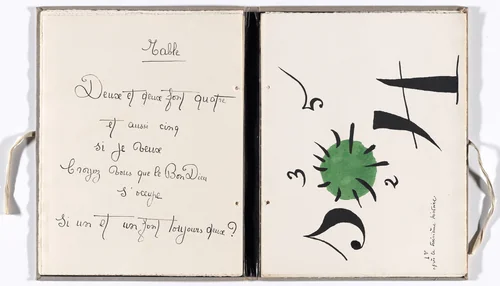
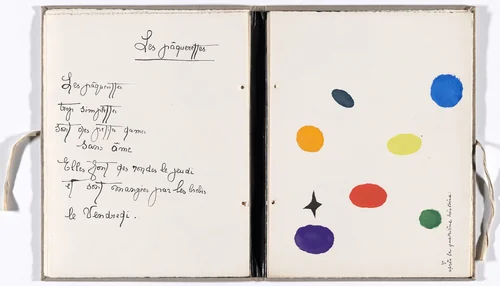
Miró's tireless activity spanned over sixty years, encompassing painting, drawing, sculpture, and illustrated books. He possessed a profound commitment to preserving the accessibility of modern art. Today, the enduring significance of his contributions is represented in major global collections, notably the National Gallery of Art and the Museum of Modern Art. Many of his iconic pieces are now available as museum-quality images and high-quality prints, allowing for broader scholarship and appreciation of his innovative spirit.
A testament to his institutional vision, Miró oversaw the establishment of two dedicated museums: the Fundació Joan Miró, founded in his native Barcelona in 1975, and the Fundació Pilar i Joan Miró, established six years later in Palma, Mallorca. This careful dedication to preserving his vast body of work across two foundational locations underscores a subtle but firm loyalty both to the land that formed him and the life he chose.
Source: Wikipedia · CC BY-SA 4.0