Gustave Moreau
Gustave Moreau (1826-1898) stands as a foundational and essential figure in French Symbolism, a movement which sought to transcend the material world through subjective interpretation and mythic narrative. Recognized by critics like Jean Cassou as "the Symbolist painter par excellence," Moreau maintained a pivotal role both as an influential precursor in the 1860s and as a dominant force during the movement's peak decades later.
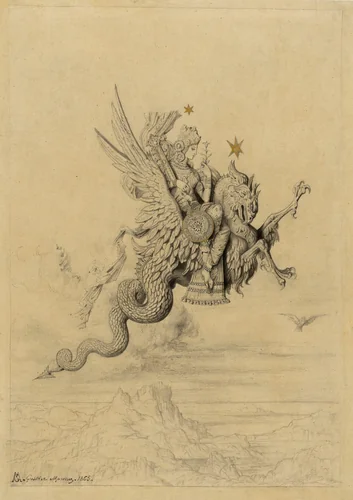
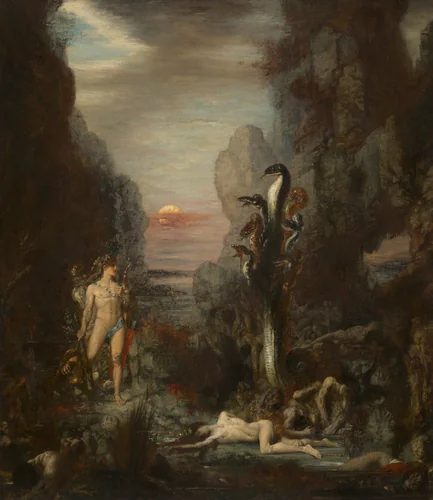
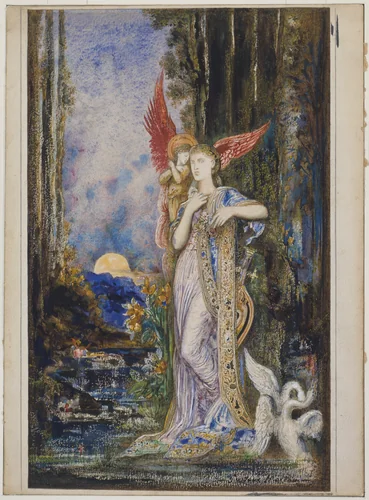
Moreau’s elaborate, often jewel-toned canvases offered a powerful counterpoint to contemporary realism. He dedicated his practice to allegories and traditional biblical and mythological narratives, subjects typically favored by fine art academies. However, rather than simply reiterating convention, Moreau imbued these established themes with a novel sense of mysterious depth and psychological complexity. The novelist J. K. Huysmans captured this innovation, observing that Moreau successfully gave "new freshness to dreary old subjects," expressing age-old myths in a language that was persuasive, lofty, and new. This approach, characterized by a complex layering of references and visual opulence, led art historian Robert Delevoy to conclude that Moreau "brought symbolist polyvalence to its highest point in Jupiter and Semele."
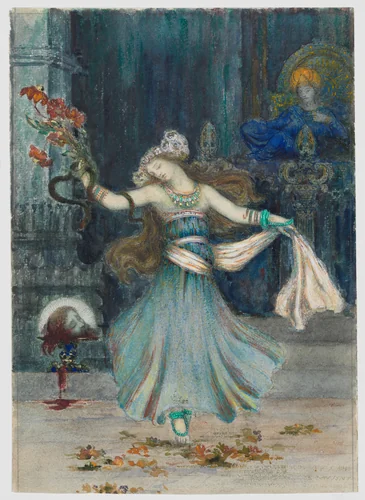
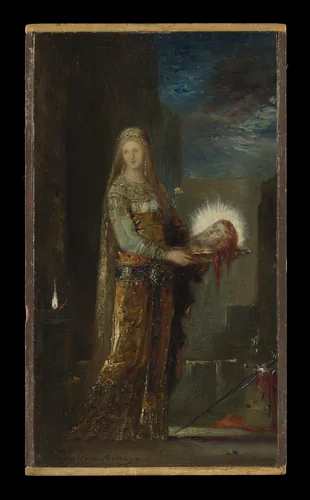
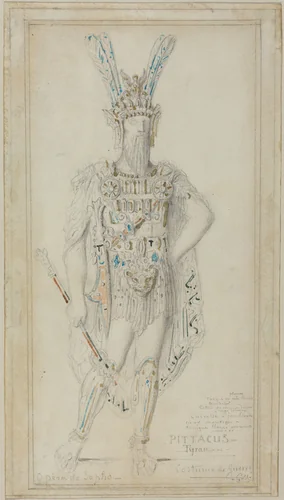
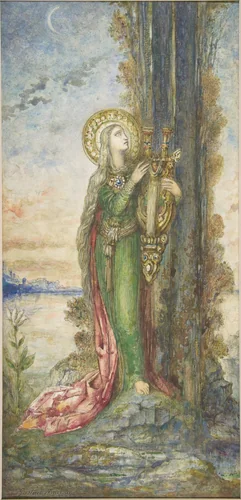
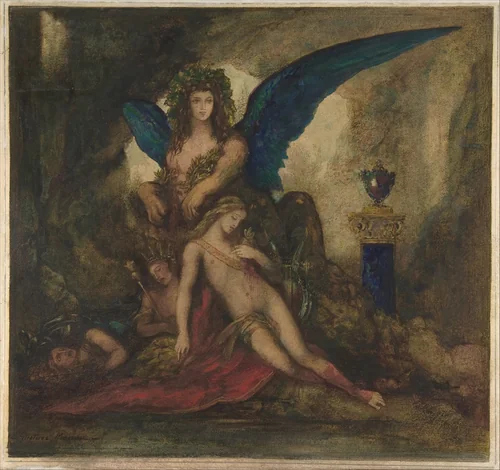
His frequent depiction of powerful, enigmatic female figures drawn from mythology and scripture, such as the compelling figure in Salomé Dancing Before the Head of St. John the Baptist, became central to the Symbolist canon, establishing what many regard as the archetypal symbolist woman. Despite the intense detail and high finish required of his major works, Moreau was astonishingly prolific, producing over 15,000 paintings, watercolors, and drawings during his active career. The sheer volume of these Gustave Moreau paintings, many of which were intimate studies, underscores the private intensity of his vision.
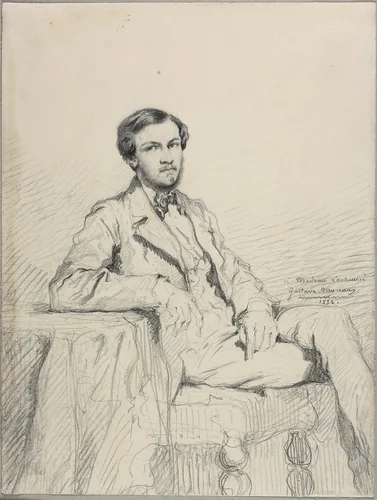
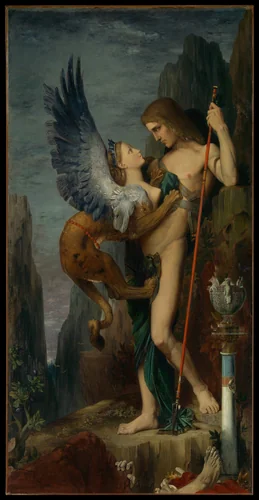
Though his distinct aesthetic suffered a period of neglect in the early 20th century, Moreau received significant critical re-evaluation starting in the 1960s and 70s, cementing his status among the most paramount Symbolist masters. Today, major works including Oedipus and the Sphinx and Portrait of Eugène Lacheurié are held in prestigious institutions globally. Furthermore, a significant number of his works have entered the public domain, ensuring that high-quality prints and downloadable artwork of his complex symbolic vocabulary remain widely accessible to contemporary scholars and admirers alike.
Source: Wikipedia · CC BY-SA 4.0