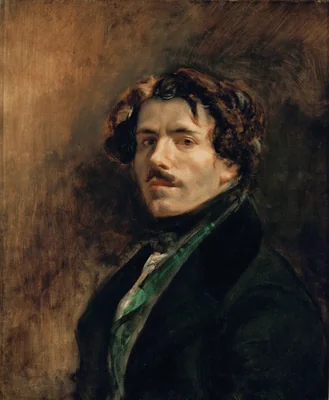
Eugène Delacroix
Ferdinand Victor Eugène Delacroix (1798-1863) stands as the essential figurehead of the French Romantic movement. He was universally regarded by his contemporaries as the school’s leader, whose pioneering use of color, expressive brushwork, and dramatic narrative provided a seismic shift away from the prevailing Neo-Classical austerity that dominated Parisian art at the beginning of the nineteenth century.
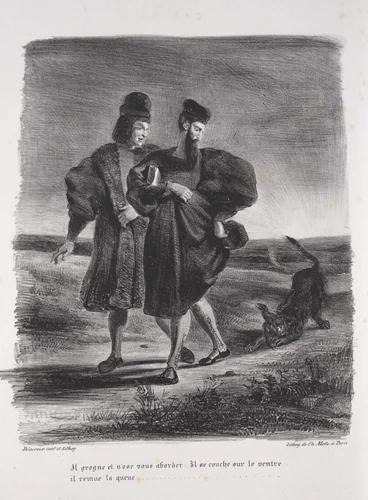
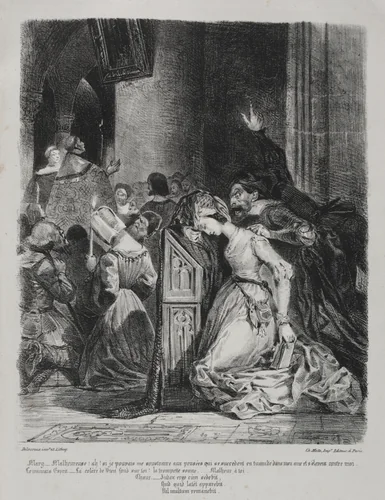
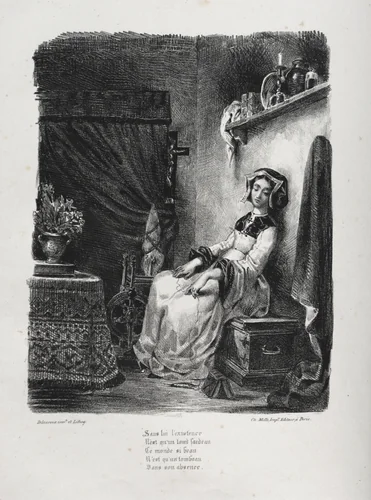
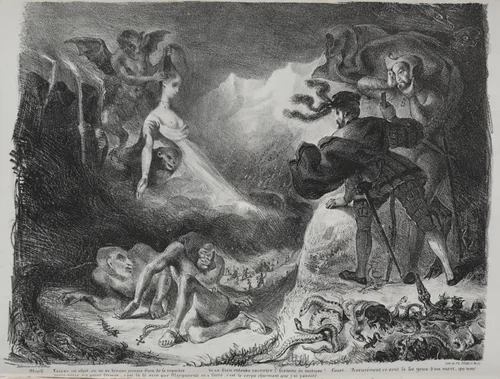
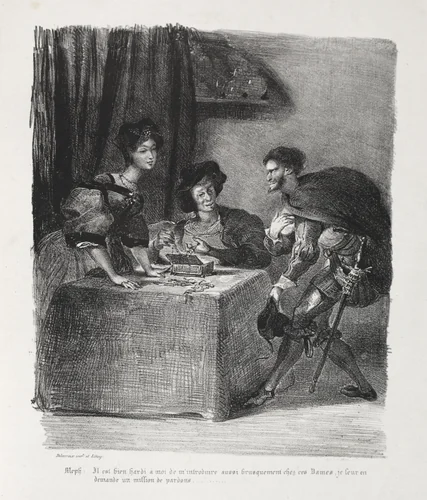
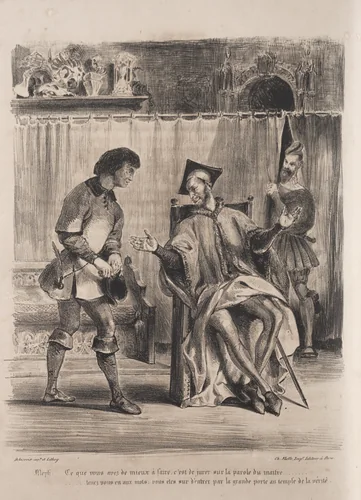
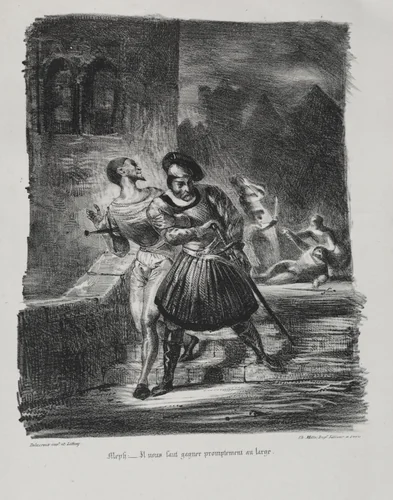
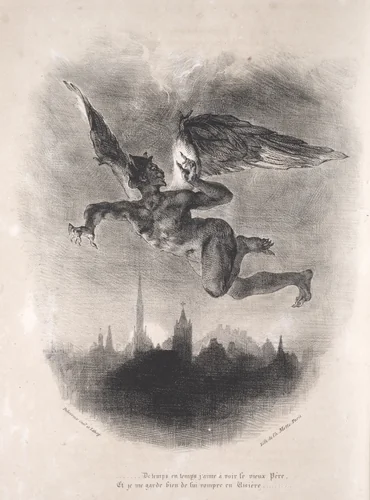
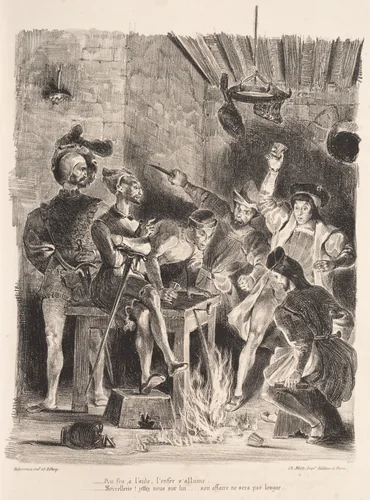
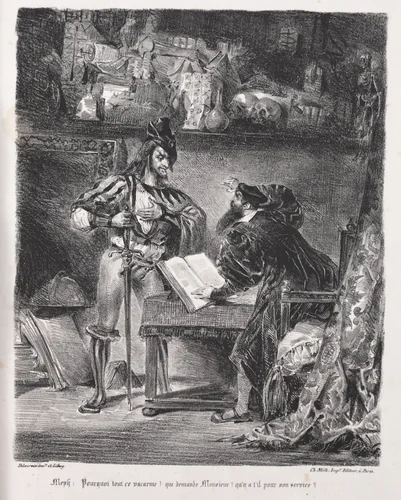
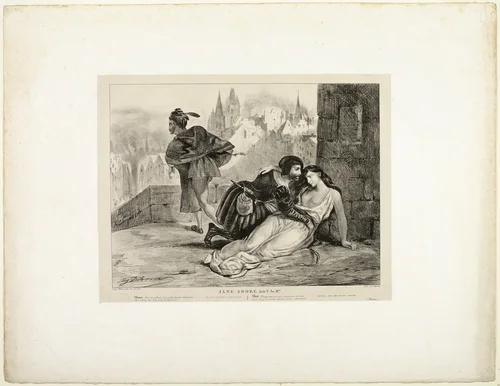
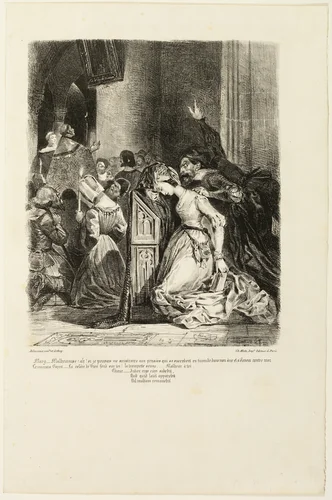
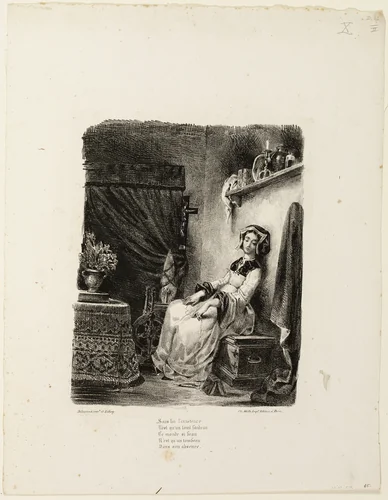
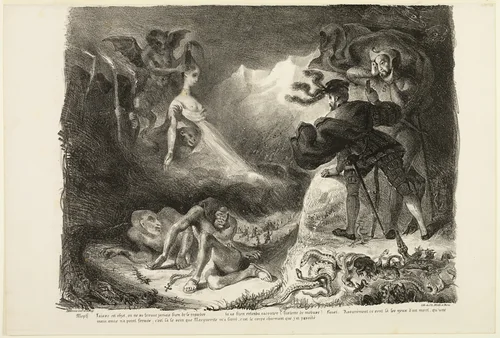
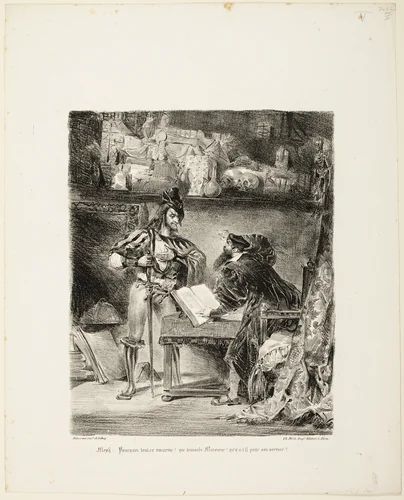
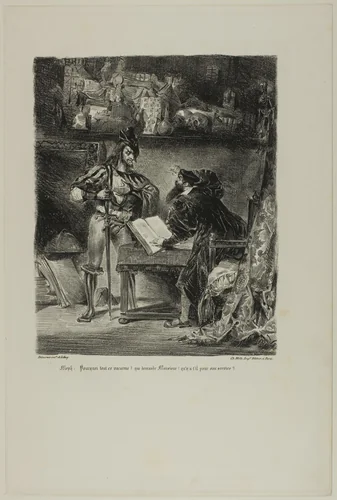
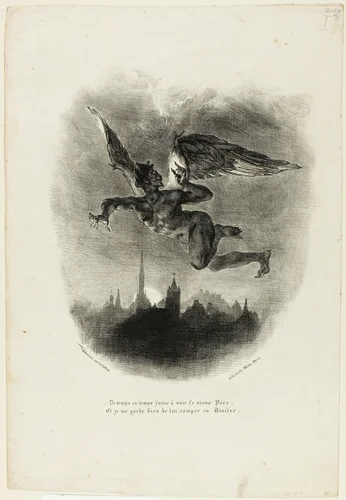
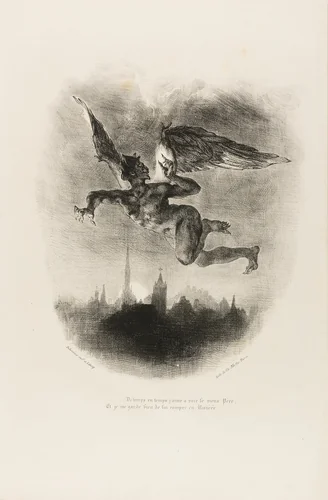
Delacroix forged a dynamic, intensely emotional style that synthesized the grandeur of the Baroque masters, particularly Rubens and the Venetian colorists, with a distinctly modern psychological acuity. He was a prolific draftsman and printmaker whose rigorous engagement with historical technique is evident even in preparatory studies and copies, such as his interpretation of "The Swing," after Antoine Watteau. His graphic output captures his versatility, ranging from political commentary, seen in works like Le Déménagement de la Censure and Duel Polemique, to intricate historical and mythological compositions like the recto and verso studies for Charioteers.
His art consistently focused on moments of extreme tension and conflict, whether military, mythical, or psychological. This emphasis on energy and vitality defined the Romantic sensibility for France and established Delacroix as a revolutionary force in visual culture. His technical experiments ensured that color was no longer merely a descriptive tool but an expressive force, a concept that would profoundly influence later generations, including the Impressionists.
Today, his vast artistic legacy—comprising paintings, drawings, and an extensive collection of preparatory works and graphic art—is preserved in prestigious global collections, including the Metropolitan Museum of Art and the National Gallery of Art. While the monumental Eugène Delacroix paintings anchor his reputation, his less-known works, now largely in the public domain, offer crucial insight into his evolving technique. Scholars and students alike benefit from the wide availability of these materials; many of his preparatory drawings and Eugène Delacroix prints are accessible as high-quality prints, allowing for detailed study of the master’s unparalleled dynamism.
Source: Wikipedia · CC BY-SA 4.0