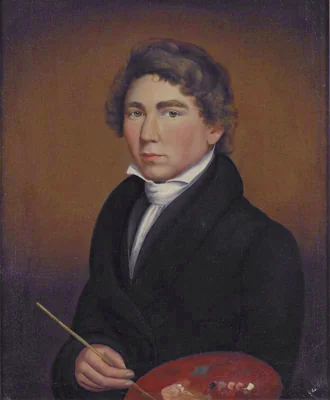
William Matthew Prior
William Matthew Prior holds a recognized and important place within the tradition of nineteenth-century American folk art. Active primarily during a concentrated period between 1840 and 1854, Prior specialized in the intimate portraiture of families and children, documenting the aspirations and domestic life of a rising middle class. His reputation is solidified by the inclusion of his works in major American institutions, notably the National Gallery of Art and the Art Institute of Chicago.
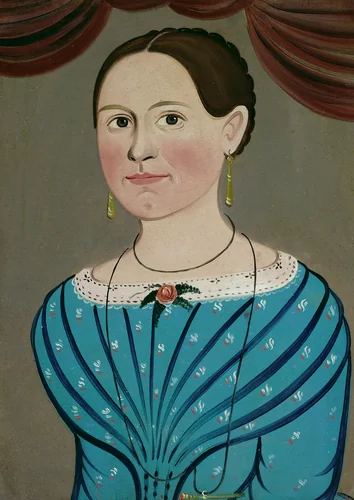
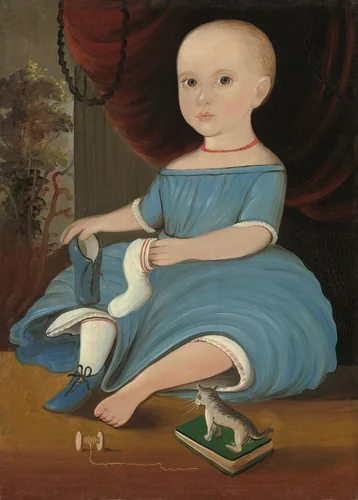
As an American folk artist, Prior’s technique is defined by a directness that characterizes the finest of his genre. He utilized clean lines and focused compositions, employing the direct frontal gaze common in the work of contemporary limners. Unlike more academic painters, Prior’s strength lay in capturing the immediate, unvarnished character of his sitters, infusing his subjects with a quiet dignity. Works such as Woman in a Blue Dress and the distinctive Baby in Blue exemplify his approach to straightforward representation, a style highly valued for its honesty.
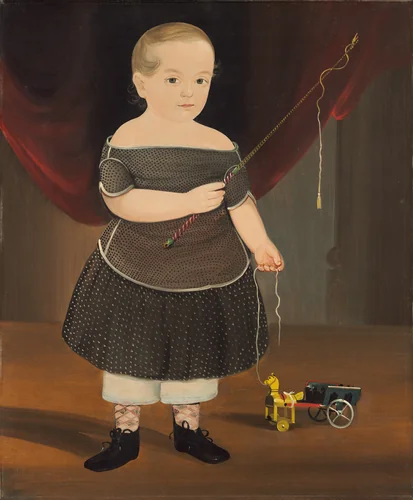
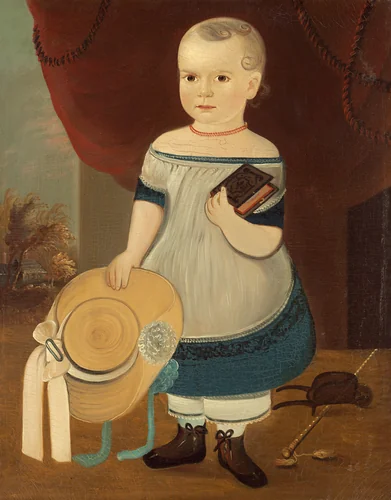
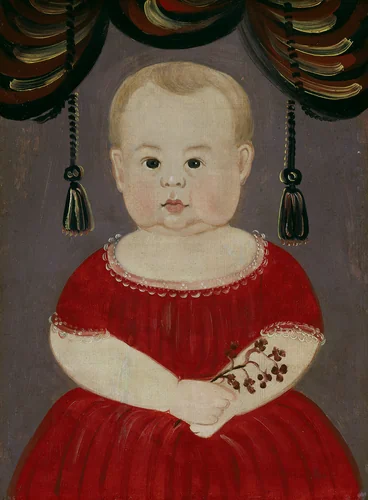
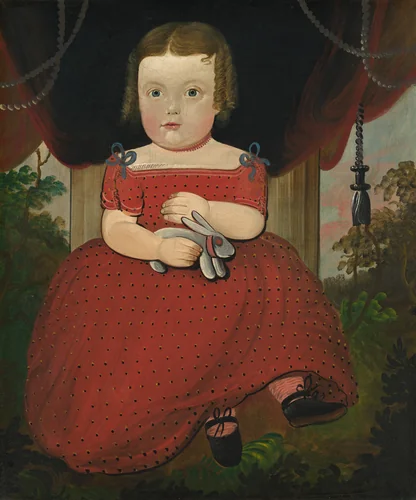
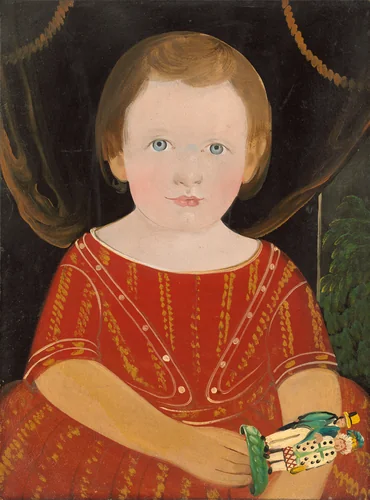
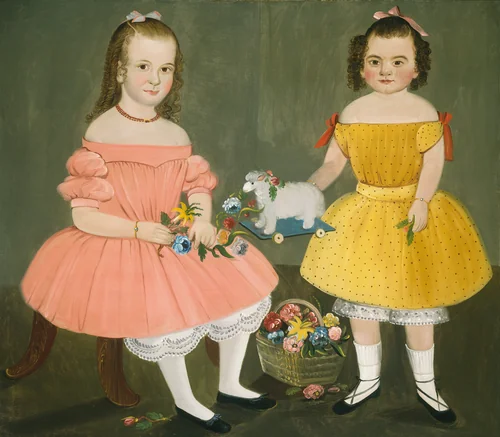
Prior maintained a particular genius for juvenile portraiture. Viewing his collected output across his fourteen-year career suggests that during the 1840s, all children possessed both an inexhaustible supply of accessories, and a slightly unsettling maturity in their expressions. This observation is borne out in pieces like Child with Straw Hat and Boy with Toy Horse and Wagon, where the subjects appear ready to assume the mantle of adulthood at any moment. His portraits function as valuable cultural artifacts, meticulously recording the era’s costumes and interior aesthetics, such as in Portrait of Fred Adelbert Haywood.
Although his active period was relatively brief, the output of William Matthew Prior paintings has maintained enduring scholarly interest. His contribution to the history of domestic portraiture is significant, providing crucial visual documentation of American society before the Civil War. Today, the enduring clarity and strong composition of his art ensures its continued appeal. Many of these foundational works are now in the public domain, allowing for widespread preservation and study. The ready availability of high-quality prints derived from his originals ensures that his quiet mastery continues to reach new audiences.
Source: Wikipedia · CC BY-SA 4.0