William Marlow
William Marlow (active 1760-1770) was a pivotal English figure specializing as a landscape and marine painter and etcher during a transformative decade of British art. Though his documented active period is concise, the enduring quality of his output ensured rapid acquisition by major institutions. Today, his works establish a critical link between the topographical tradition and the nascent Picturesque movement, with important examples held in collections including the National Gallery of Art, the Art Institute of Chicago, and the Metropolitan Museum of Art, confirming their museum-quality status.
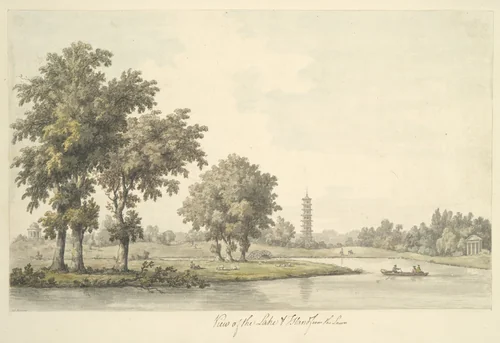
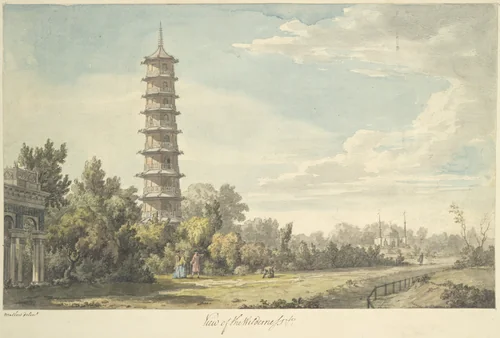
Marlow’s proficiency spanned diverse subjects and media, encompassing detailed pencil and wash studies alongside finished oils. His career trajectory reflects the mandatory artistic itinerary of the era, moving seamlessly between native English views and the coveted Continental vistas inspired by the Grand Tour. His exacting depictions of royal properties, such as the companion pieces View of the Lake and the Island from the Lawn at Kew and View of the Wilderness at Kew, offer highly valuable documentation of Georgian estate design before the full impact of later landscaping trends. These works demonstrate a careful balance between observational fidelity and artistic composition.
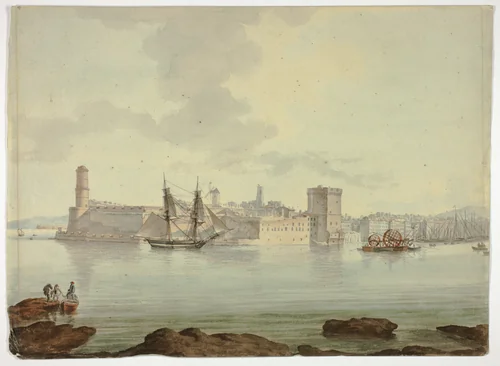
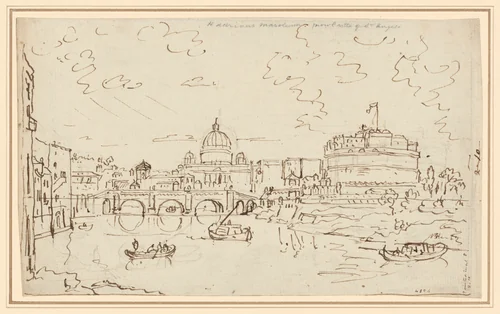
Crucially, Marlow successfully engaged with the classical Italian ideal, a necessary credential for any ambitious landscape painter of the period hoping to attract serious patronage. His large-scale vedute, such as The Tiber with Saint Peter's and the Castel S. Angelo (recto), confirm his mastery of atmospheric effects and historical context, framing classical ruins and urban monuments with dramatic light and shadow. Works like Harbor before Fortified Town further underscore his specialized ability as a marine painter, documenting the crucial interface between naval commerce and architecture.
Marlow’s practice as an etcher ensured that his compositions circulated widely, extending his influence beyond limited patronage circles. Many of his significant studies and finished William Marlow paintings are now considered public domain due to their age, allowing institutions to provide access to downloadable artwork. This accessibility ensures that high-quality prints of William Marlow are available to contemporary audiences, maintaining scholarly interest in a skilled practitioner whose technical discipline shaped the conventions of eighteenth-century landscape art.
Source: Wikipedia · CC BY-SA 4.0