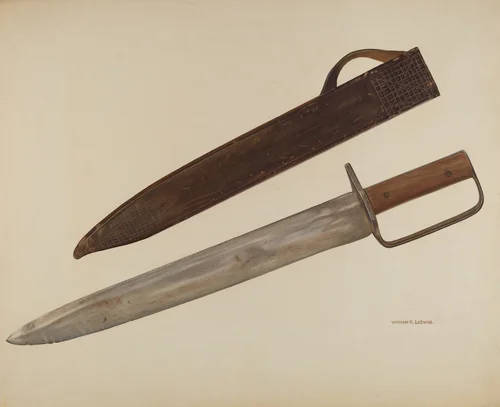
William Ludwig
William Ludwig was a central, specialized contributor to the Index of American Design (IAD), the seminal Federal Art Project established between 1935 and 1942 under the Works Progress Administration (WPA). His work represents a vital chapter in the history of American visual documentation, focusing specifically on the meticulous preservation of indigenous folk art and functional decorative objects.
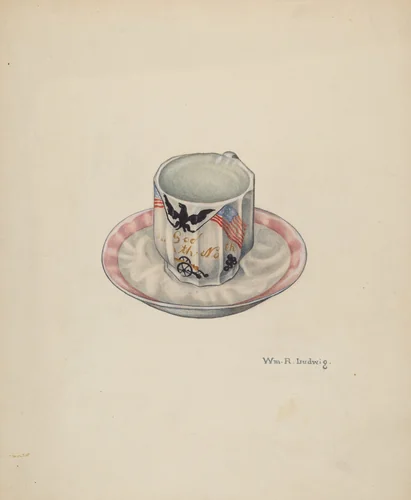
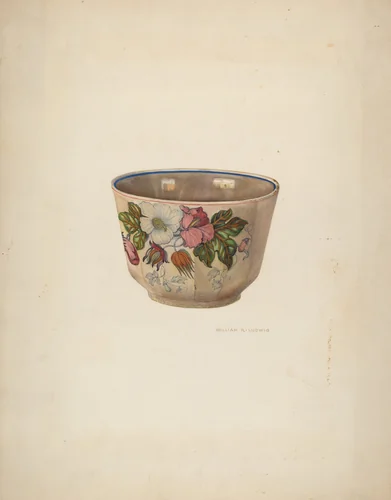
Active primarily from 1935 to 1941, Ludwig produced thirteen highly detailed renderings, now securely housed within major institutional archives, most notably the permanent collection of the National Gallery of Art. The IAD mandate required artists to capture the historical integrity and precise materiality of American artifacts before they were lost, modernized, or destroyed. Ludwig’s skill lay in transforming ordinary domestic implements into sophisticated, museum-quality representations.
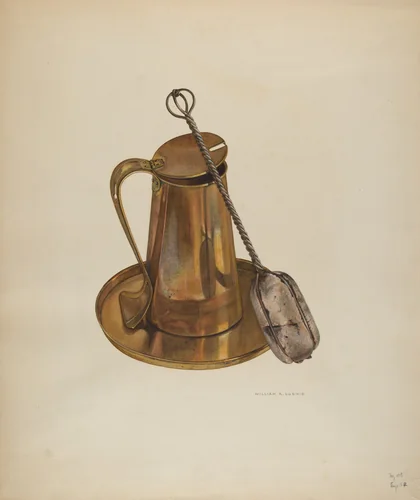
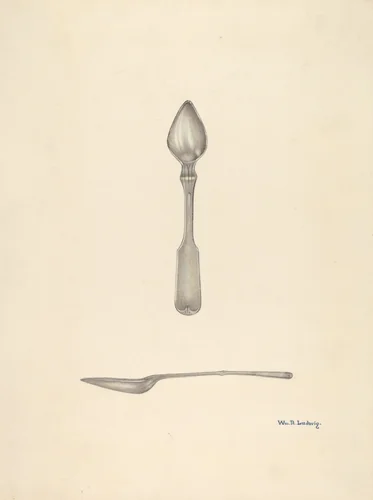
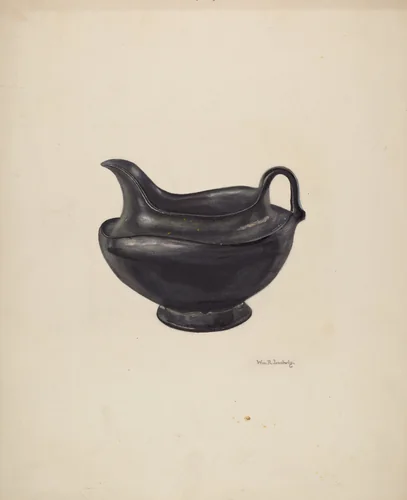
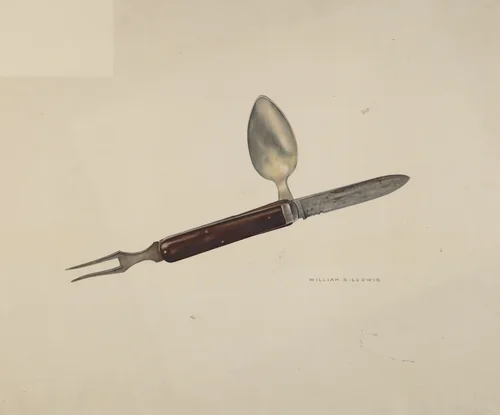
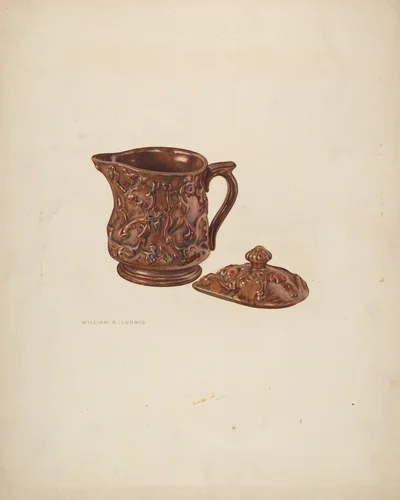
His portfolio details a spectrum of utilitarian items, showcasing regional craft traditions and early industrial design. Ludwig’s rendering of the Moravian Pitcher, for instance, captures the ceramic texture and specific glazes with documentary fidelity. Similarly, the detailed drawings of metalwork, such as the Cape Cod Lighter and the diminutive Bishop Hill: Small Spoon, demonstrate his technical mastery in conveying surface reflection and ergonomic structure.
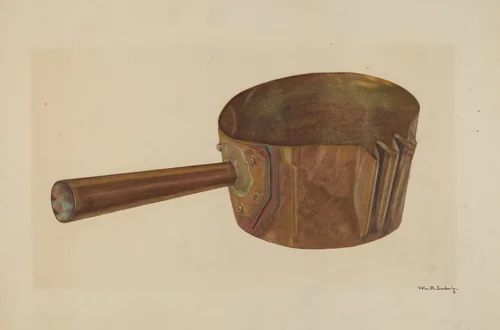
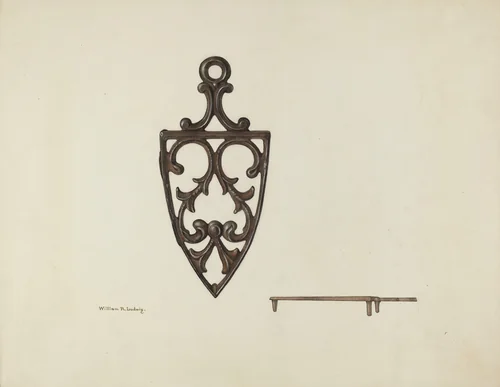
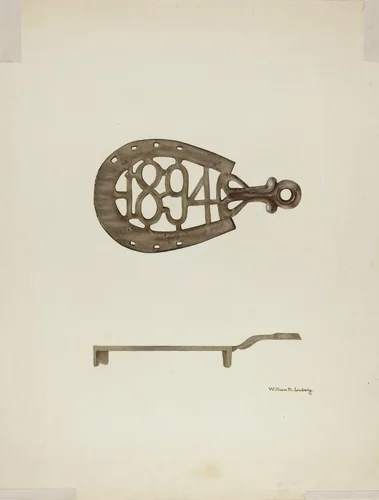
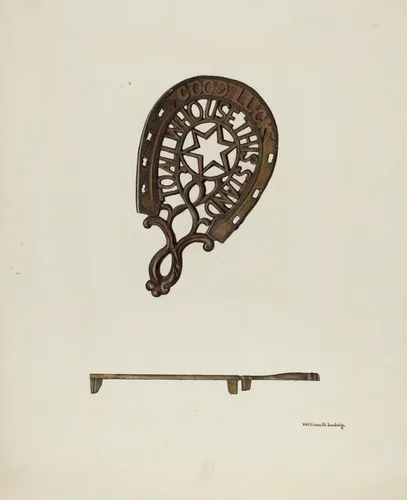
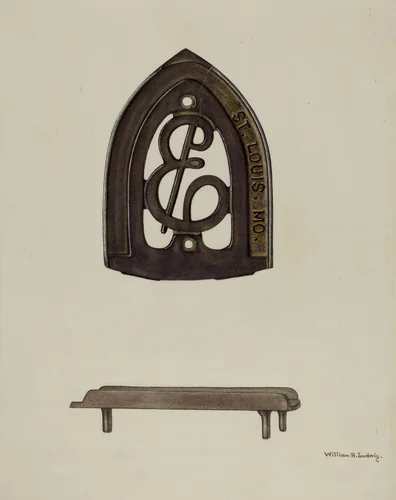
The significance of Ludwig’s contribution rests on the objective precision required by the Index. Unlike contemporaries who focused on narrative or expressive painting, Ludwig’s artistic personality was deliberately subsumed by the necessity of documentation. He rendered the Candy Ladle and the Trivet with a rigorous focus that turned functional hardware into high-quality prints of historical importance.
Today, the enduring legacy of the Index means that much of William Ludwig's work, including his meticulous drawings, has entered the public domain. These images, now often available as royalty-free downloadable artwork, continue the mission of the IAD by allowing researchers, designers, and historians access to America's material past in remarkably clear, authoritative form.
Source: Wikipedia · CC BY-SA 4.0