William Kent
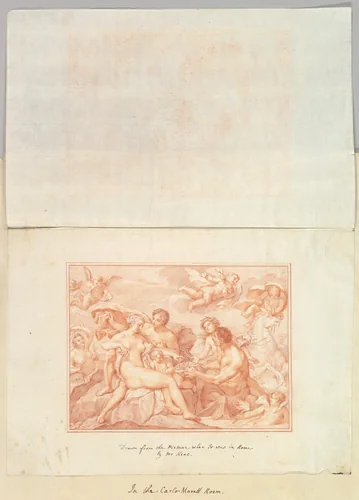
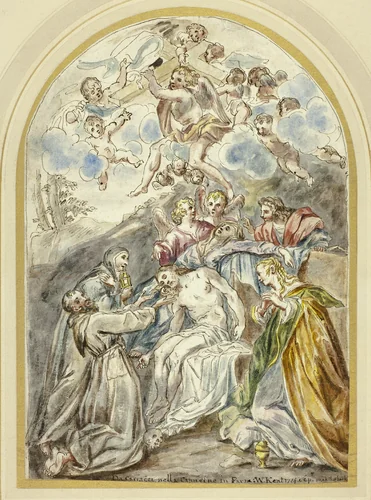
William Kent (c. 1685-1748) occupies a singular, indispensable place in the evolution of early Georgian aesthetics, defining the visual language of the period through the sheer scope of his multidisciplinary practice. An English artist whose career spanned the early 18th century, Kent initially trained as a painter, a skill evidenced by dramatic canvases such as Acis and Galatea and topographical works like Chiesa dei Cappuccini Parma. While he was eventually awarded the prestigious post of Principal Painter in Ordinary, history suggests that this title, though highly distinguished, ultimately undersold his true genius for design synthesis.
Kent was perhaps the earliest practitioner of the integrated aesthetic experience, operating simultaneously as an architect, landscape architect, and furniture designer. His capacity to coordinate these disciplines meant that he controlled the entirety of an estate’s presentation, from the grand façade of the building to the intricate carving of the interiors, and the sweeping, deliberately naturalistic contours of the surrounding grounds. This pioneering work in landscape architecture established the foundations for the influential English garden movement.
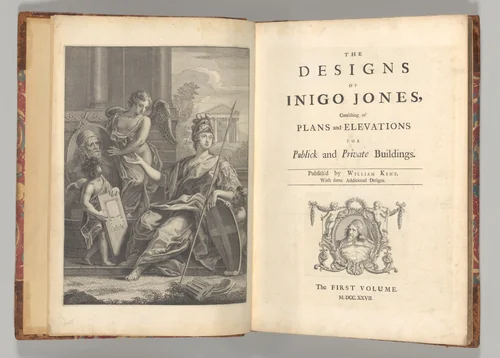
In architecture, Kent became a critical proponent of Palladian classicism, often acting as a bridge between the rigorous standards of the past and the demands of contemporary aristocratic patrons. His dedication to these classical principles is perhaps best illustrated by his detailed work publishing and expanding upon the foundational corpus of English architecture: The Designs of Inigo Jones Consisting of Plans and Elevations for Publick and Private Buildings. This monumental, multi-volume undertaking cemented his reputation not merely as a designer, but as a curator and custodian of architectural history.
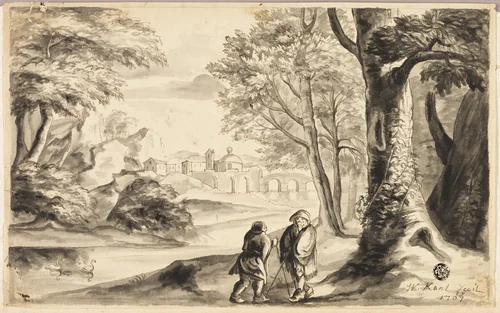
While examples of original William Kent paintings and drawings, such as Two Travelers under Tree with Village and Bridge in Distance, remain highly prized and reside in major institutions including the Metropolitan Museum of Art and the Art Institute of Chicago, his lasting influence resides primarily in the structures he designed and the taste he shaped. Fortunately, detailed records of his extensive output, including architectural sketches and decorative plans, are often available in the public domain, providing researchers and collectors access to museum-quality documentation. These comprehensive collections mean that detailed William Kent prints of his original designs continue to inform contemporary appreciation for 18th-century design innovation.
Source: Wikipedia · CC BY-SA 4.0
![The Designs of Inigo Jones Consisting of Plans and Elevations for Publick and Private Buildings. Publish'd by William Kent, With some Additional Designs. The First [Second] Volume by William Kent, volume, 1727](https://img.artbee.org/c216745e-3ab0-442a-b2a9-0d871b9793cf/small.webp)