William James Smith
William James Smith (active 1815-1824) was a skilled British printmaker whose relatively brief but highly focused career concentrated primarily on evocative theological subjects and intense figurative studies. Though only approximately ten works are securely attributed to his hand, the significance of his output is firmly confirmed by its representation in major international collections, including the Rijksmuseum in Amsterdam and the Metropolitan Museum of Art in New York.
Operating primarily during the British Regency period, Smith excelled in the demanding mediums of etching and engraving. He utilized sophisticated chiaroscuro techniques to achieve the dramatic tonal depth necessary for conveying serious biblical narratives. His compositions frequently revisited traditional religious iconography, yet injected a heightened sense of immediacy and emotional realism often derived from observing earlier continental masters, particularly those influential in the preceding Dutch Golden Age.
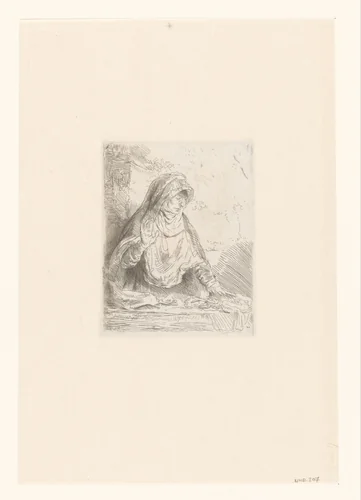
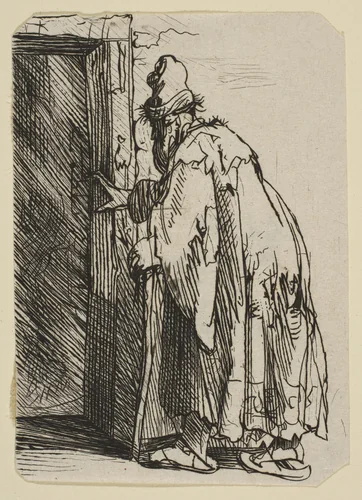
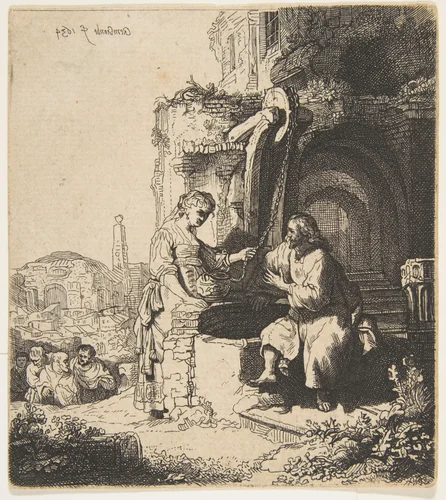
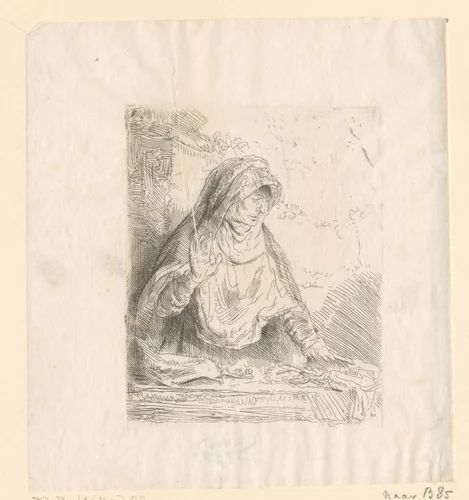
This stylistic lineage is evident in works such as The Virgin with the instruments of the Passion, which demonstrates Smith’s careful command over complex figural arrangement and symbolic density. Conversely, the smaller study The Blindness of Tobit: A Sketch shows his equally keen focus on momentary, concentrated emotional intensity, stripping the composition down to its essential human interaction. Smith’s legacy also includes significant efforts in reproduction; his reverse copies, such as Christ and the Woman of Samaria among Ruins (reverse copy), are valued by historians for what they reveal about the commercial mechanisms and technical practices of print circulation in the early 19th century.
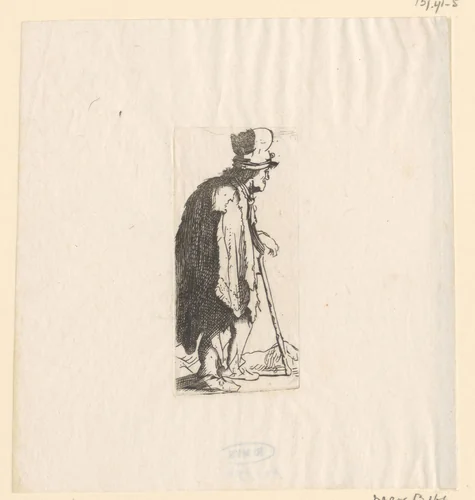
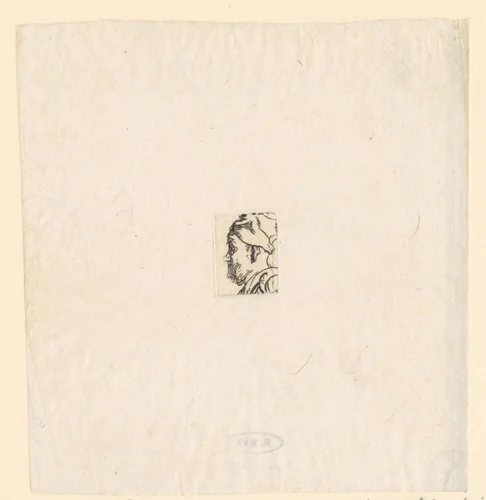
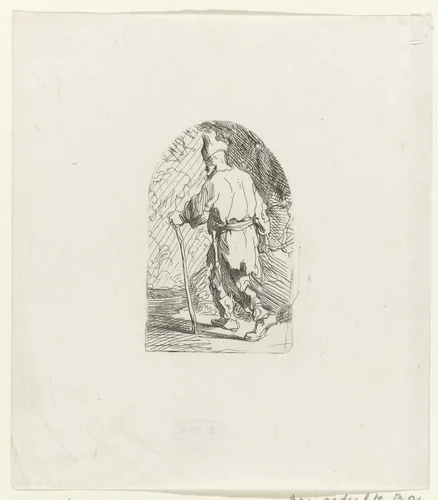
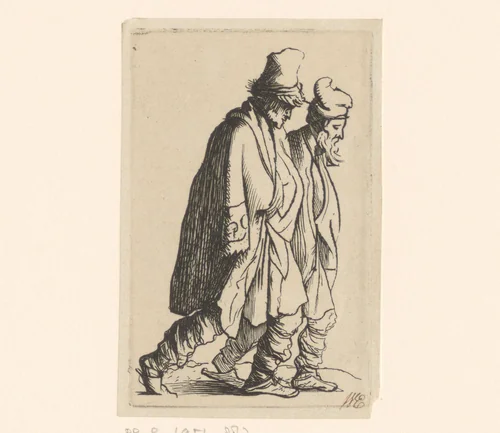
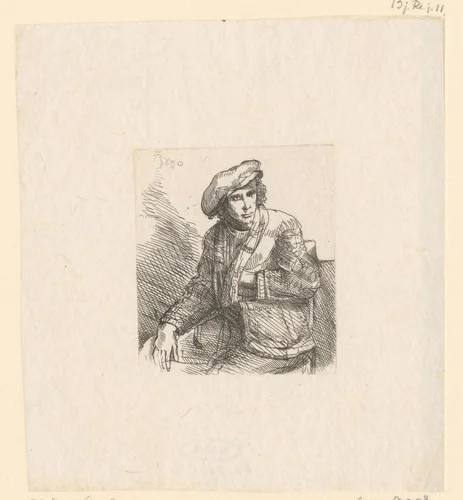
It is a curious note that despite his clear English heritage and training, Smith’s most frequently cataloged works often carry Dutch titles, including Bedelaar met misvormde hand, leunend op een stok and Hoofd van man met muts, naar links. This linguistic diversity in the indexing of the oeuvre suggests early dissemination or particularly strong collection activity in the Netherlands or Flanders immediately following their creation.
Smith’s activity tapered off abruptly around 1824, leaving behind a compact yet technically excellent body of William James Smith prints. The quality and historical importance of these graphic works ensure their continued scholarly study. Fortunately for contemporary enthusiasts, due to their age and inclusion in institutional holdings, many of Smith’s prints are now available in the public domain, granting wide access to high-quality prints and securing his small but distinct place in the history of early nineteenth-century graphic arts.
Source: Wikipedia · CC BY-SA 4.0