William Heath
The name William Heath holds historical resonance, primarily associated with the Massachusetts farmer, soldier, and political leader who served as a Major General in the Continental Army during the American Revolutionary War. However, within the specialized history of early nineteenth-century British visual satire, the name points to an entirely different, though equally sharp, political commentator.
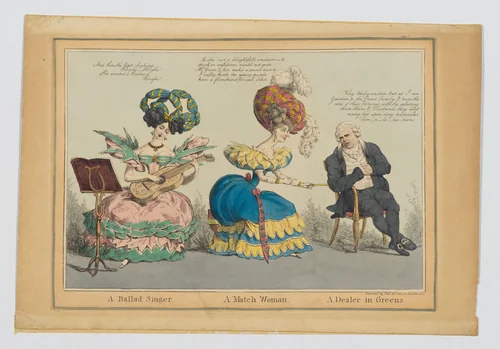
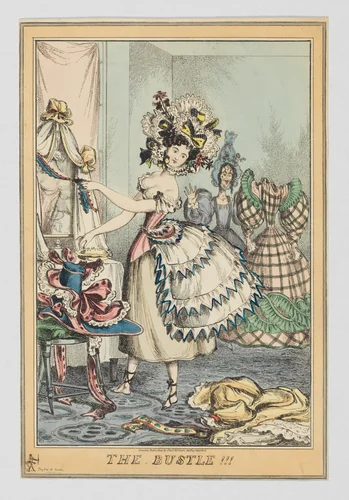
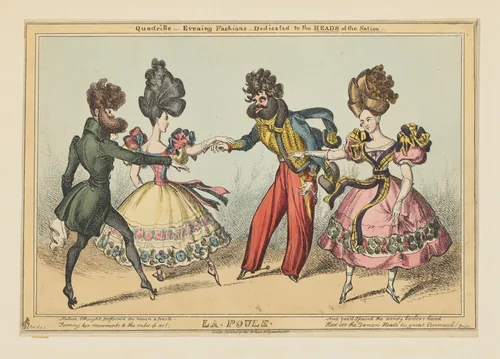
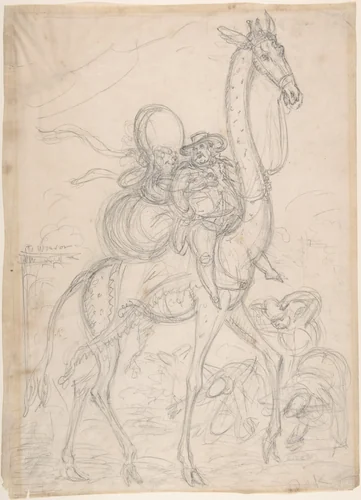
Active predominantly between 1814 and 1819, William Heath established himself as a formidable graphic satirist in London. Working primarily through etching and hand-coloring, his focused output of approximately fifteen documented prints provided immediate, biting commentary on the shifting social and political landscape of the post-Napoleonic era. His works were critical components of the rapid circulation of political opinion in the Regency period, capturing the anxieties and absurdities of the British establishment with notable precision.
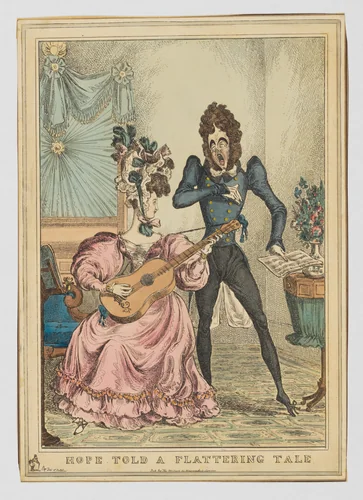
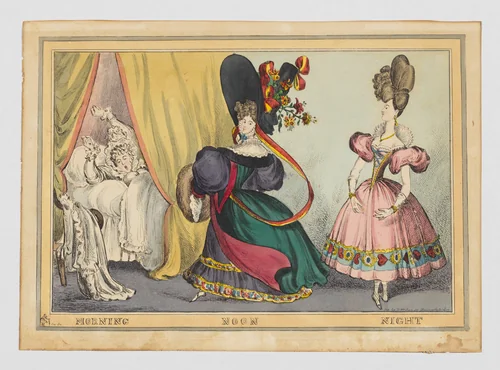
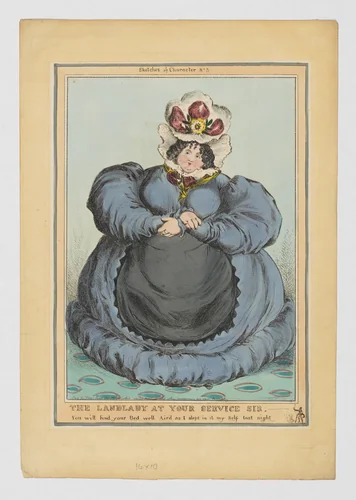
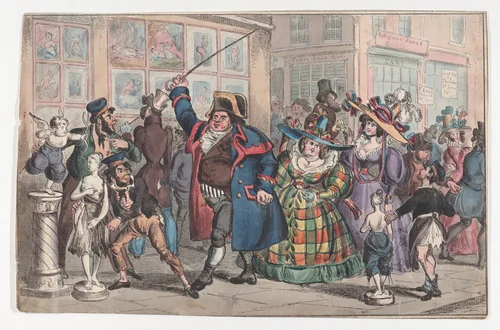
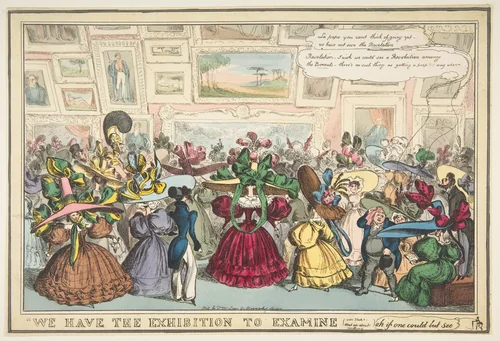
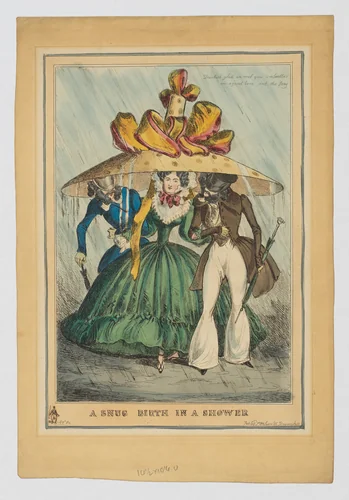
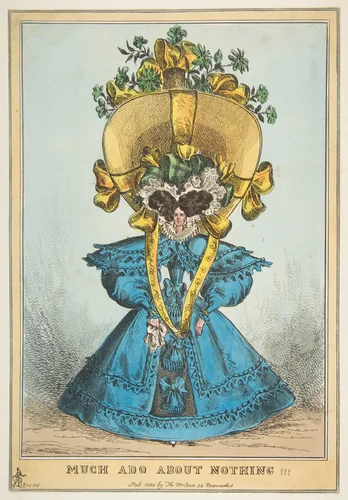
Heath’s strength lay in capturing the detailed, often vulnerable, pomposity of public figures. Prints such as the grandly theatrical The Rival Richards, or Sheakspear in Danger and the military critique A Review of the New Grand Army employed a mixture of clear allegorical composition and precise facial exaggeration—skills essential in an era reliant on immediate visual communication. Unlike some contemporaries who sought maximal crudeness, Heath often maintained a certain visual finesse in his political attacks, even when addressing vulgar subjects like the financial scandals referenced in A Frontispiece to the New Red Book. His works demonstrate a keen, if detached, observation of institutional behavior. A subtle personality element appears in his handling of military subjects; having likely never served, he often exaggerated the awkward stiffness of parade formations, treating the rigid discipline of the army primarily as a subject for sophisticated visual comedy rather than reverence.
This concise but historically crucial body of work is preserved in significant institutional collections, including the Metropolitan Museum of Art and the Art Institute of Chicago. Given their importance as primary sources for understanding the public mood of Regency England, these artifacts are frequently sought as museum-quality representations of the period. Today, as many of his original works have entered the public domain, researchers and collectors can easily find William Heath prints available as high-quality reproductions and downloadable artwork, ensuring that the sophisticated visual critique of the early 19th-century satirist continues to circulate widely.
Source: Wikipedia · CC BY-SA 4.0
![A Desert [sic]–Imitation of Modern Fashion by William Heath, print, 1823-1833](https://img.artbee.org/c29d56e5-45ca-4c88-b3f9-b150573749ce/small.webp)