William Hart
William Hart (active 1823-1883) occupies a significant position within the tradition of nineteenth-century American landscape art, defined less by a broad biographical record and more by the concentrated quality of his documented output. Known primarily for his engagement with both the tranquil and sublime aspects of nature, Hart’s works are preserved in the permanent collections of major American institutions, including the Metropolitan Museum of Art, the National Gallery of Art, and the Cleveland Museum of Art, affirming their lasting museum-quality importance.
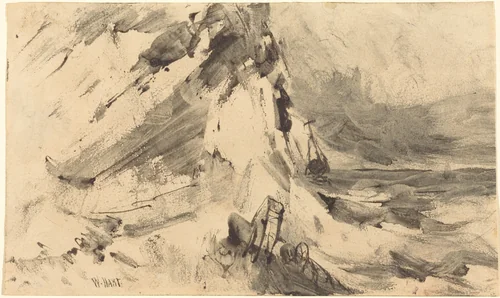
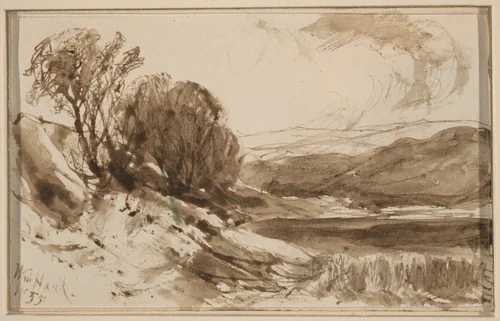
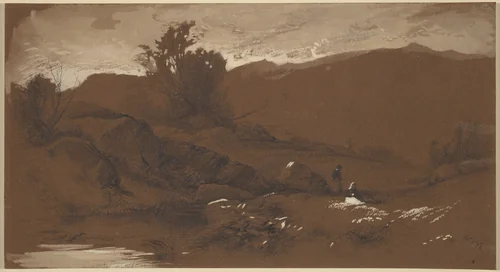
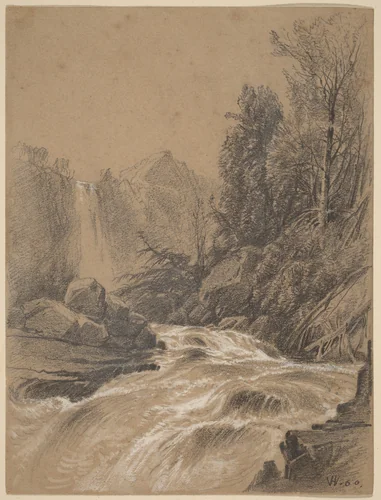
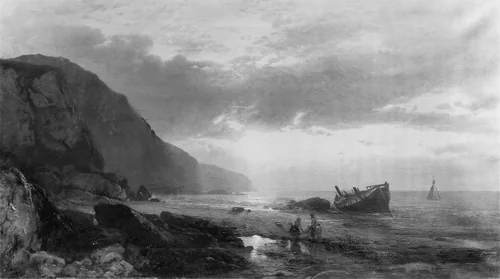
The existing catalog of his work reveals a meticulous draftsman whose primary focus was the dramatic topographical study. His known inventory leans heavily toward drawing, suggesting Hart may have functioned often as a preparatory artist or chronicler of geography, building detailed compositions before translating them to oil. Subjects range from contemplative interior views, such as Hilly Landscape with Trees and Figures in a Landscape, to intensely dramatic scenes evocative of Romanticism, particularly the raw power displayed in the single documented painting, Shipwreck in Storm.
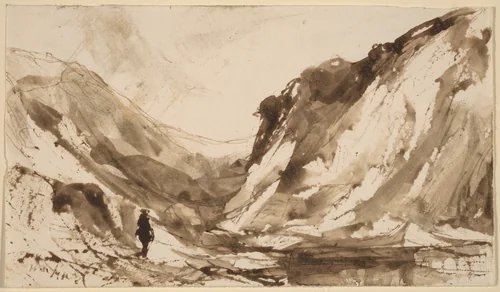
Hart demonstrates exceptional control in rendering geological drama. Works like Mountain Landscape, Stream and Waterfall and Deep Valley in Mountainous Landscape highlight his ability to capture the immense scale of the American wilderness, emphasizing rugged textures and the interplay of water and stone. This sensibility aligns him with contemporary artists who sought to define a unique American aesthetic through the celebration of untouched natural environments.
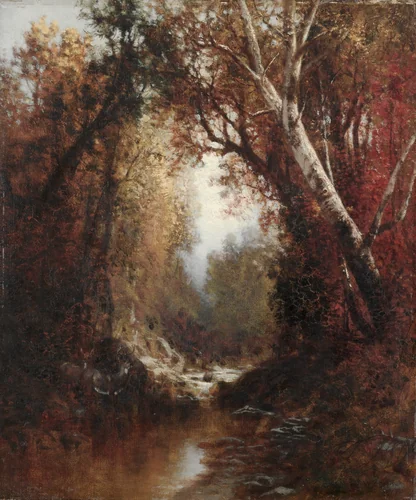
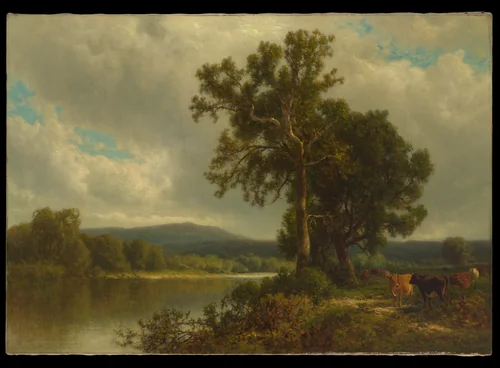
A particular curiosity surrounding the artist is the multiplicity of namesakes active during the period, making definitive personal biography challenging; yet, the integrity of this William Hart’s artistic production speaks for itself. His specialized body of drawings and William Hart paintings, meticulously preserved by public domain collections, ensures his continued relevance. Today, thanks to institutional preservation efforts, the detailed studies he created are widely accessible, allowing scholars and enthusiasts alike to study his technique through high-quality prints and downloadable artwork.
Source: Wikipedia · CC BY-SA 4.0