William Guy Wall
William Guy Wall (1792–1864) holds a crucial position among early American landscape painters, recognized for defining the visual vocabulary of the nascent Republic’s major port cities. Born in Ireland, Wall established himself quickly upon his arrival in the United States, primarily focusing his energies during the period 1792 to 1821 on documenting the dynamic topography of New York and its environs.
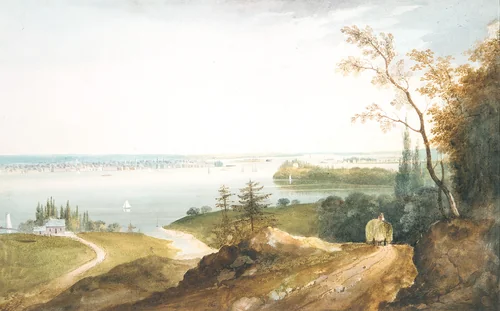
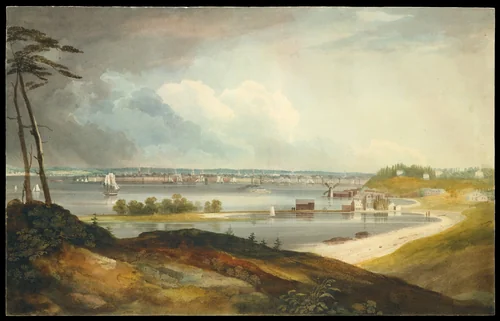
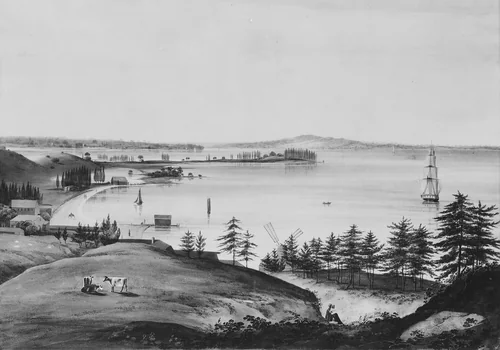
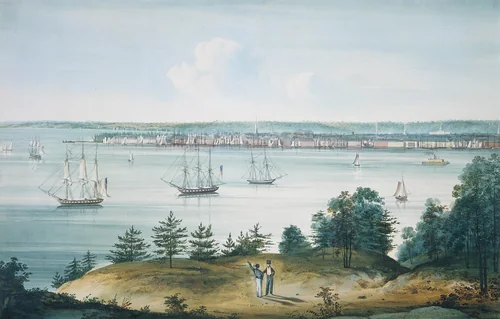
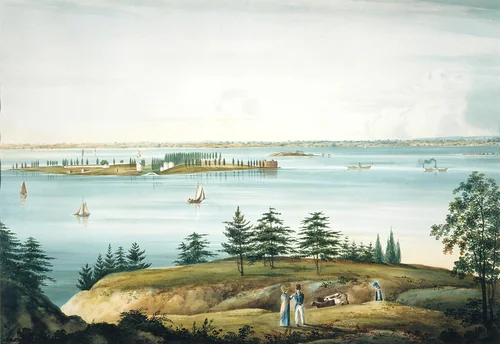
Wall’s work transcends mere topographical record. Instead, he employed a keen eye for dramatic composition, rendering some of the earliest and most evocative panoramic views of the growing metropolis. His most celebrated achievements are a series of grand vistas of the Bay of New York, captured from strategic, elevated viewpoints. Works such as New York from the Heights near Brooklyn and The Bay of New York Looking to the Narrows and Staten Island, Taken from Brooklyn Heights served as seminal documents for historians and powerful advertisements for the city’s ambition.
What separates Wall’s approach from simple map-making is his sophisticated handling of light and atmosphere. His careful placement of masts, sails, and human activity transforms the industrial harbor into a breathtaking panorama, revealing the vitality of the city beneath its functional necessity. It is an understated observation that Wall understood the artistic potential of the harbor better than many of his contemporaries; he successfully turned a common ferry route into an epic, defining visual experience.
The enduring appeal of William Guy Wall paintings rests on this precise balance of clarity and drama. His relatively compact output secured his reputation and placed his work immediately into major institutional collections, including the Metropolitan Museum of Art. These definitive city portraits, often now digitized, allow scholars and enthusiasts access to high-quality prints for study and appreciation. Given the passage of time and their historical significance, many of his most important works are now in the public domain, guaranteeing that Wall’s authoritative vision of early New York remains accessible to the modern viewer.
Source: Wikipedia · CC BY-SA 4.0