William Glackens
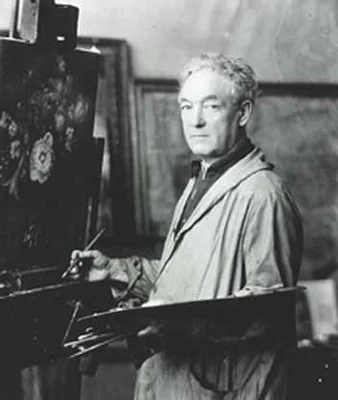
William Glackens (1870-1938) holds a seminal position in early twentieth-century American art, primarily known as a co-founder of the Ashcan School. This influential group of painters championed a new American realism, staunchly opposing the conservative aesthetic boundaries enforced by institutions like the National Academy of Design. Glackens and his contemporaries redefined artistic subject matter by focusing their lenses on the unvarnished realities of modern urban life.
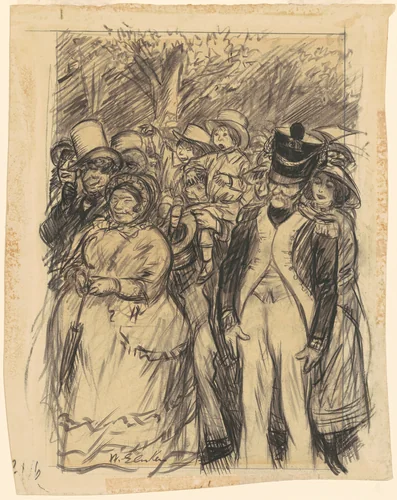
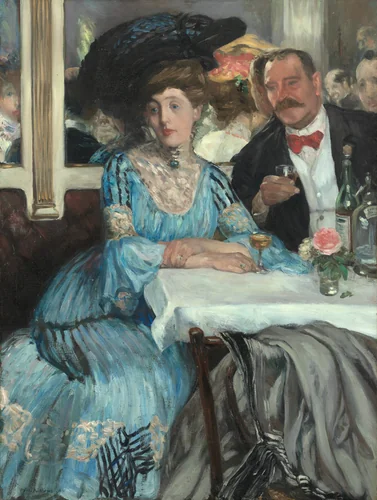
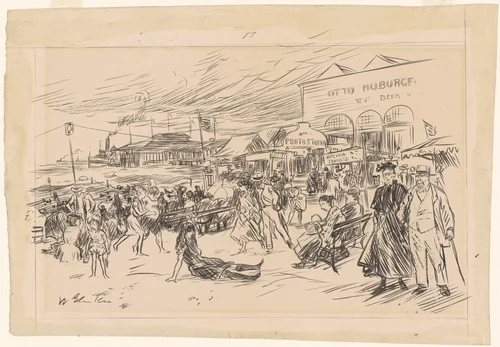
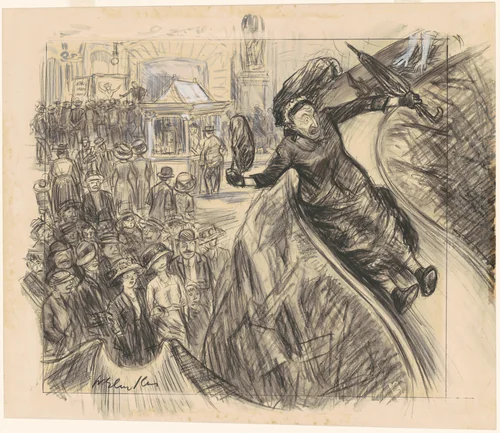
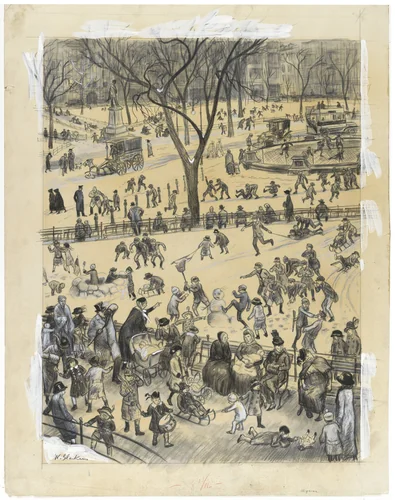
His early career as a newspaper and magazine illustrator, a practice he maintained for much of his life in both Philadelphia and New York, honed his ability to capture swift, authentic human interactions. This grounding gave his William Glackens paintings a journalistic immediacy, initially establishing his reputation with dark-hued, vibrantly painted scenes depicting the daily bustle of pre-WWI streets. Works such as At Mouquin's and the studies like Papa, Carry Me—Take Me Up in Your Arms capture the gritty energy of the nascent American metropolis with forceful brushwork.
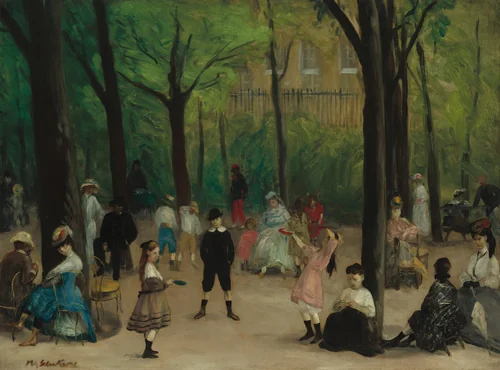
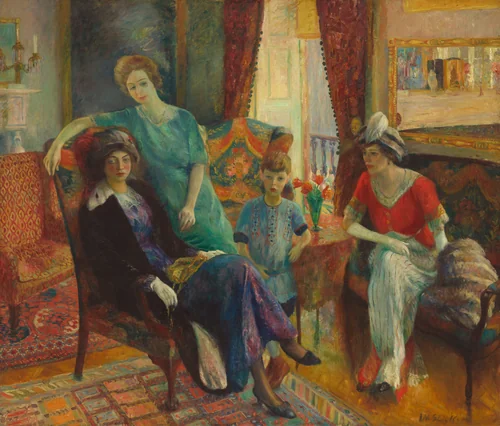
Yet, his artistic trajectory underwent a decisive and joyous shift. In his mature work, Glackens embraced a considerably brighter, almost purely hedonistic palette, reflecting the strong influence of French Impressionists, particularly Pierre-Auguste Renoir, evident in later pieces like Luxembourg Gardens. This move transformed his earlier social realism into an extended, optimistic observation of leisure and pleasure.
Beyond his visible achievements as a painter, Glackens played a crucial, if often understated, role in shaping America's appreciation of radical modern European painting. He was personally instrumental in assisting collector Albert C. Barnes in the acquisition of the European canvases that ultimately formed the nucleus of the famed Barnes Foundation in Philadelphia. It is a striking historical irony that the artist who championed the gritty, democratic subject matter of the Ashcan School also served as a critical conduit for some of the world’s most sophisticated Impressionist and Post-Impressionist masterpieces.
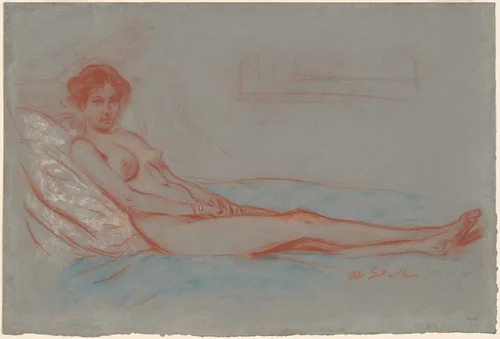
Glackens' enduring legacy ensures that his work is maintained in major institutions, including the Museum of Modern Art, the Art Institute of Chicago, and the National Gallery of Art. Today, much of his extensive oeuvre, including the notable Reclining Female Nude, is widely available as downloadable artwork, allowing researchers and collectors access to high-quality prints that document his pivotal role in moving American painting from the grimy street corners of realism toward the vibrant light of colorism.
Source: Wikipedia · CC BY-SA 4.0