William Etty
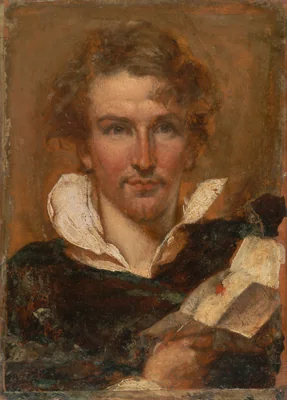
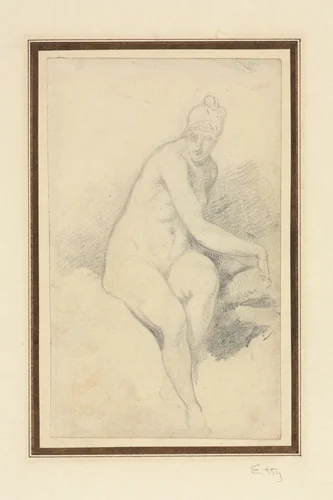
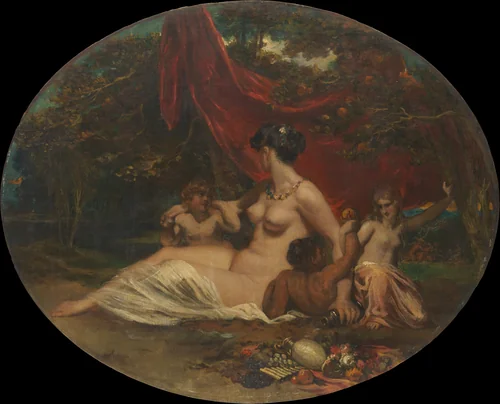
William Etty (1787-1843) occupies a seminal position in the trajectory of British art, distinguished primarily as the first significant painter in the nation’s history to dedicate his practice substantially to the depiction of the nude figure and the still life. His commitment to grand historical compositions featuring the human form challenged contemporary tastes and secured his reputation as a master draftsman and colorist.
Born in York, Etty’s early life suggested little of his future artistic prominence. He left formal education at age twelve to commence a seven-year apprenticeship as a printer in Hull. This rigorous training in practical mechanics and layout concluded in 1807, prompting his immediate move to London and enrollment in the prestigious Royal Academy Schools. While there, he studied under Thomas Lawrence, developing his technique primarily through copying the works of established masters.
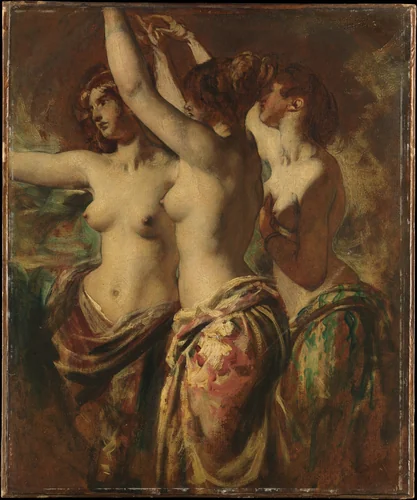
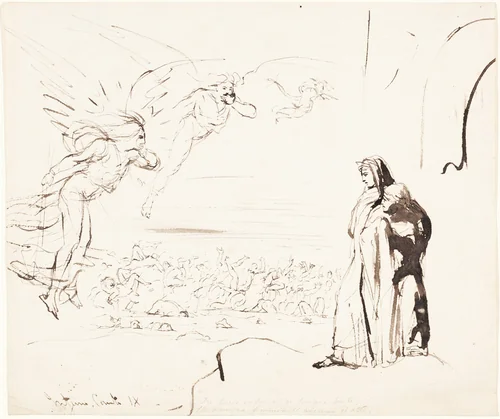
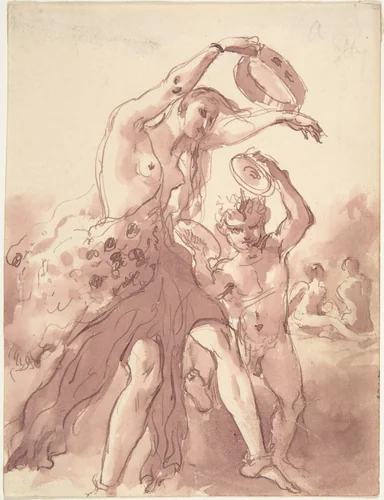
Etty quickly earned the profound respect of his peers at the Royal Academy of Arts for his technical command of anatomy and, specifically, his unparalleled ability to render realistic, luminous flesh tones. This technical innovation became his hallmark, lending remarkable vitality to compositions such as Bacchante and his ambitious Scene from the Inferno (canto IX). Yet, despite this high institutional esteem, his initial years in London were marked by surprisingly little critical or commercial success, a delay that perhaps spurred his relentless devotion to studio work.
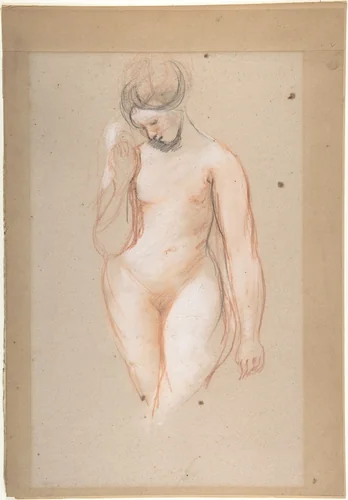
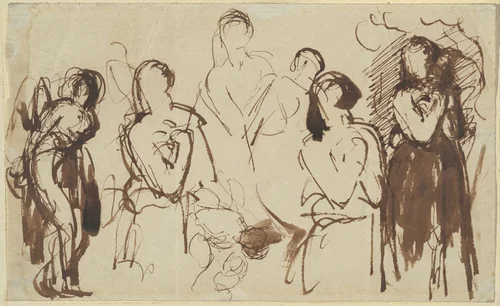
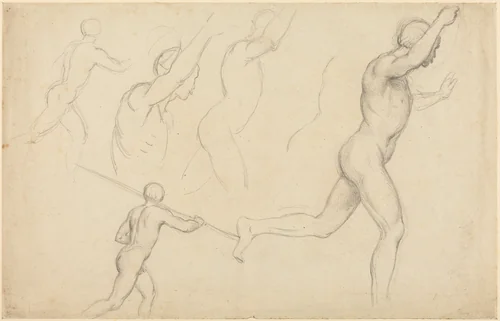
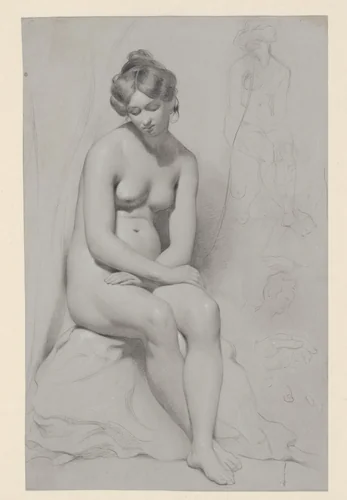
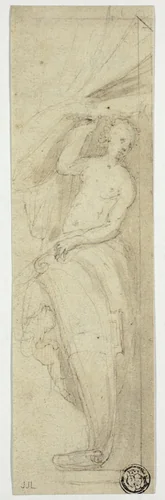
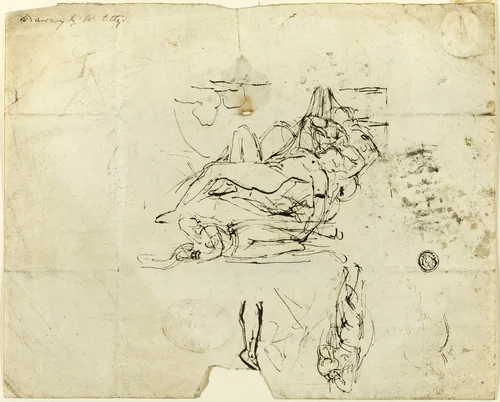
His dedication to mastering the figure, demonstrated in studies like Studies of Men Running and the observational drawing Zittend naakt vrouwelijk model met hoog kapsel, ernaast nogmaals geschetst, ultimately solidified his legacy. Etty championed life drawing, ensuring the figure remained central to academic training throughout the mid-nineteenth century. Today, many important William Etty paintings and studies are cornerstones of major institutional collections worldwide, including the National Gallery of Art and the Cleveland Museum of Art. Owing to the works entering the public domain, a wide array of his drawings and compositions are available globally, providing access to high-quality prints for researchers and art enthusiasts alike.
Source: Wikipedia · CC BY-SA 4.0
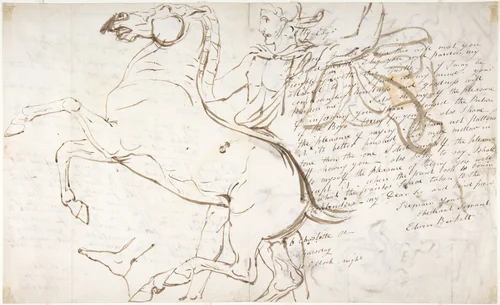
![Study of a Horse [verso] by William Etty, drawing, 1807-1849](https://img.artbee.org/f09f5d7f-5ba4-4edd-81ac-38296978619e/small.webp)
![The Horse of Selene from the Elgin Marbles [recto] by William Etty, drawing, 1807-1849](https://img.artbee.org/a7ef8c65-1d27-4986-9b58-87f6156e717c/small.webp)