William England
William England (active 1850-1862) stands as a highly successful commercial and technical innovator within mid-Victorian photography. Operating during a period when foreign travel was both romanticized and increasingly accessible, England specialized almost exclusively in stereoscopic photography. This format, which delivered a vivid, three-dimensional illusion when viewed through a specialized device, became the defining mass-market photographic medium of the 1850s and 1860s, offering the illusion of presence to thousands who might never leave England.
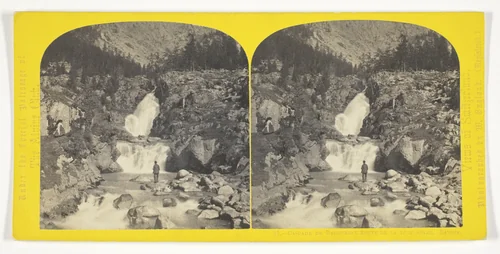
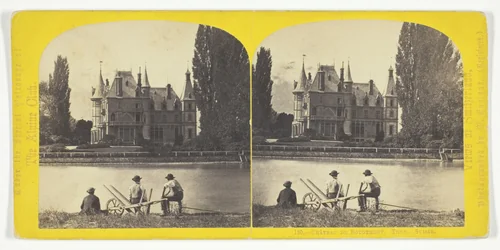
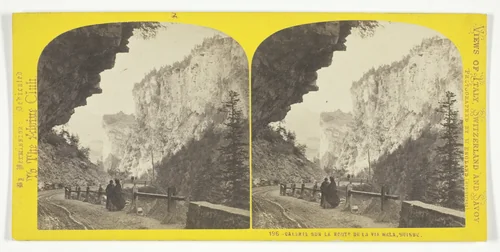
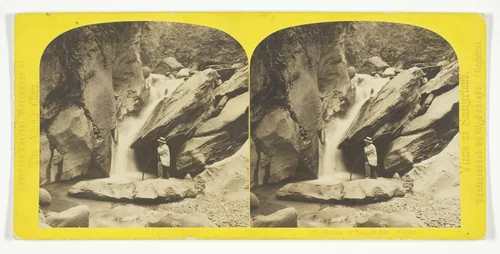
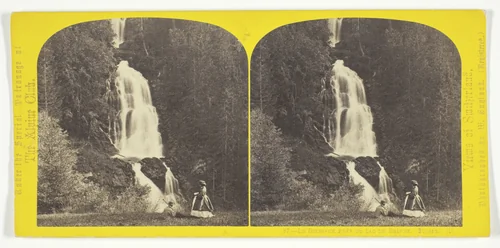
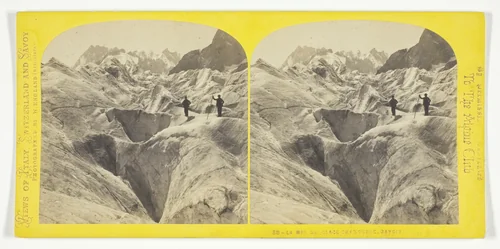
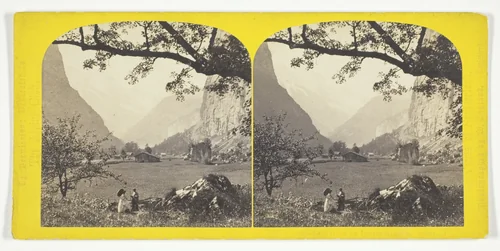
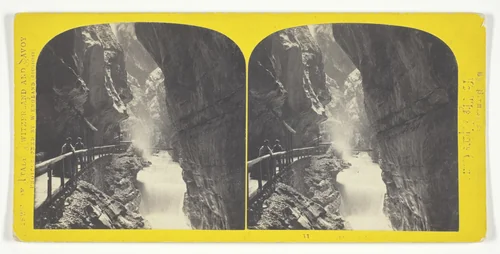
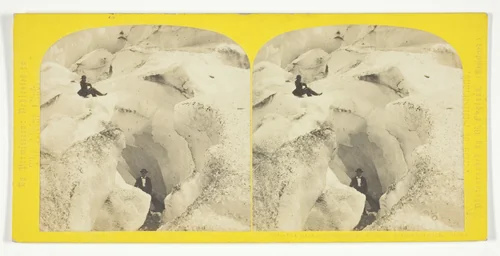
England’s extensive photographic output was concentrated almost entirely on sublime, often dramatic, European scenery. His major series, including Views of Switzerland and Views of Italy, Switzerland and Savoy, documented the rugged grandeur of the Alps and the picturesque towns that clustered around them, appealing directly to the burgeoning tourist market and the era's fascination with nature's overwhelming power. Works like Cascade de Barberine de la Tete Noire. Savoie and the precisely framed Chateau de Rougemont. Thun. Suisse, No. 120 exemplify his technical mastery in rendering complex lighting and expansive vistas onto glass plates.
To maintain the scale of his commercial operations, England executed demanding photographic excursions throughout Switzerland, Savoy, and Italy, producing the detailed plates needed for thousands of commercial copies. While many contemporaries focused on formal portraiture or architectural studies, England embraced the logistical challenges of exterior work and high-altitude documentation. The scale of this rigorous production suggests that, for the Victorian public, owning a physical, three-dimensional "view" of a distant peak or gorge was regarded as almost essential as visiting it.
Though his active career appears to have spanned only about twelve years, England's contributions established a significant precedent for documentary travel imagery. His work, characterized by precise composition and rich tonal contrasts, is recognized today as foundational museum-quality material. Original William England prints are held in major institutional collections, including the Museum of Modern Art, the Art Institute of Chicago, and the Metropolitan Museum of Art. Because many of these historic photographs are now in the public domain, they are increasingly accessible as downloadable artwork, allowing a new generation to appreciate the technical skill required to produce such consistently high-quality prints in the infancy of the medium.
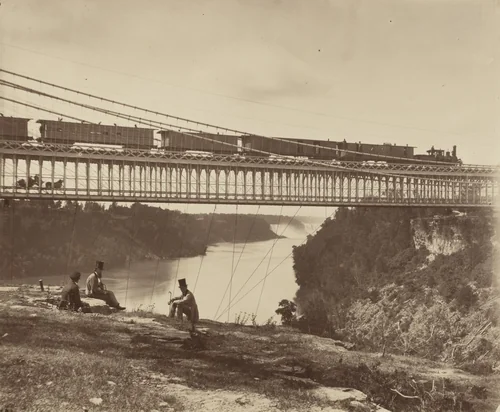
![[86 Stereographic Views of The International Exhibition of 1862] by William England, photograph, 1862](https://img.artbee.org/64d5f49b-0048-4427-9d34-c71d03152e16/small.webp)