William Edward Kilburn
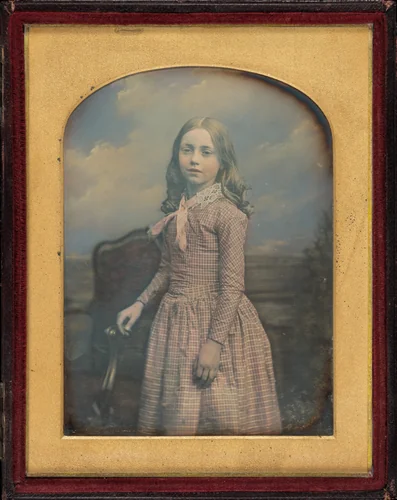
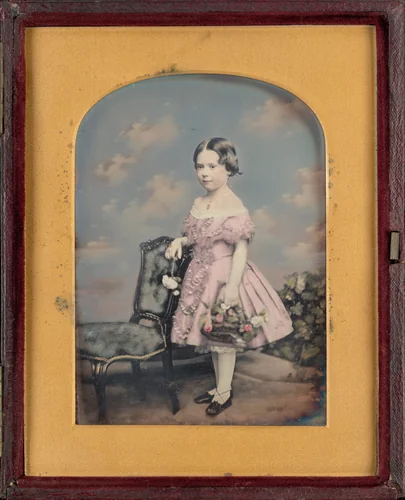
William Edward Kilburn (active 1840-1860) was a pivotal early practitioner of photography in England, distinguished primarily by his privileged access to the highest echelons of Victorian society. His work, concentrated during the crucial nascent decades of the photographic medium, provides rare, intimate documentary insights into the British monarchy and the influential figures orbiting the Crown, an achievement few contemporaries could claim.
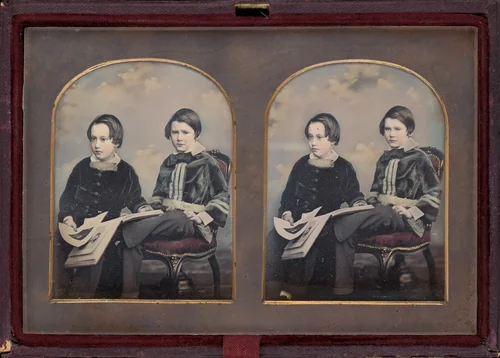
Working primarily during the 1840s and 1850s, Kilburn gained renown for his ability to translate the rigidity of formal portraiture into the swift immediacy offered by the camera. Though the complete extent of his surviving oeuvre remains modest, the quality and historical weight of the documented images secure his place in the history of early British photography. His technical proficiency, crucial for mastering the challenging early processes of the time, is evident across his varied subject matter, from the gentle study of youth captured in Portrait of Two Boys to the detailed clarity required for political figures.
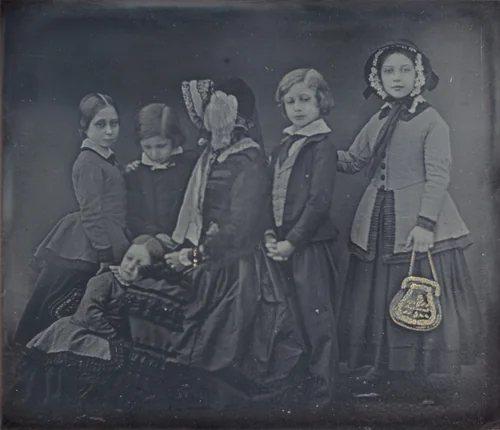
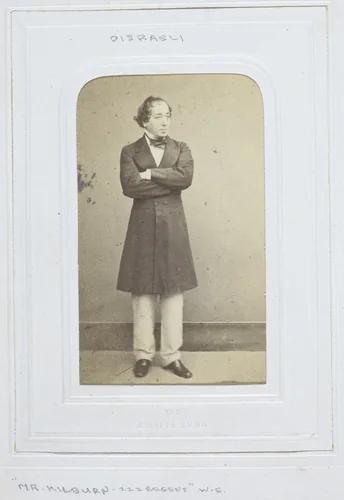
Kilburn documented important individuals of the age, notably producing a strong portrait of the future Prime Minister, Benjamin Disraeli. However, his enduring significance rests on his work featuring the royal family. His iconic photograph, Queen Victoria and Children, offers a remarkable deviation from the often-stiff formality associated with state-commissioned paintings. It presents the sovereign not in the regal isolation of power, but as a relatable, domestic figure surrounded by her family. This willingness to show the monarch in a relaxed, familiar context was a sophisticated manipulation of public image, facilitated by the new speed and perceived veracity of the photographic process.
It is perhaps telling that while painters frequently struggled to secure sittings with the busiest people in the Empire, the relative swiftness and novelty of Kilburn’s studio practice allowed him to secure these unique private moments for posterity. Today, these historically invaluable records are held in major public collections, including the Art Institute of Chicago and the National Gallery of Art. The accessibility of high-quality prints derived from these institutional holdings means that the artistic and documentary legacy of William Edward Kilburn prints continues to inform scholarship, with many of his works having subsequently entered the public domain.
Source: Wikipedia · CC BY-SA 4.0