William Dunlap
William Dunlap (1766-1839) stands as a foundational polymath in the early American cultural landscape. While primarily revered as the pioneer who shaped American theater in its nascent decades, his parallel career as a visual artist and historian provides an essential, documented record of the nascent nation’s intellectual elite.
Dunlap’s influence on performing arts was comprehensive. He managed two of New York City’s most significant early venues, the John Street Theatre and the Park Theatre, serving simultaneously as a prolific playwright, actor, and the era's principal chronicler of the stage. Yet, despite this demanding schedule and his crucial role in establishing professional dramatic literature, Dunlap maintained an active painting practice throughout his lifetime, specializing in portraiture. It is a subtle observation that the clarity of his output persisted, notwithstanding the considerable professional and physiological challenge of having lost an eye in childhood.
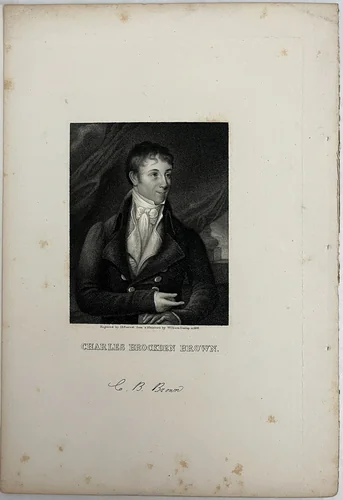
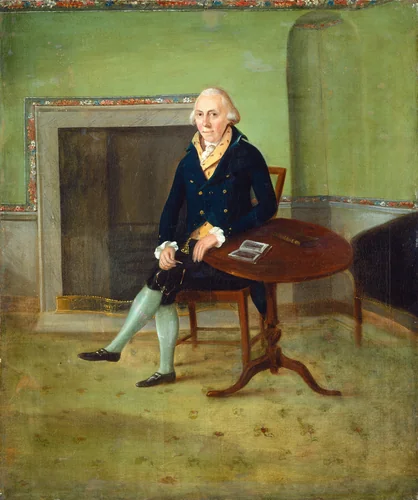
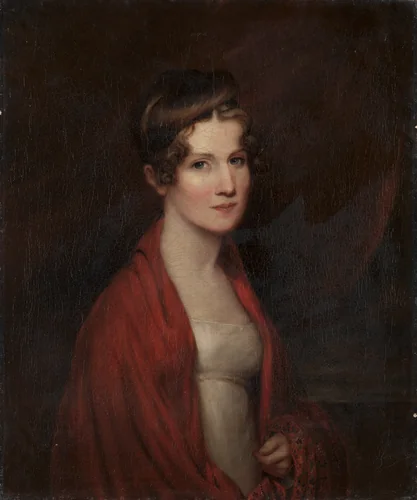
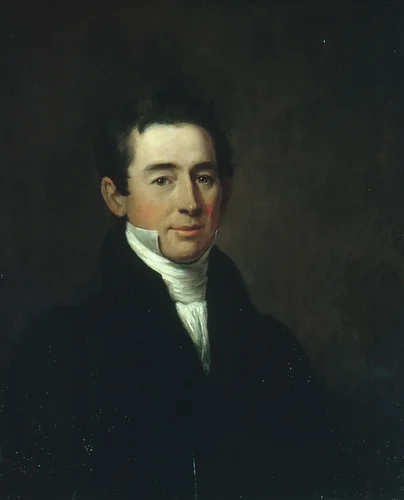
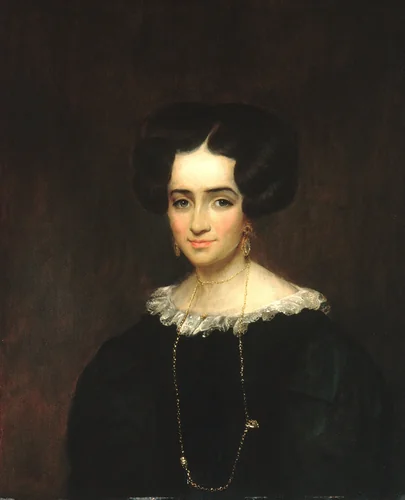
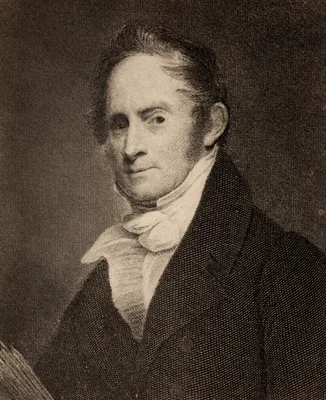
His extant artistic works, created during a pivotal period of American history, function less as aesthetic experiments and more as invaluable historical documents. Dunlap meticulously recorded the likenesses of influential figures such as the novelist Charles Brockden Brown, the prominent jurist Samuel Griffin, and the noted society figure Mary Fairlie Cooper. These intimate portraits, characterized by a directness of gaze and precise rendering, offer crucial insight into the personalities shaping the Federalist era.
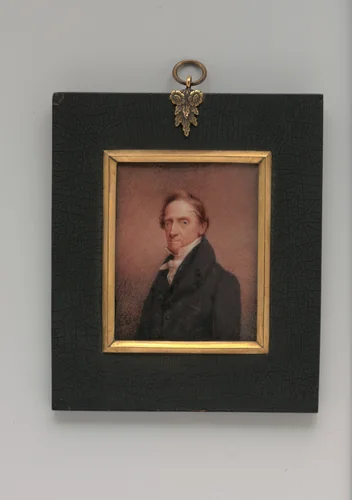
The continuing historical significance of Dunlap’s visual archive is attested by its permanent presence in major institutions, including the Metropolitan Museum of Art, the Art Institute of Chicago, and the National Gallery of Art. Works like the compelling Self-portrait retain a unique museum-quality gravity, reinforcing his role as an insightful observer of his own time. Today, surviving William Dunlap paintings are highly sought after by collectors, while key examples, often reproduced as high-quality prints, circulate widely. For researchers and enthusiasts interested in early American portraiture, certain William Dunlap prints are increasingly available as downloadable artwork, ensuring that the legacy of this multifaceted artist remains accessible for study and appreciation.
Source: Wikipedia · CC BY-SA 4.0