William Alfred Delamotte
William Alfred Delamotte (active 1795-1805) was an English artist whose brief, documented career focused primarily on the meticulous preparation and execution of drawings and prints. Though historically less heralded than contemporaries working on a monumental scale, Delamotte’s enduring significance is evidenced by the permanent inclusion of his graphic works in major North American institutions, including the Art Institute of Chicago, the National Gallery of Art, and the Cleveland Museum of Art. His short period of activity spans a pivotal moment in English art history, where sketching directly from nature was quickly replacing idealized studio compositions, laying the groundwork for nineteenth-century naturalism.
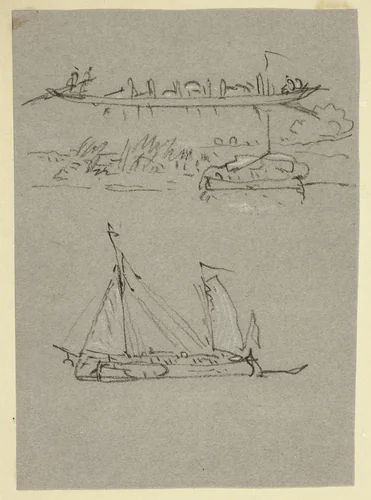
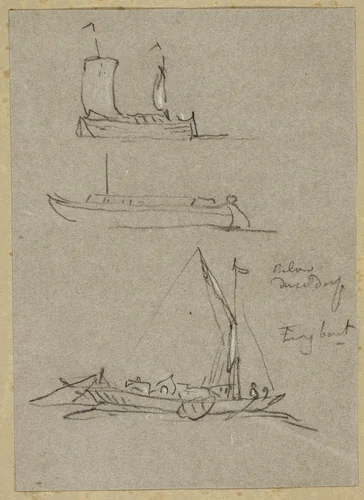
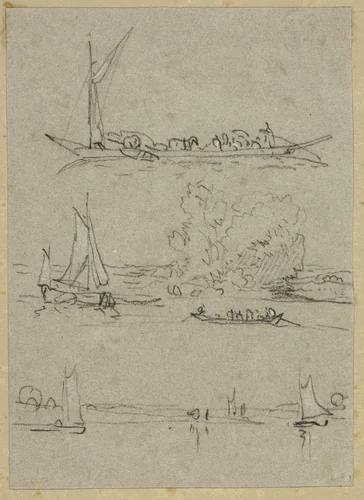
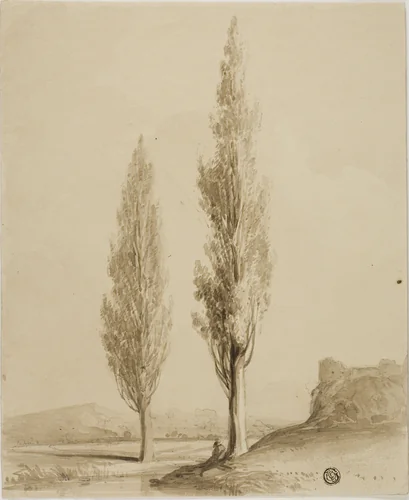
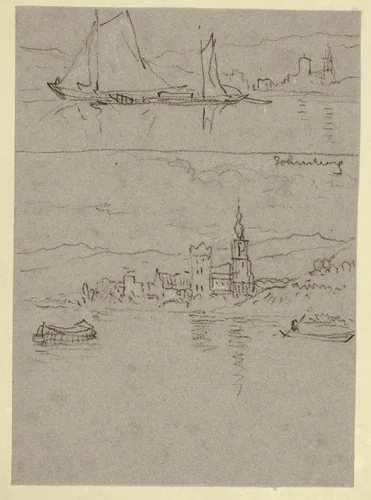
Delamotte’s extant output is dominated by intimate, observational studies of geography and topography. His concentration on riverine settings suggests an artist engaged directly with the European travel tradition of the late eighteenth century, producing detailed visual documents suitable for engraving or publication. Works such as Three Sketches of Dusseldorf River Boats and the composite study Two Poplars and Seated Figure Beside Stream demonstrate a masterful control of line and subtle atmospheric perspective. It appears that Delamotte, unlike many of his touring peers obsessed with classical ruins, was particularly fascinated by the functional, workhorse vessels of the continental waterways, giving his graphic studies an unusual sense of modern utility. This precision in draftsmanship was critical, as the drawings often served as the immediate template for subsequent etchings or engravings.
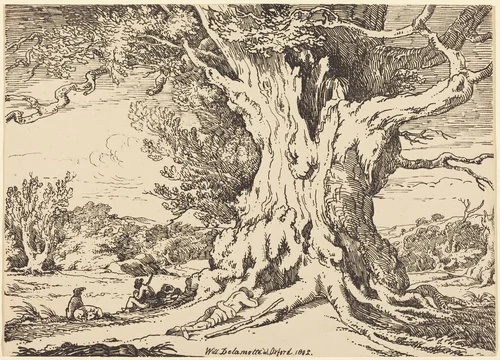
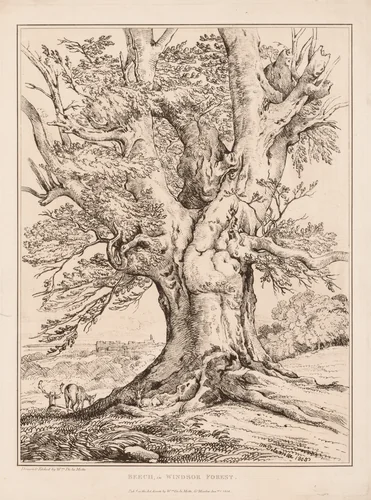
The conversion of his finished drawings into published editions was central to Delamotte’s output, cementing his place among the era’s skilled printmakers. The surviving inventory of his works, emphasizing drawings over finished William Alfred Delamotte paintings, underscores his primary identity as an artist focused on graphic reproduction and detailed preparatory study. Though Delamotte's brief activity period limits the breadth of his catalogue, the surviving examples are considered crucial artifacts of the transitional era between neoclassical landscape conventions and the empirical naturalism later favored by the Romantics. Because many of these historic works have since entered the public domain, they offer scholars and enthusiasts access to high-quality reproductions of 18th-century landscape studies, ensuring the continued study of William Alfred Delamotte prints.
Source: Wikipedia · CC BY-SA 4.0