Willem van de Velde the Younger
Willem van de Velde the Younger (1633-1700) stands as the defining marine painter of the Dutch Golden Age, successfully translating the immense complexity of naval architecture and the mercurial nature of the sea into compositions of rare authority and atmospheric depth. Active throughout the latter half of the seventeenth century, his career established the benchmark for seascapes, a genre of immense national significance to the Netherlands.
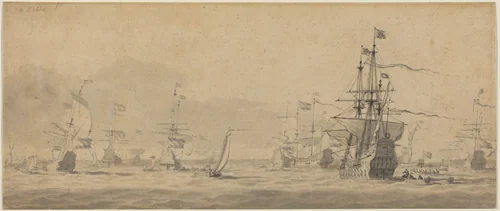
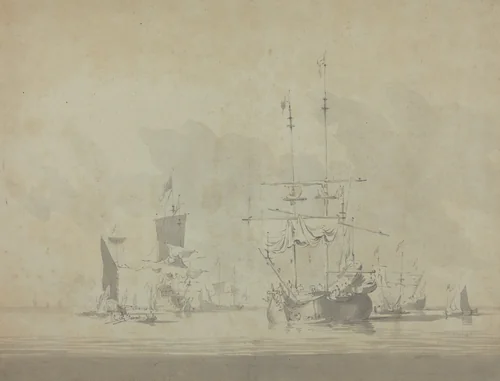
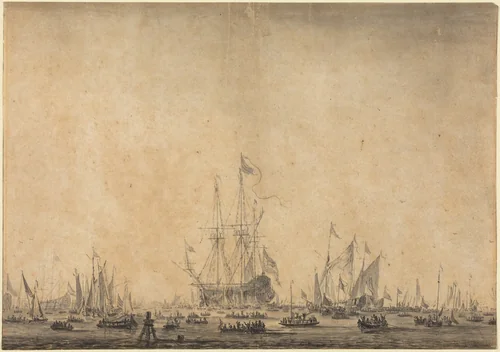
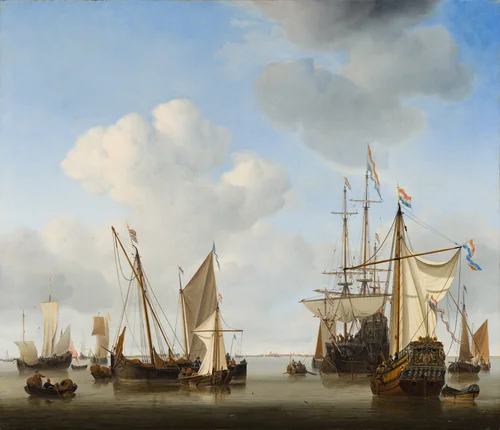
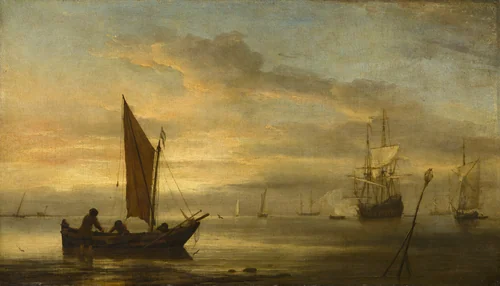
His artistic path was shaped by a unique family specialization. He inherited the craft from his father, Willem van de Velde the Elder, who often utilized a pen-painting technique and specialized in documenting naval events. This close association provided the Younger with an early and rigorous education in the subject matter, allowing him to perfect the oil painting technique in depicting ships. While his brother, Adriaen van de Velde, focused on peaceful landscapes and figural studies, the Younger dedicated himself almost exclusively to the visual documentation of maritime power, commerce, and daily life on the water, often rendered with almost photographic precision, as seen in works like Ships in the Roads.
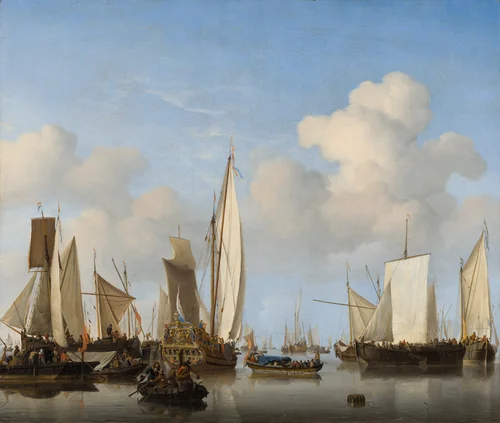
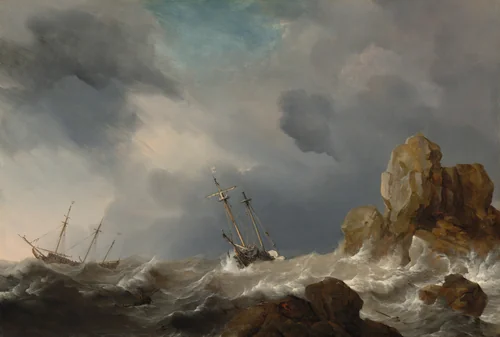
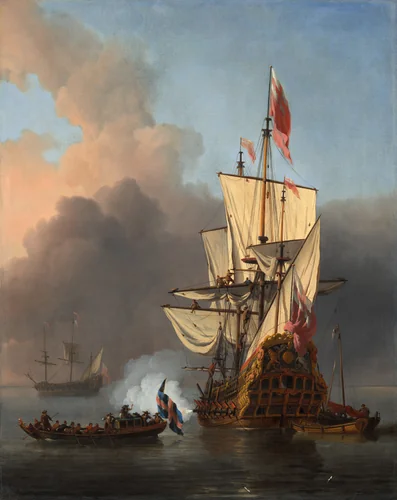
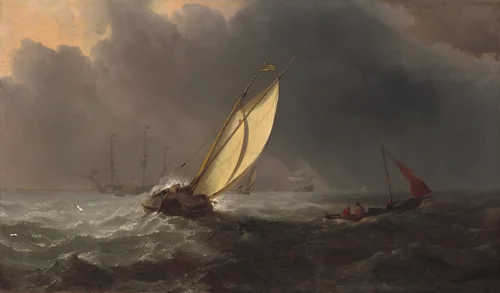
Van de Velde the Younger excelled at capturing the fleeting qualities of light and weather, differentiating between the smooth silence of a calm port and the dynamic energy of a storm-tossed fleet. His paintings are characterized by their technical rigor, particularly the detailed rendering of rigging and hull structures, which he managed to integrate seamlessly into evocative atmospheric settings. It is often noted that few artists have managed to depict moving water with such believable transparency and motion. This expertise made him highly sought after, leading to representation in major collections globally, including the Mauritshuis and the National Gallery of Art.
Today, the enduring appeal and technical mastery found in Willem van de Velde the Younger paintings ensure their continued scholarly interest. Due to their age and historical provenance, many of his most significant works are now in the public domain, allowing enthusiasts to study these masterful scenes. The continued popularity of these views means they are frequently sought after as high-quality prints, offering access to the visual history of seventeenth-century naval might.
Source: Wikipedia · CC BY-SA 4.0