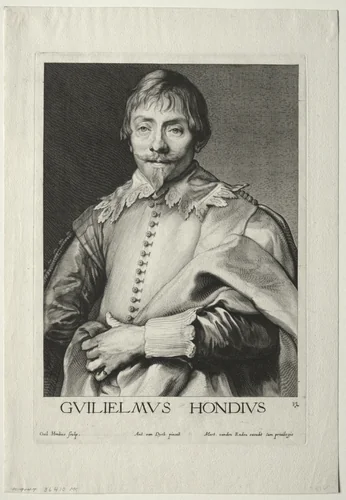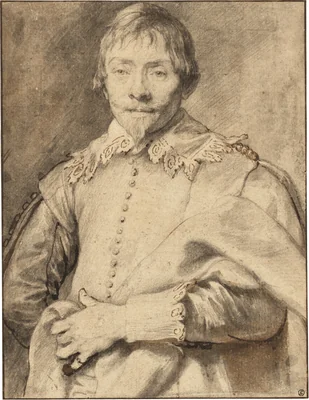
Willem Hondius
Willem Hondius (also known as Willem Hondt) was a pivotal Dutch Golden Age figure whose career trajectory led him to artistic prominence outside the familiar centers of the Low Countries. Active between 1597 and 1628, Hondius was recognized primarily as an exceptionally skilled engraver and cartographer, though he also worked as a painter. Unusually for a Dutch master of the era, he spent the majority of his working life based in Poland, serving as a vital link between the sophisticated printmaking techniques of the Netherlands and the demands of Central and Eastern European courts.
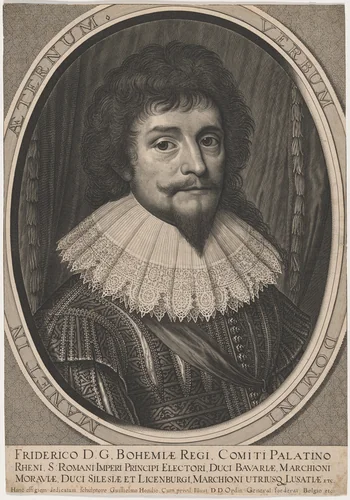
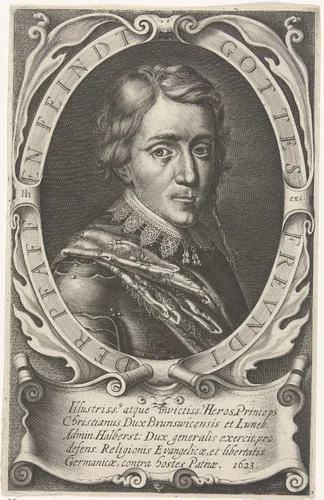
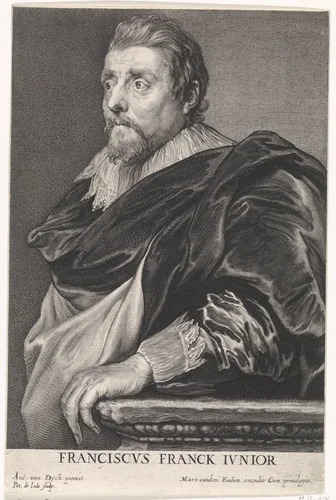
Hondius demonstrated a precise, highly detailed style essential for translating the authority and presence of sitters onto copperplate. His surviving works, which are predominantly formal portraiture, provide important visual documentation of early 17th-century European political and cultural figures. Notable pieces include the stately study of Frederick of Bohemia and the striking Portret van Christiaan, hertog van Brunswijk-Wolfenbüttel. His output extended beyond courtly figures; he also captured fellow professionals, evidenced by his masterful engraving of Portret van Frans Francken (II), suggesting a deep and ongoing engagement with contemporary artistic circles despite his geographical distance from Antwerp.
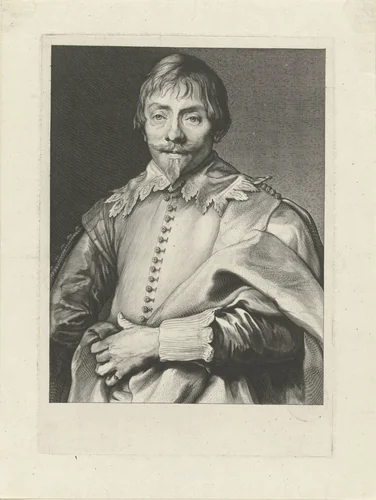
The inclusion of two distinct self-portraits in his known catalog, including the eponymous Portret van Willem Hondius, confirms the importance he placed on documenting his own persona—a trait often shared by the most successful court artists who needed to assert their status through visual identity. His mastery was not confined merely to fine art; as a recognized cartographer, his precision also extended into the accurate mapping of geopolitical boundaries, underscoring the era's fluid definition between highly technical craft and creative achievement.
Today, Hondius's body of work resides in major international collections, including the Rijksmuseum, the National Gallery of Art, and the Cleveland Museum of Art, attesting to his enduring historical value. Because many of these historic Willem Hondius prints are now in the public domain, those interested in 17th-century European portraiture can readily access high-quality prints of his detailed engravings, ensuring that the visual record maintained by this Dutch master in Poland remains globally accessible.
Source: Wikipedia · CC BY-SA 4.0