Willem de Heusch
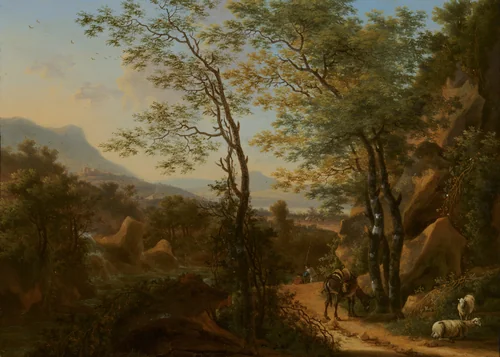
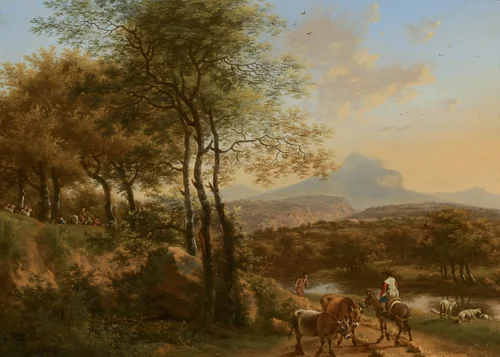
Willem de Heusch (c. 1625-1672) holds an important position within the highly competitive field of 17th-century Dutch landscape art. Active primarily between 1635 and 1660, he distinguished himself not only as a painter but also as a skilled engraver, participating fully in the era’s intensive artistic production. While based in the Netherlands, De Heusch was a dedicated exponent of the Italianate tradition, choosing the idealized, classical vision of the Roman Campagna over the native topography favored by many of his contemporaries.
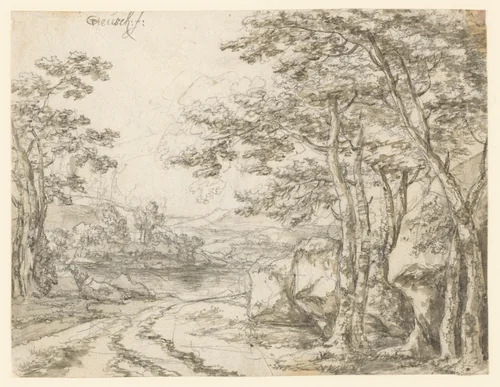
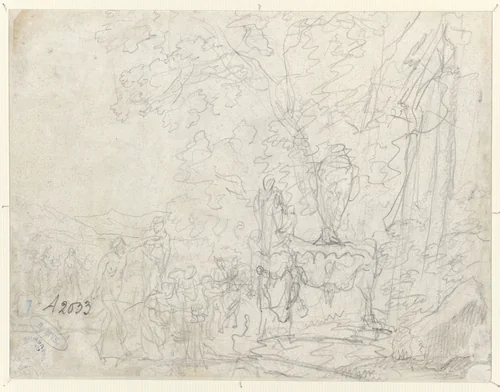
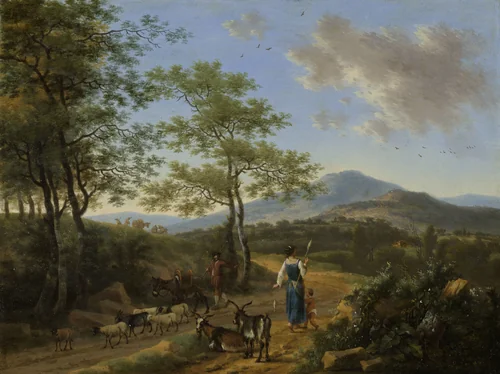
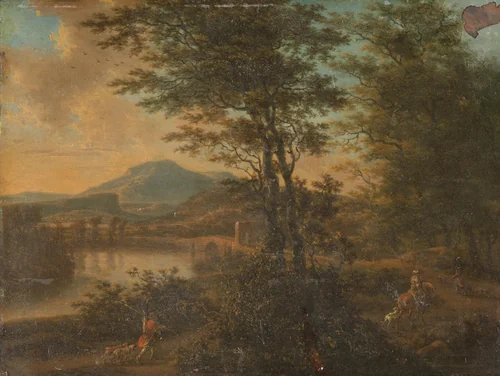
His body of work is characterized by dramatic compositions, often centered on sun-drenched vistas, ruined classical architecture, and the ever-present figures of herdsmen leading their flocks through mountainous terrain. Paintings such as Italian Landscape with Herdsmen and Italian Landscape at Sunset exemplify his mastery of atmospheric effects, using rich, warm color palettes to evoke the Mediterranean light. These calculated scenes balance meticulous detail, evident in preparatory studies like Schets van offerscène, with a grand, sweeping scope seen in canvases like Mountainous Landscape in Italy. Even when addressing local settings, such as Landschap met een weg langs bomen, the underlying classical compositional framework remains evident, filtering Dutch reality through an Italian lens.
De Heusch was part of a major artistic trend where Dutch masters perpetually looked south, integrating the picturesque drama and perceived classical nobility of Italy into the visual language of the Low Countries. It is perhaps an understated observation of the period that, for many Dutch painters, the ideal pastoral scene always seemed to require a few sun-drenched Roman ruins.
The enduring appeal and historical significance of his work are attested by its careful preservation within major Dutch collections, including the Mauritshuis and the Rijksmuseum. These institutions ensure the study of Willem de Heusch paintings continues today. For researchers and enthusiasts alike, the availability of these institutional holdings as downloadable artwork often facilitates the creation of high-quality prints, connecting contemporary audiences directly to the output of this Golden Age master. De Heusch’s legacy is rooted in his successful integration of Dutch technical precision with the idealized romanticism of Italianate classicism.
Source: Wikipedia · CC BY-SA 4.0