Willem Bilderdijk
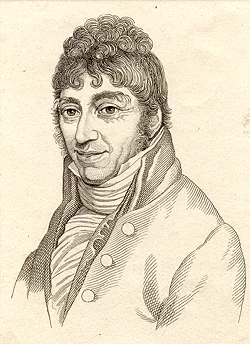
Willem Bilderdijk (1756-1831) is widely remembered as one of the Netherlands' most prodigious polymaths, active simultaneously as an influential poet, historian, lawyer, and linguist. Less recognized, but equally refined, are his contributions to the graphic arts. During the critical period between 1766 and 1781, Bilderdijk channeled his intense intellectual precision into the exacting medium of engraving, producing a select but highly sophisticated body of work focused on ornamental and emblematic illustration.
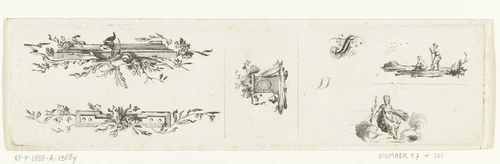
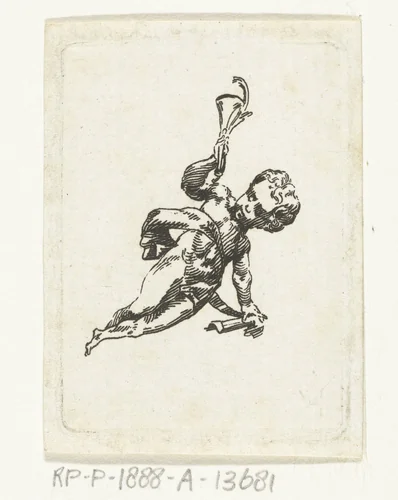
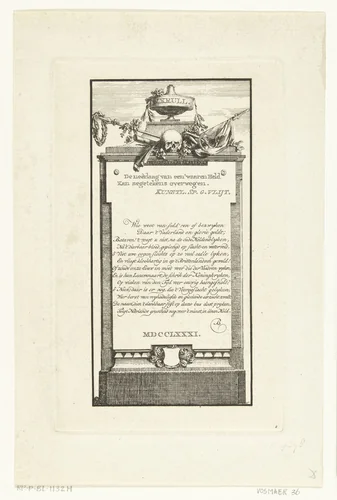
His visual portfolio, preserved today in prestigious collections including the Rijksmuseum, provides a precise window into the Neoclassical aesthetic that dominated late 18th-century Dutch book production. Bilderdijk specialized in the vignette, a form of small ornamental engraving designed to punctuate and enhance printed texts. These pieces functioned not as standalone artworks but as sophisticated visual accessories, offering concise allegorical or mythological commentaries on the surrounding literature.
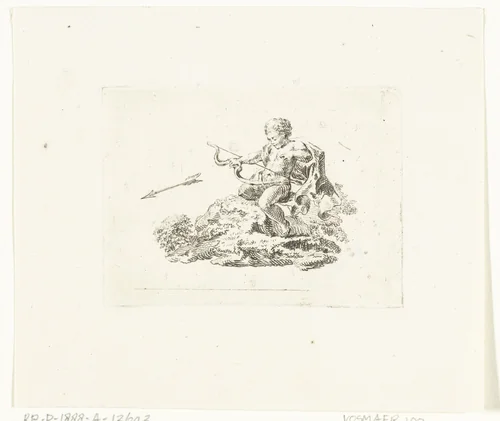
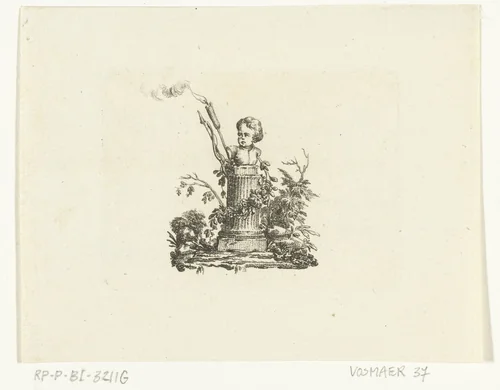
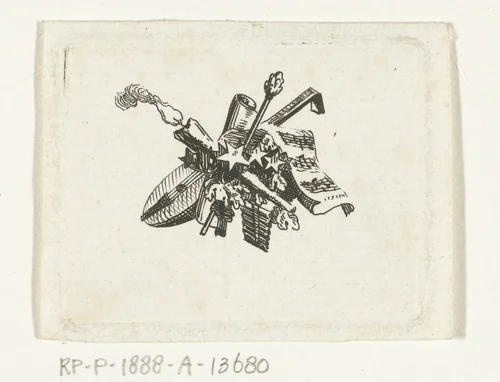
The surviving plates demonstrate a profound adherence to classical iconography and elegant line work. Works such as Vignet met buste van Amor met pijl en boog op zuil and Vignet met Amor die pijl schiet met boog foreground the enduring motifs of classical love and learned pursuit. Other compositions, like the Vignet met citer, brandende fakkel en muziekblad, signal Bilderdijk's own interests in poetry and musical culture, translating scholarly themes into highly decorative graphic forms. The execution required for these small-scale plates speaks to a controlled discipline, suggesting that his background as a legal scholar and linguist informed his approach to visual composition, demanding absolute clarity and formal exactitude in every engraved line.
Bilderdijk’s artistic output is thus best understood as a visual corollary to his literary and scholarly pursuits. The six documented Willem Bilderdijk prints are far more than mere historical curiosities; they stand as prime examples of the era’s decorative arts, bridging the gap between book illustration and independent printmaking. Today, the availability of these high-quality prints through public domain initiatives ensures that this specialized aspect of the polymath’s career remains accessible to researchers and enthusiasts of 18th-century graphic design.
Source: Wikipedia · CC BY-SA 4.0