Wenzel Jamnitzer
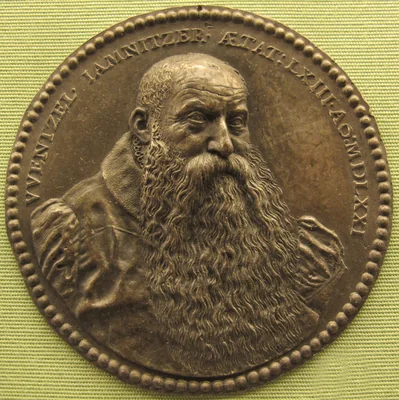
Wenzel Jamnitzer (1508-1585) stands as the definitive German goldsmith of the 16th century, recognized globally for his exacting craftsmanship and innovative designs at the height of the Northern Mannerism period. Working primarily from the artistic hub of Nuremberg, Jamnitzer served as the esteemed court goldsmith to a succession of Holy Roman Emperors, cementing his status at the highest echelons of European patronage.
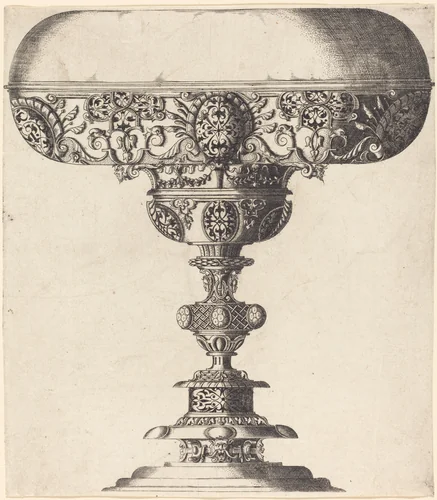
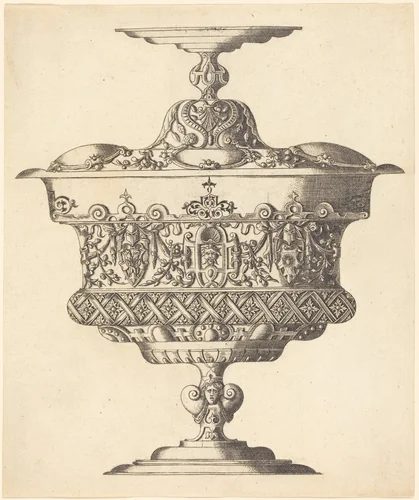
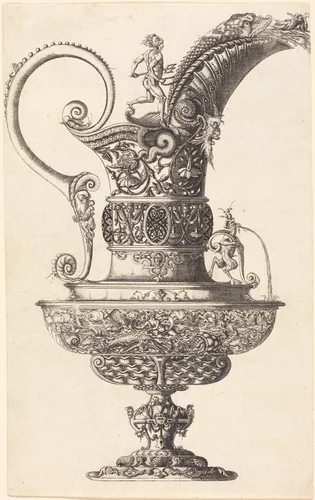
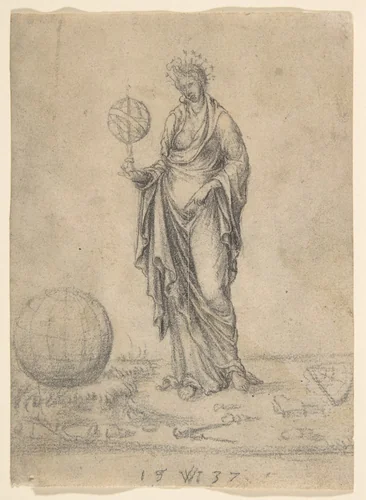
His output was extensive, spanning massive sculptural silverware, complex functional objects, and delicate preparatory works. While the bulk of a court goldsmith’s work was inevitably melted down or repurposed across centuries, the surviving corpus reveals a preoccupation with intricate detail and naturalistic forms. His recorded works include spectacular items such as the celebrated Cup series and ceremonial pieces like the allegorical Urania and the complex Jar with Neptune. These objects illustrate his sophisticated understanding of classical motifs, often executed with a fascinating geometric precision.
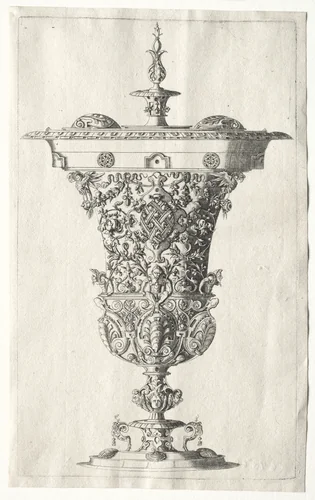
Crucially, Jamnitzer was also a masterful printmaker. Utilizing the relatively nascent technique of etching, he produced detailed designs that served both as proposals for metalwork and as independent artworks, allowing his influence to spread beyond the immediate Imperial court. These two-dimensional works offer invaluable insight into the highly detailed, complex aesthetic favored by Mannerism and the technical innovations of the age.
Jamnitzer’s enduring artistic legacy is confirmed by the presence of his highly refined objects and detailed Wenzel Jamnitzer prints in major institutions worldwide, including the Metropolitan Museum of Art, the National Gallery of Art, and the Cleveland Museum of Art. It is perhaps no surprise that an artist so concerned with perfect, complicated forms and illusionistic effects was also an accomplished mathematician, dedicated to codifying natural geometry in art. Due to the historical nature of his active period, much of the two-dimensional documentation relating to his work, including high-quality prints, is now available in the public domain, allowing contemporary access to the complex geometries and masterful execution he pioneered.
Source: Wikipedia · CC BY-SA 4.0