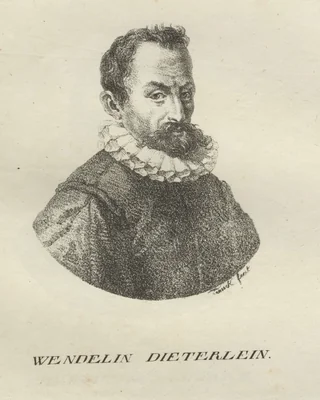
Wendel Dietterlin
Wendel Dietterlin (c. 1550–1599) stands as one of the most inventive exponents of Northern European Mannerism, though his reputation rests almost entirely on his theoretical work rather than his pictorial output. A German painter, printmaker, and architectural theorist, Dietterlin’s designs provided a highly influential, and sometimes unsettling, vision for the future of architectural ornament. While most of the original Wendel Dietterlin paintings he executed over his lifetime are now lost, his enduring legacy is cemented by Architectura, a comprehensive treatise detailing the five classical architectural orders and their dramatic decorative potential.
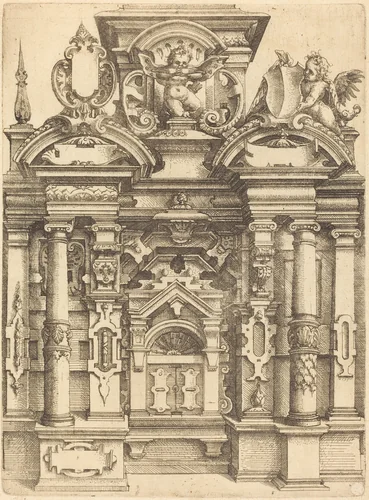
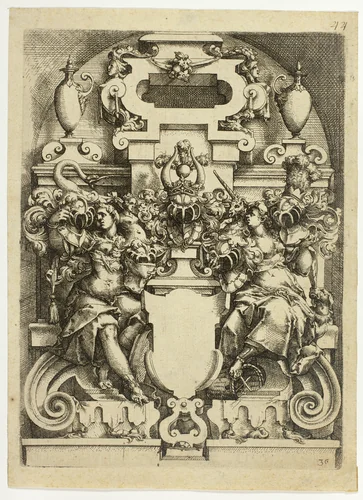
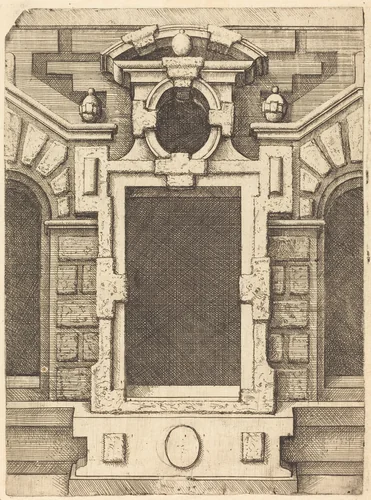
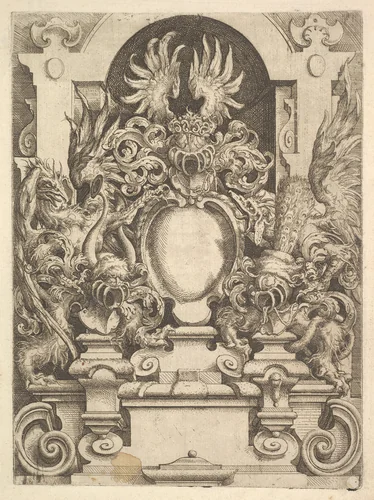
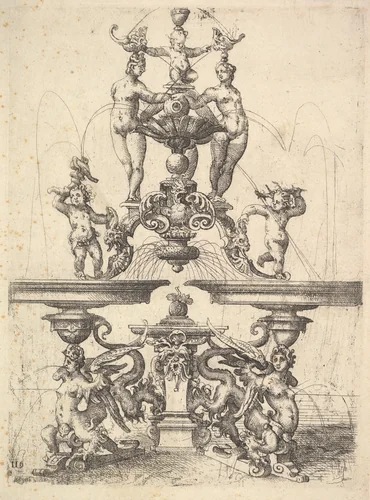
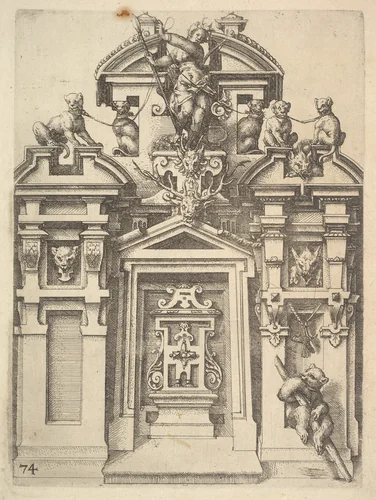
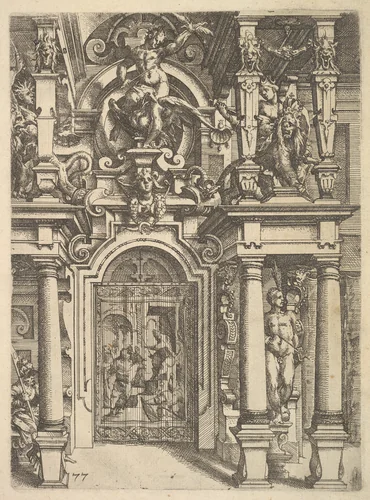
First published in parts beginning in 1593 and expanded into its definitive Nuremberg edition in 1598, Architectura was less a standard instruction manual and more a visual explosion of Baroque potentiality. The approximately 200 plates showcase a dizzying manipulation of inherited classical elements. Dietterlin treated columns, capitals, and pediments not as structural rules, but as plastic forms to be stretched, twisted, and overlaid with grotesque and fantastic imagery. His illustrations, such as the Triumphal Doorway or the design for Fantastic Architecture, plate 36, emphasize theatricality and sculptural complexity over functionality, displaying a profound grasp of the bizarre possibilities inherent in Renaissance vocabulary. The book became a vital resource for European designers and artisans seeking to infuse their work with dynamism and startling complexity across media.
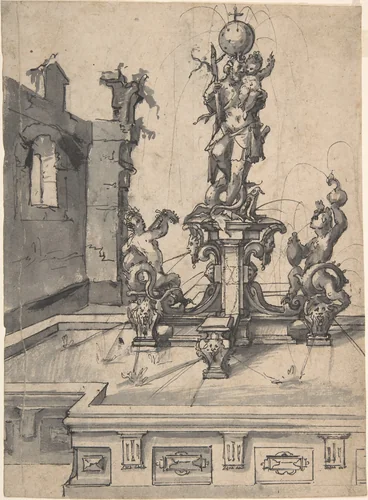
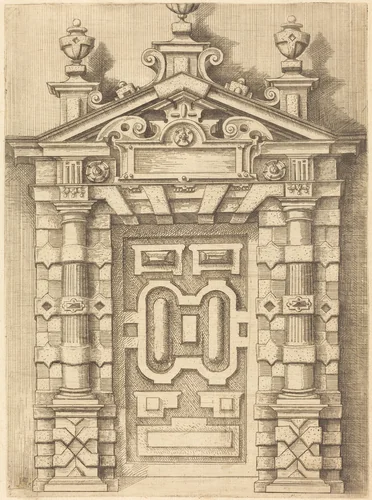
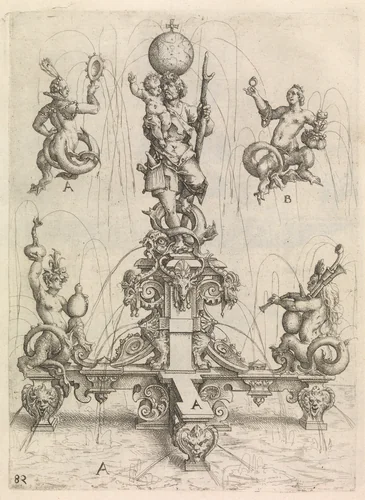
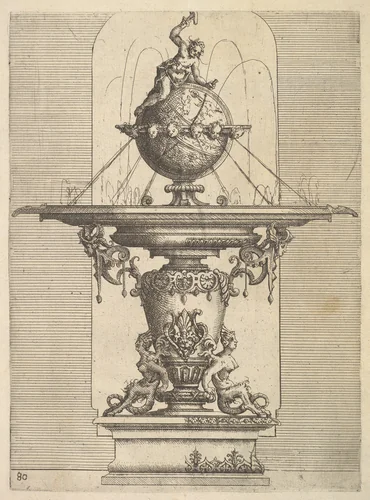
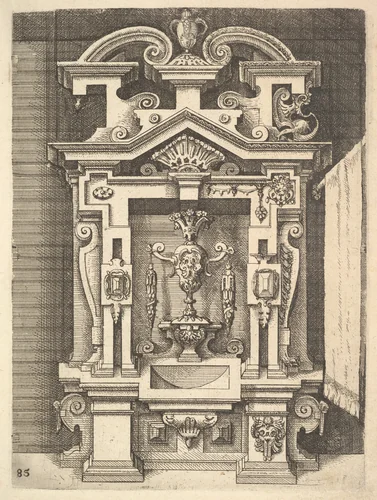
Dietterlin’s prints function as a visual compendium of late-sixteenth century decorative ambition. The precision and invention found in works like the Pedimented Doorway confirm his mastery of the engraver’s technique, transforming highly complex spatial concepts into sharp, reproducible images. It is perhaps telling that Dietterlin often named his most elaborate creations, such as the detailed Design for an Elaborate Fountain Surmounted by a Statue of St. Christopher, after the specific craftsmen who purchased the plates for use, reminding us that these revolutionary designs were also practical blueprints destined for the workshop floor. Today, scholars and artists benefit from the dissemination of high-quality prints stemming from the collections of institutions like the Metropolitan Museum of Art and the National Gallery of Art. These remarkable works are frequently found in the public domain, ensuring Dietterlin's audacious and influential vision remains accessible for study and inspiration.
Source: Wikipedia · CC BY-SA 4.0