Wen Boren
Wen Boren (c. 1502–1575) was a highly respected master of Chinese landscape painting who flourished during the mid-Ming Dynasty (1368–1644). A key figure of his era, his distinctive works are characterized by refined brushwork, layered compositions, and an imaginative approach to monumental natural forms, securing him permanent placement in influential Western institutions such as the Metropolitan Museum of Art and the Cleveland Museum of Art. His most active period, spanning approximately 1520 through 1570, coincided with the peak of intellectual and artistic patronage centered near the lower Yangtze River.
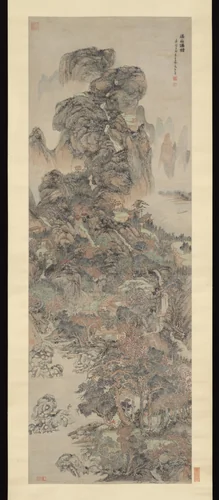
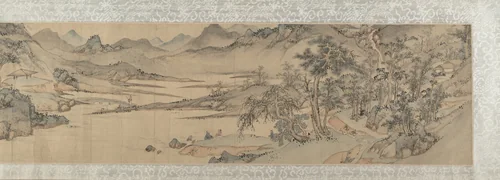
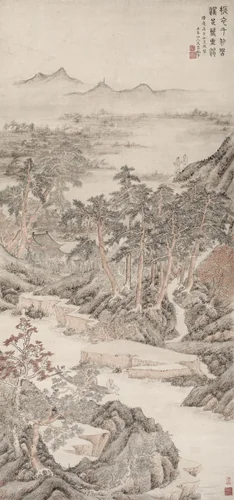
While categorized generally as a traditional shan shui (mountain water) artist, Boren’s intricate compositions frequently served as visual commentaries on classical literary and historical narratives. He excelled at depicting both the sweeping, idealized vistas expected of the Ming scholarly tradition and the minute details of human interaction within them. This duality is powerfully evident in contrasting works like Dwellings of the Immortals Amid Streams and Mountains, which transports the viewer to a lofty, ethereal retreat, and the more grounded, narrative focus of Saying Farewell at Xunyang (Song of the Pipa), a painting that illustrates the famous eighth-century Tang poem detailing a melancholy departure.
A characteristic of Boren’s best output is the inclusion of small, meticulously rendered scholars or figures engaged in contemplation or ritual, such as those found in Washing the Feet (from the Dusty World). It is a subtle observation that the grandest mountains and most complex topography often serve merely as a backdrop for the brief dramas of human life.
Paintings like Water Village exemplify his advanced mastery of complex atmospheric perspective and spatial depth, skills which solidified his reputation during his lifetime and ensure his ongoing relevance today. The continued importance of his output means that museum-quality renderings of his work are highly sought after by collectors and institutions worldwide. Due to their foundational significance to Chinese art history, many seminal Wen Boren paintings have been digitized and made available as downloadable artwork through institutional archives, ensuring that his meticulous legacy remains accessible for scholarly study and public appreciation.
Source: Wikipedia · CC BY-SA 4.0