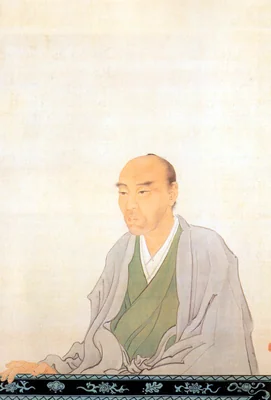
Watanabe Kazan
Watanabe Kazan (1793–1841) stands as one of the most distinctive and complex figures of the late Edo period, occupying the demanding roles of painter, high-ranking scholar, and samurai statesman. His profound contribution to Japanese art lies in his ability to integrate the rigorous traditions of native ink painting with innovative, observational realism derived from nascent Western artistic influences.
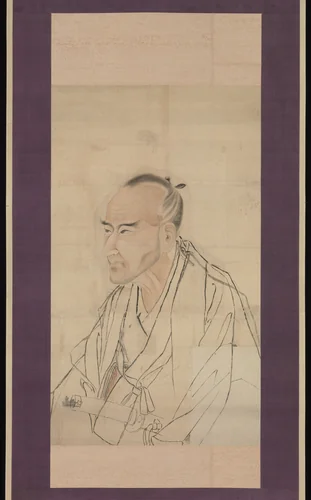
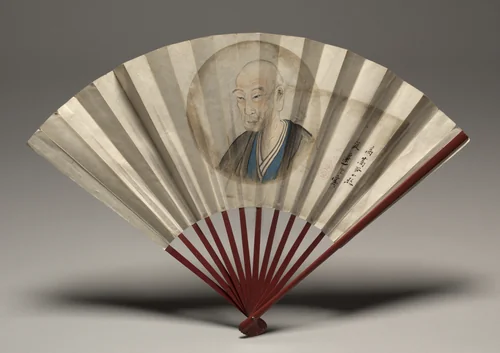
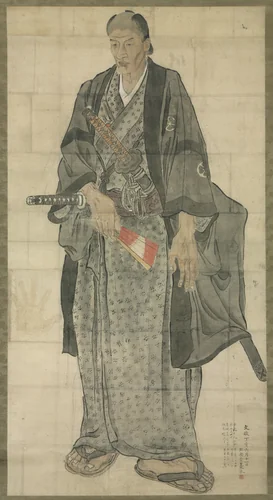
Kazan’s artistic vision reflects the intellectual ferment of his time, marked by a commitment to psychological veracity, particularly in portraiture. Unlike contemporaries who adhered strictly to formulaic likenesses, Kazan employed subtle shading and modeling, giving his subjects an unprecedented sense of volume and presence. This precision is powerfully evident in works such as the intimate study Sketch for the Portrait of Tachihara Suiken and the definitive Portrait of Kō Sūkoku.
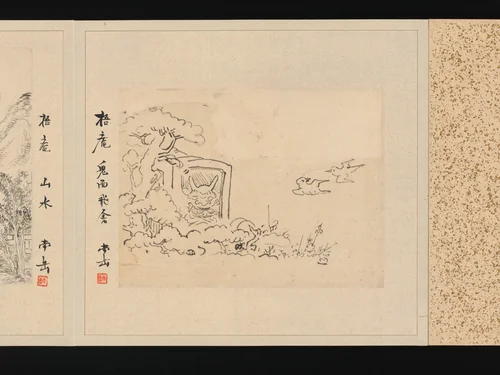
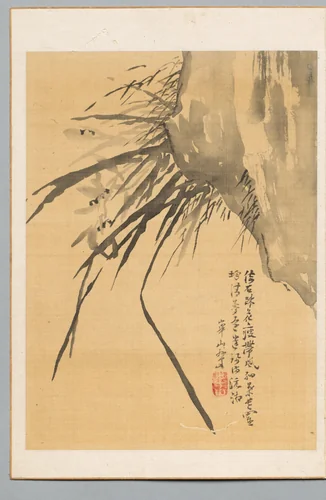
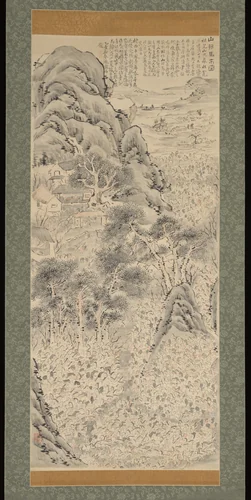
The diversity of his output illustrates his expansive skill set. While celebrated for the formal structure of his portrait commissions, he also produced lyrical, nature-focused pieces like Orchid, and demonstrated his profound engagement with art history through reinterpretations, including After Ike no Taiga’s “Horse Market in a Mountain Village”. His technical process is meticulously documented in volumes like the Album of Fifty-four Sketches, which reveal the speed and assurance of his observational drawing.
Kazan’s career was ultimately defined by a duality: the disciplined bureaucrat and the pioneering artist. It is perhaps unsurprising that an individual who navigated the complex political landscapes of the Shogunate with such acuity would apply that same meticulous precision to his artistic observations, leading to some of the era's most sensitive Watanabe Kazan paintings.
Though his creative output was curtailed by political persecutions in the 1830s, his legacy remains robust. His works are preserved in significant international collections, including the Metropolitan Museum of Art and the Cleveland Museum of Art. For scholars and the public seeking access to this crucial bridge between tradition and modernity, many of his significant artworks, including rare Watanabe Kazan prints, are increasingly available as downloadable artwork, furthering the appreciation of this unique and pivotal master whose works have entered the public domain.
Source: Wikipedia · CC BY-SA 4.0