Wang Jian
Wang Jian (1598-1674), a pivotal painter active during the transition from the Ming to the Qing dynasty, played a crucial role in systematizing and perpetuating the classical Chinese landscape tradition. Known primarily as one of the highly influential "Four Wangs," he devoted his practice to the rigorous study and revival of the Song and Yuan dynasty masters. His long and productive career, spanning over seven decades, cemented his position as a primary interpreter of the historical canon.
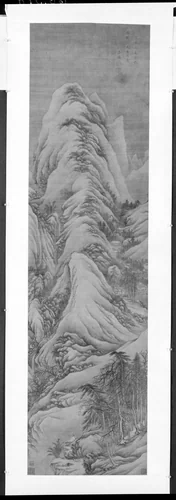
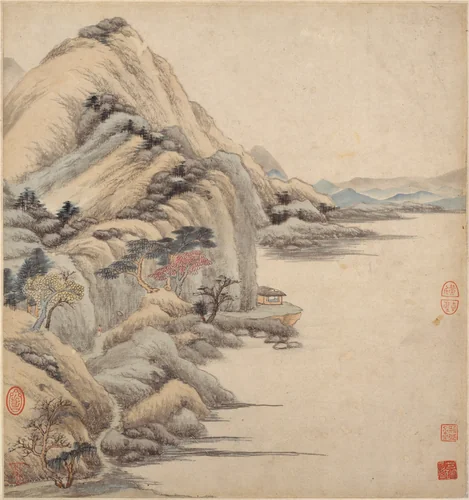
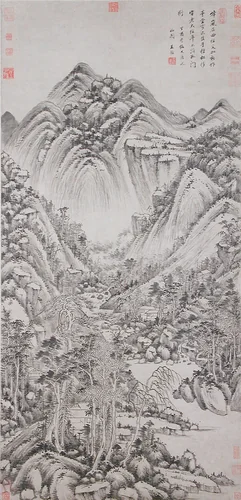
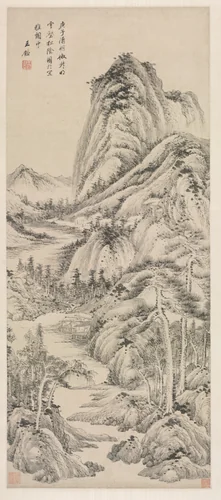
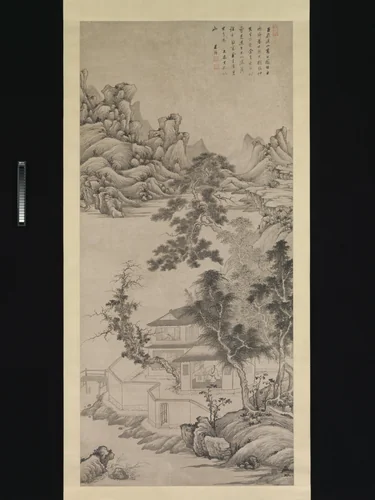
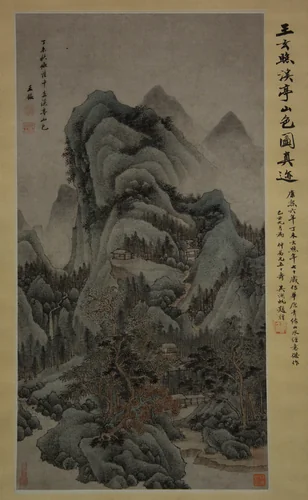
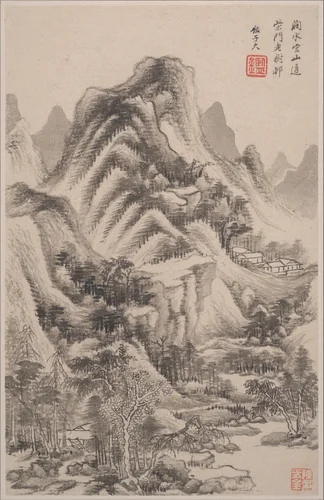
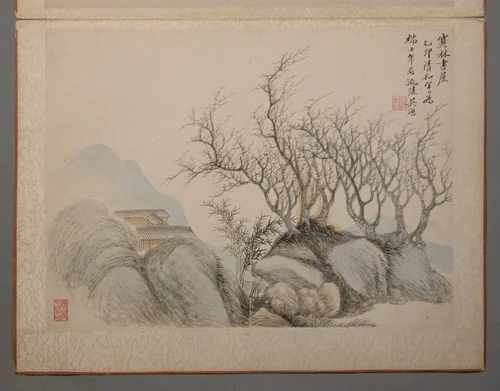
Wang Jian’s aesthetic rested upon fang, or the committed emulation of established masters. He regarded this process not as imitation, but as critical engagement necessary to perfect compositional principles and brush techniques before asserting individual refinement. Catalogue entries consistently reflect this scholarly dedication, listing key works such as Landscape in the style of Huang Gongwang and Lofty Scholar among Streams and Mountains, in the manner of Juran. These works exemplify his deep understanding of the Southern School tradition, particularly the expressive dryness of the Yuan literati painters.
Although his deliberate conservatism was sometimes viewed by later critics as purely academic, this very rigor proved essential in preserving the integrity of traditional brushwork. Wang Jian achieved a synthesis that maintained the vitality of the Orthodox School, establishing a sophisticated visual language for subsequent generations. His approach elevates the act of historical research into an artistic discipline in itself.
Today, the foundational nature of Wang Jian paintings ensures their continued study across the globe. His work is held in prestigious international collections, including the Art Institute of Chicago, the Metropolitan Museum of Art, and the Cleveland Museum of Art, attesting to its enduring museum-quality status. While the historical record occasionally struggles to distinguish the painter Wang Jian from the many other notable figures sharing his common name throughout Chinese history, the artistic clarity and sustained excellence of his oeuvre are undeniable. Many of his classical designs are now in the public domain, offering opportunities for enthusiasts to access downloadable artwork that provides exceptional insight into 17th-century Chinese scholarship.