Wang Duo
Wang Duo (1592-1651), courtesy name Zhaofan, stands as one of the most dynamic and historically significant figures in the late Ming and early Qing dynasties. A highly accomplished scholar and official active during China’s turbulent dynastic transition, his enduring legacy rests solely upon his mastery of the brush. His expressive style, characterized by monumental scale, intense focus, and robust energy, redefined the art of calligraphy for subsequent generations.
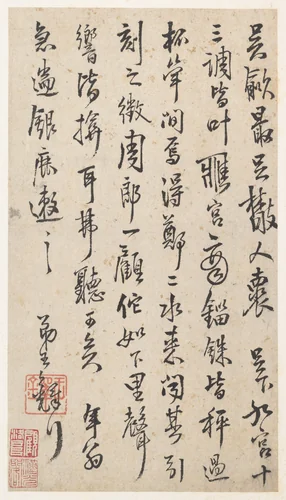
Wang Duo primarily excelled in running script (xingshu) and the dramatically kinetic grass script (caoshu). He purposefully rejected the more delicate, refined styles popular among his contemporaries, instead championing a return to the powerful, architectonic structures of the Six Dynasties masters. This practice involved deep study and reinterpretation of ancient texts, evident in works such as his inscription of the Letter by Yu Shinan (558-638). By absorbing and reanimating these classical precedents, Wang imbued his work with a unique historical weight and startling contemporary vibrancy, often utilizing a thick, saturated brush to achieve dramatic variations in stroke weight and velocity.
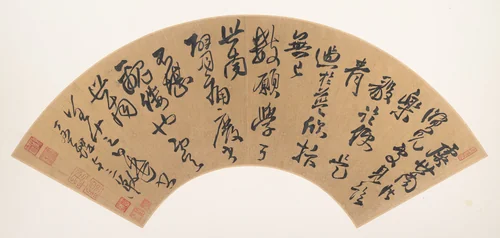
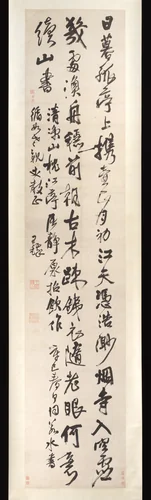
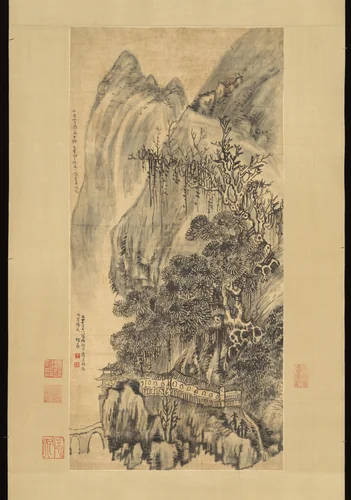
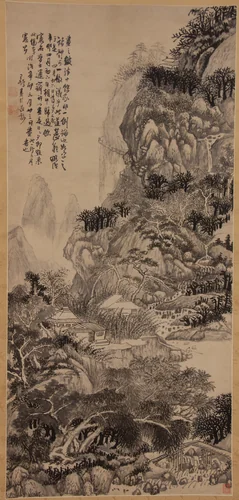
Beyond his celebrated calligraphy, which ranges from personal correspondence like Letter to large vertical scrolls, Wang Duo was also an assured painter, responsible for refined pieces like Landscape and Mountain Landscape. These Wang Duo paintings often exhibit the same restless vitality and profound command of composition found in his calligraphic scrolls.
His artistic output was prolific and powerful. A subtle observation of his practice reveals his preference for working on an immense scale, often completing multiple large-format pieces in a single, intense session, resulting in a kinetic spontaneity that defines his mature style. Today, his work is considered museum-quality and resides in preeminent international collections, including the Metropolitan Museum of Art. The preservation of his works ensures that students and enthusiasts worldwide can access his unique visual language; key pieces are now available as downloadable artwork and high-quality prints, securing his position as one of the great technical innovators in Chinese art history.
Source: Wikipedia · CC BY-SA 4.0