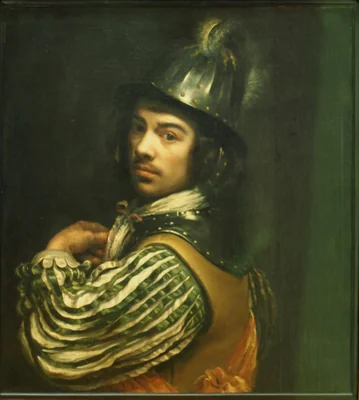
Wallerant Vaillant
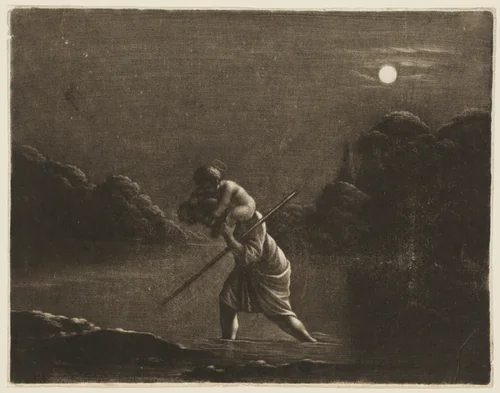
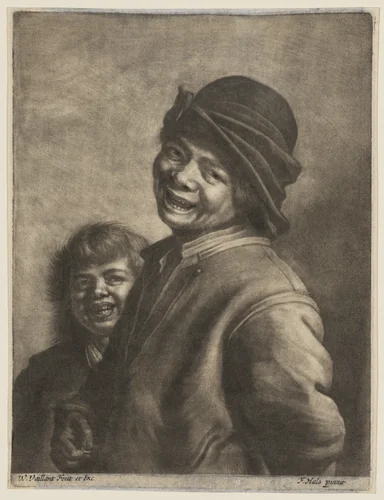
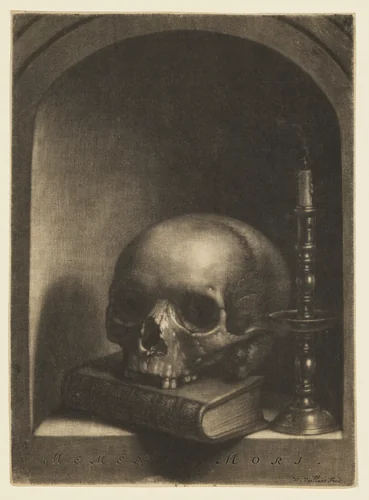
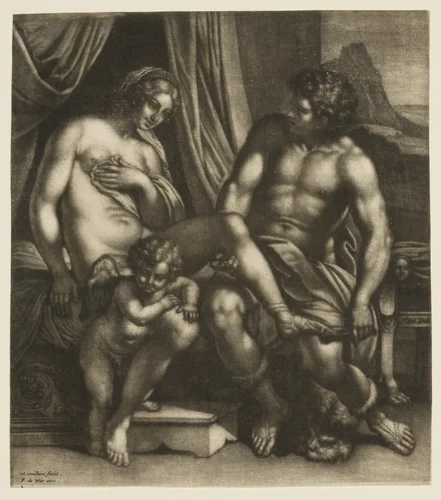
Wallerant Vaillant holds a distinctive and pioneering place in the history of graphic arts, recognized not only as a painter of the Dutch Golden Age but, more crucially, as one of the earliest artists to master and popularize the revolutionary mezzotint technique. Active predominantly between 1623 and 1635, Vaillant’s career coincided with the birth of this innovative process, which he likely helped to develop. Mezzotint provided a radical departure from traditional line-based engravings, allowing for the direct creation of deep, atmospheric tonal gradients previously unachievable in printmaking. This innovation effectively translated the rich subtleties of oil painting into a reproducible medium.
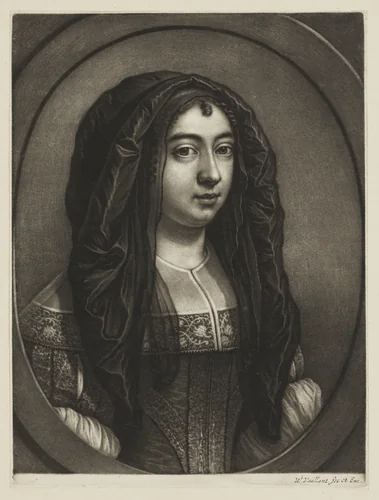
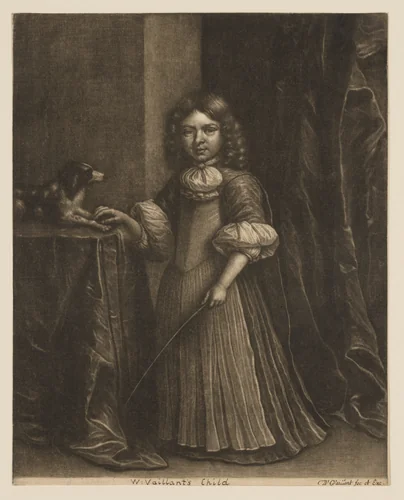
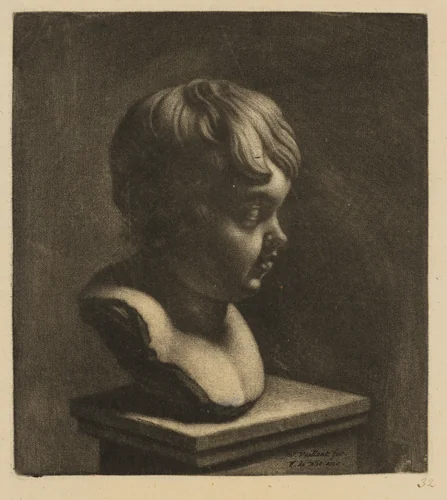
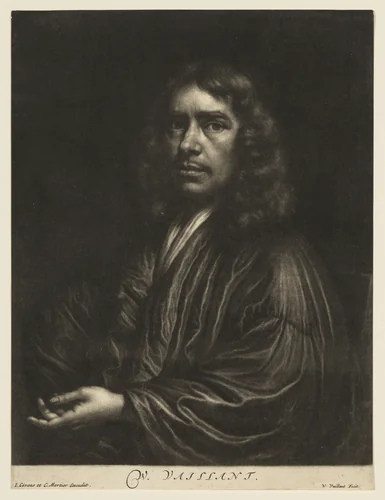
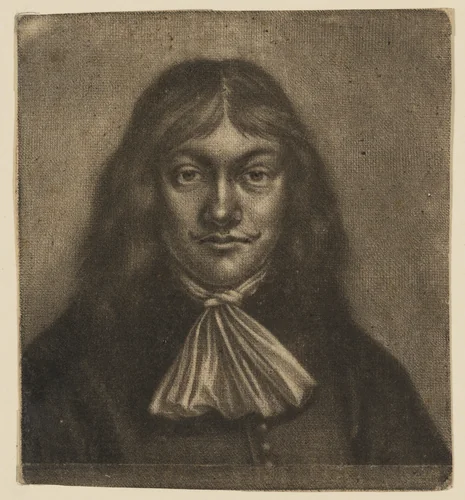
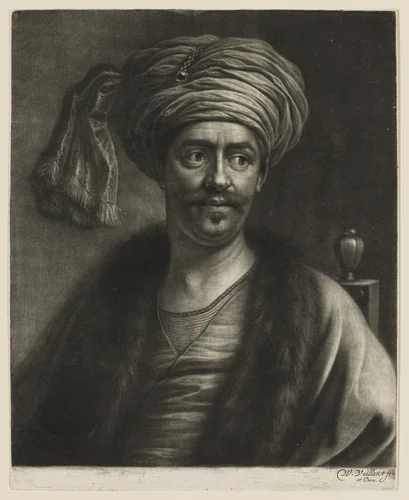
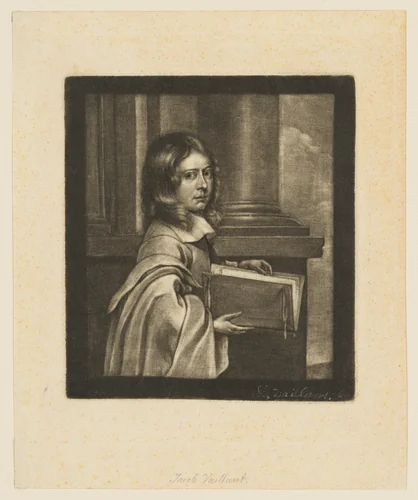
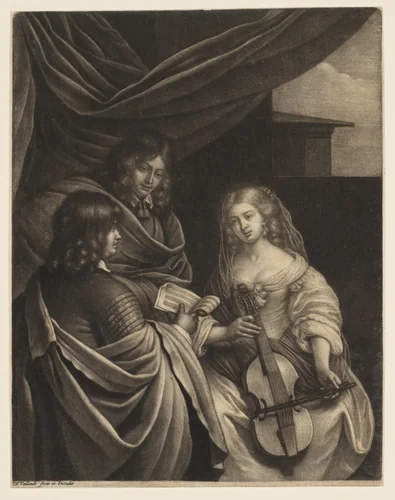
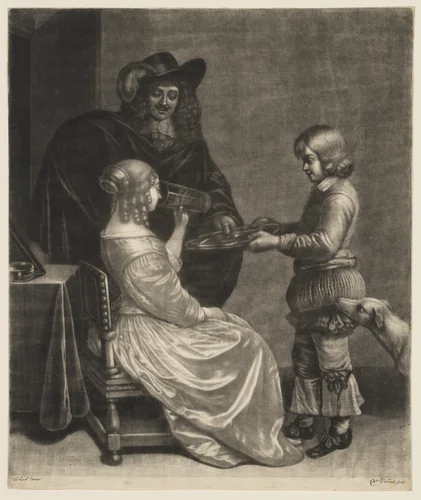
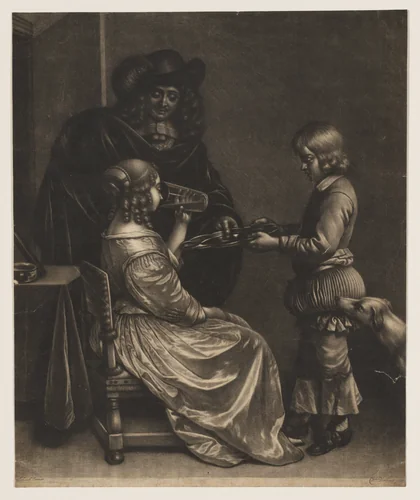
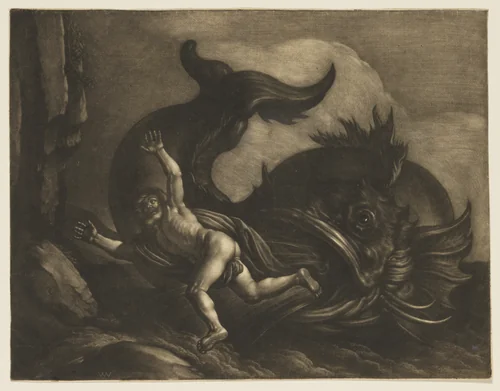
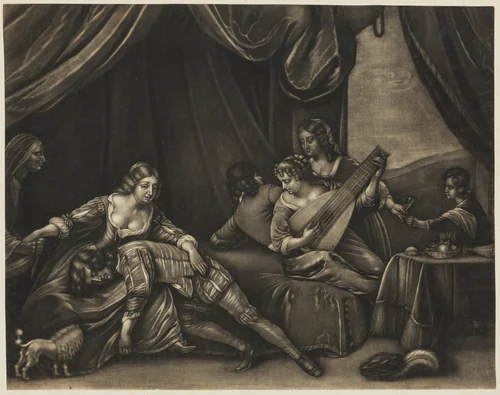
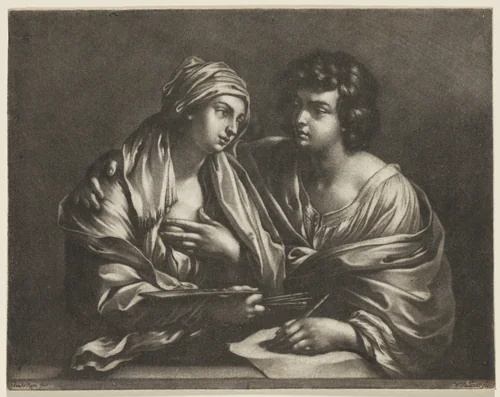
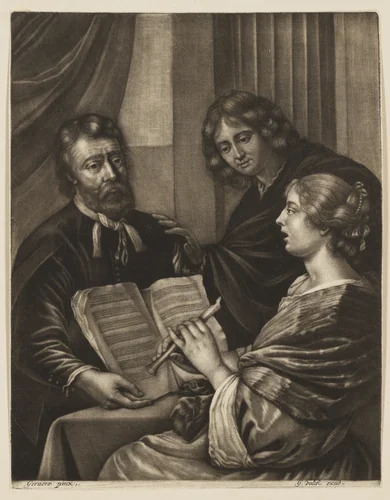
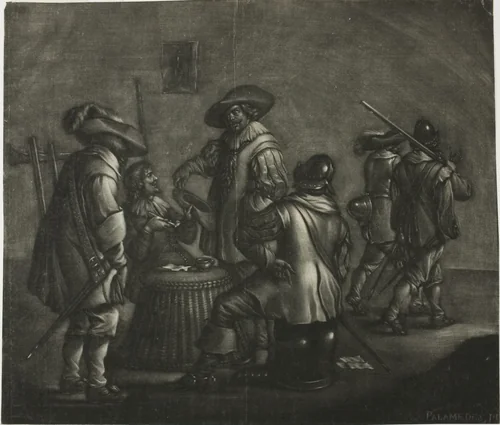
Vaillant’s surviving corpus, though small—comprising approximately fourteen prints and one drawing—demonstrates his quick grasp of the new medium's expressive potential. His work primarily focused on genre scenes and formal portraiture, essential components of the competitive seventeenth-century Dutch art market. Works like Concert with Nine Persons showcase his skillful handling of complex interior spaces and varied lighting effects, while the robust formality of his Self-Portrait cemented his reputation. Other notable character studies, such as Young Artist with a Statue of Cupid and Portret van een vrouw, en profil naar links, utilize mezzotint’s characteristic softness to render nuanced textures and skin tones, lending a tangible immediacy to his subjects.
The development of mezzotint, championed by Vaillant, allowed for wide dissemination of images and established a lucrative commercial avenue for artists. His early recognition of the technique’s business potential highlights an entrepreneurial acumen essential for success in the Golden Age. This quality underscores the importance of his contributions, moving printmaking beyond mere illustration toward sophisticated artistic reproduction.
Today, the enduring artistic merit of Wallerant Vaillant prints ensures that his work remains central to major international collections, including the Rijksmuseum, the Metropolitan Museum of Art, and the National Gallery of Art. Furthermore, many of his significant works are now in the public domain, allowing researchers and enthusiasts to access high-quality prints and studies of his influential output as widely downloadable artwork. Vaillant’s legacy rests firmly on his technical brilliance and his role in accelerating the sophistication of graphic reproduction.
Source: Wikipedia · CC BY-SA 4.0