Vittorio Maria Bigari
Vittorio Maria Bigari was a significant Italian painter whose career spanned the late-Baroque period and extended into the nascent Rococo aesthetic. Active primarily between 1702 and 1761, Bigari distinguished himself less as a traditional easel painter and more as a specialist in quadratura and sophisticated ornamental design, serving as a crucial structural fantasist for 18th-century interiors.
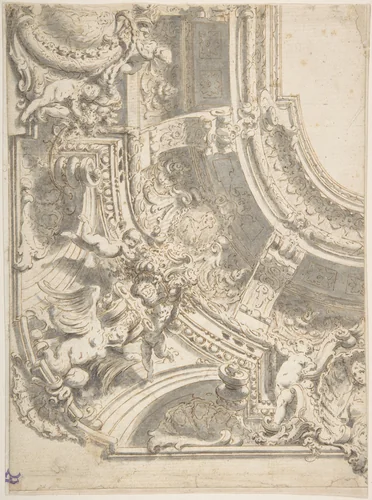
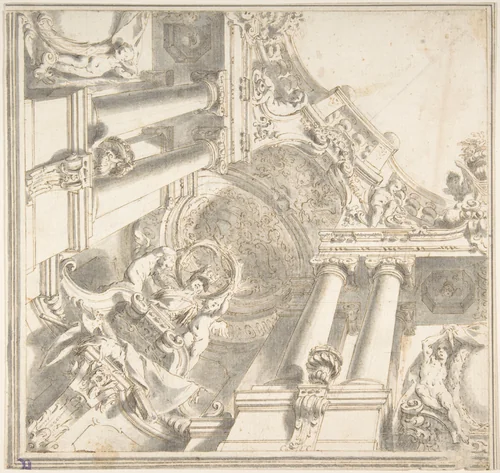
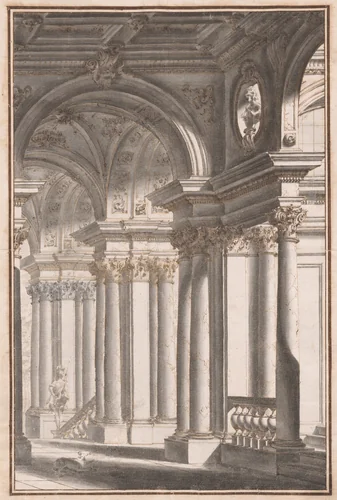
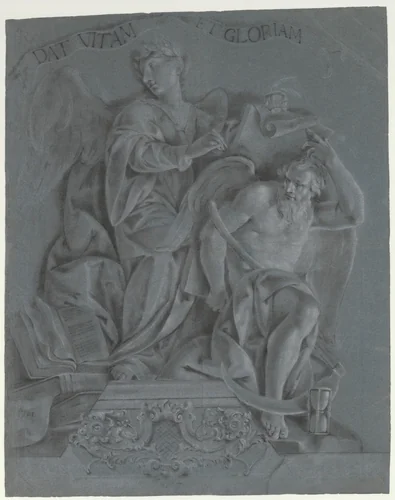
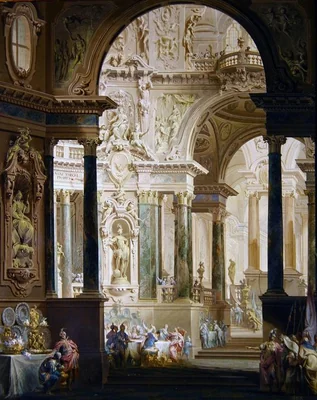
Bigari’s surviving artistic legacy is heavily comprised of highly detailed preparatory drawings that functioned as blueprints for large-scale commissions. These works reveal a meticulous engagement with classical motifs, illusionistic perspective, and the complex integration of sculpture, stucco, and painted architecture. Designs such as the Design for a Quarter of a Trompe L'Oeil Ceiling with Architecture in the Ionic Order and a Statue of Victory demonstrate his profound understanding of spatial dynamics, creating the illusion of soaring height and depth necessary for the monumental schemes favored by patrons of the era.
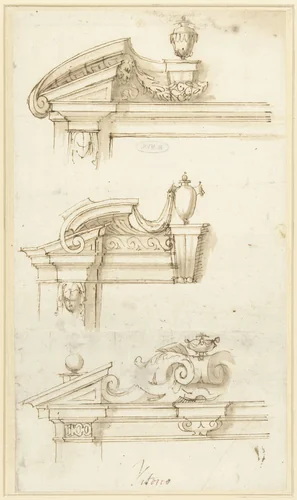
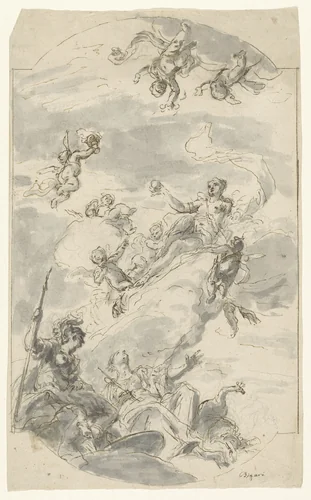
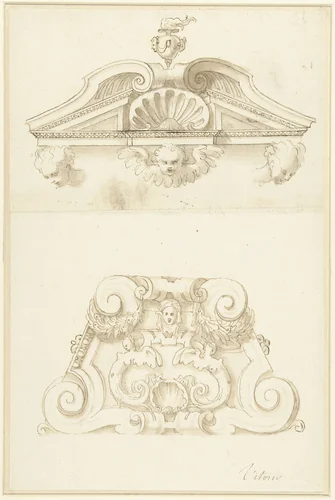
His drawings, including the meticulous plans for ornamental chimney pieces and the Drie ontwerpen voor deuromlijstingen (Three Designs for Door Frames), confirm that Bigari operated at the intersection of architecture and decorative painting. He was responsible for dictating the structure and detailed ornamentation that framed allegorical cycles and mythological narratives, ensuring coherence across disparate artistic media within a single room.
The technical precision of his draftsmanship underscores why his works maintain relevance today. Many of Bigari’s precise visual concepts, reflecting their museum-quality finish, are carefully preserved in leading international institutions. Scholars frequently access these highly detailed pieces, available as high-quality prints for study and comparison. The continued availability of Vittorio Maria Bigari prints helps illuminate the practical process of 18th-century Italian decorative arts. His ability to balance structural necessity with exuberant decorative detail positions him as an essential, if often understated, figure in the evolution of European interior design. Today, his works are secured in major collections globally, including the Metropolitan Museum of Art, the Rijksmuseum, and the National Gallery of Art.
Source: Wikipedia · CC BY-SA 4.0