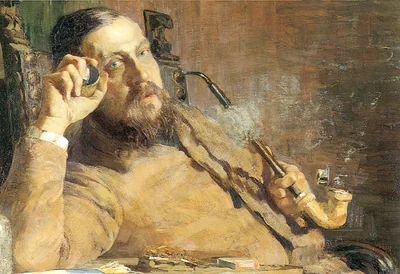
Vittore Grubicy
Vittore Grubicy de Dragon (1851-1920) holds a unique and crucial place in the history of late nineteenth-century Italian art, functioning simultaneously as an influential painter, a respected critical theorist, and a pioneering art entrepreneur. It was Grubicy, perhaps more than any single peer, who was responsible for the strategic introduction and subsequent integration of the complex optical theories of Divisionism into the Italian visual vernacular.
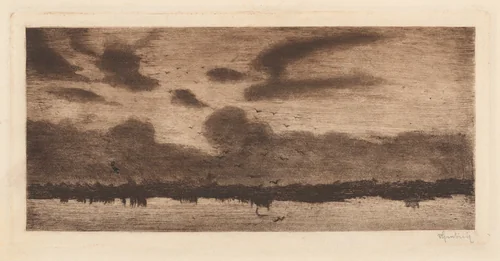
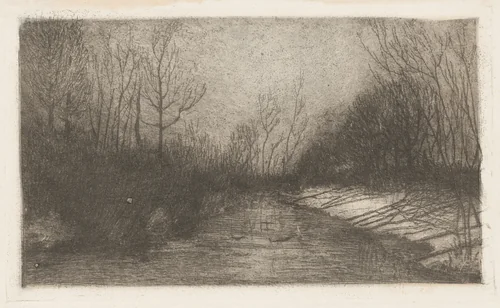
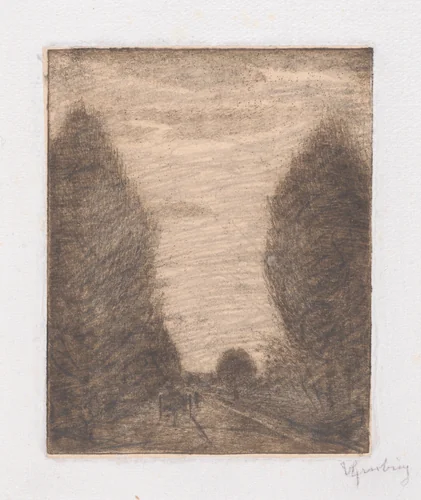
Grubicy’s foundational impact as an art critic and essayist cannot be overstated. His rigorous writings and consistent advocacy provided the necessary intellectual framework that shaped the development of an entire generation of Italian painters. He championed a methodical application of color theory, derived largely from French scientific investigations, to explore the transient effects of light and atmosphere. This dedicated inquiry is evident in his graphic oeuvre, which focused intensely on atmospheric conditions and mood, captured in powerful works such as the moody, suggestive etching Coastal View (A Foreboding of Sadness) or the striking tonal contrasts found in Antwerp: Sunset [Anversa: Tramonto].
Beyond his critical pen and personal artistic output, Grubicy operated one of the era’s most forward-thinking commercial enterprises: the Grubicy Gallery. Rejecting the traditional salon structure and transactional sales models, the gallery pioneered a system where it acted less like a casual retailer and more like a dedicated management agency. By representing its living artists as long-term clients, Grubicy formalized the modern dealer-artist relationship, demonstrating a rare synthesis of aesthetic passion and business acumen. This prescient model was pivotal in shaping the commercial viability of modern art in Milan.
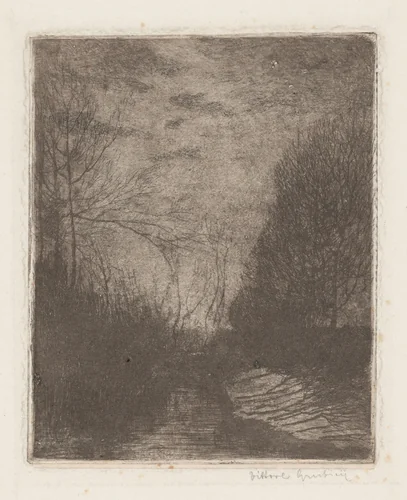
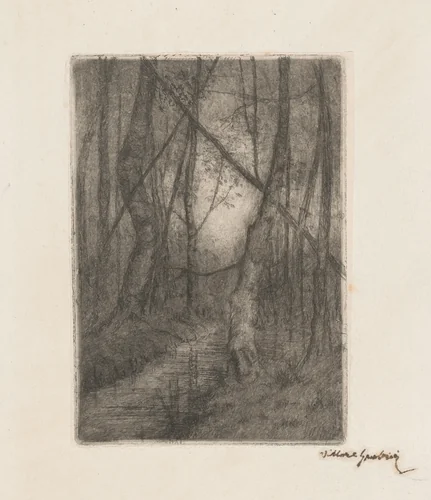
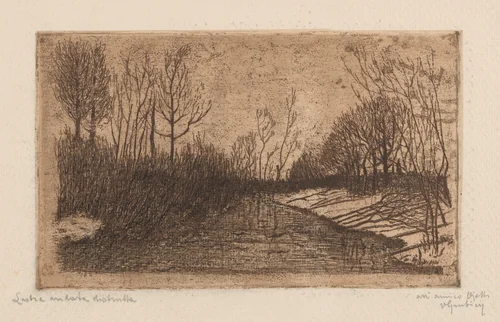
Grubicy’s personal oeuvre, visible in the limited yet impactful output of his mature phase, particularly showcases his dedication to capturing the fugitive moments of natural light, often achieved through meticulous cross-hatching and controlled shading. His commitment to technique meant that his finished work, such as A May Evening at Lierna, 2, possessed a distinctive museum-quality finish, attracting major international collections including the National Gallery of Art. Today, the enduring influence of Vittore Grubicy paintings and high-quality prints ensures his contribution remains central to understanding the Italian transition to modernism. Many of these historically significant works are now available in the public domain, offering broad access to his pioneering graphic work.
Source: Wikipedia · CC BY-SA 4.0
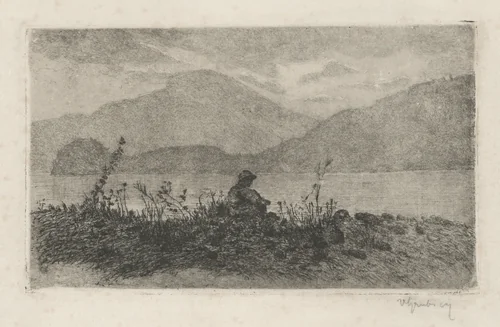
![Antwerp: Sunset [Anversa: Tramonto] by Vittore Grubicy, print, 1893-1894](https://img.artbee.org/1ce0576a-1f00-4295-9112-2faedbbe8d8b/small.webp)