Vittore Carpaccio
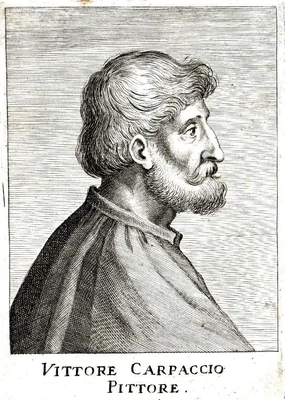
Vittore Carpaccio (c. 1445–1515) occupies a significant position within the early Venetian School, bridging the tradition established by the Bellini family with the burgeoning technical advancements of the High Renaissance. Trained under Gentile Bellini, Carpaccio swiftly developed an aesthetic profile distinctly separate from his mentor, synthesizing disparate influences into a highly articulate narrative style that defined Venetian storytelling painting for decades.
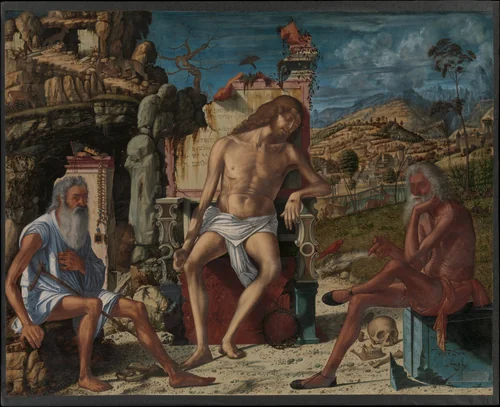
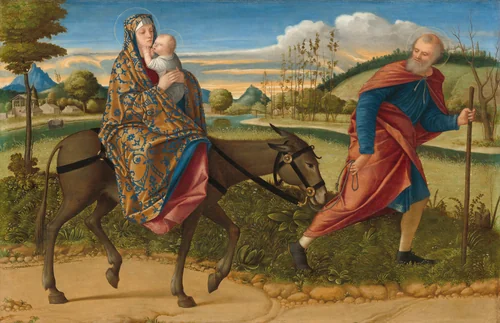
His stylistic innovations were rooted in a close study of currents arriving from both the south and the north. Carpaccio absorbed the compositional clarity and humanism promoted by Antonello da Messina, while simultaneously incorporating the meticulous detail and crisp realism characteristic of Early Netherlandish painting. This synthesis allowed him a mastery of space rarely achieved by his contemporaries. Works like the cycle featuring The Meditation on the Passion showcase his advanced command of linear perspective, coupled with a precise, almost architectural attention to setting. He favored a palette of bold, saturated colors, lending his religious and historical scenes a heightened sense of dramatic presence and atmosphere.
Carpaccio excelled at illustrating the cultural complexity of the Republic of Venice. His paintings frequently address religious themes while cataloging the era’s fascination with global trade and the collection of exotic objects. This is subtly highlighted in his famous 1502 portrayal of Saint Augustine in His Study, which functions less as a meditation on ascetic devotion and more as an inventory of high-status artifacts acquired through the city’s vast trading network—a telling observation regarding spiritual life layered with worldly glamour.
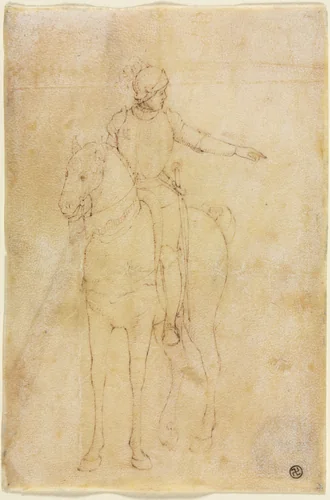
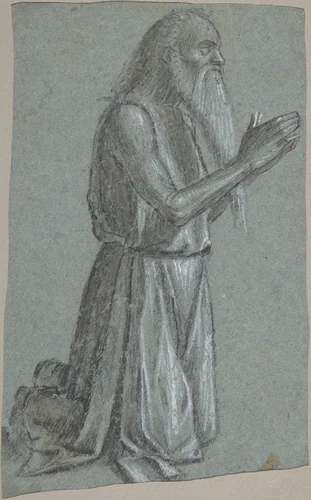
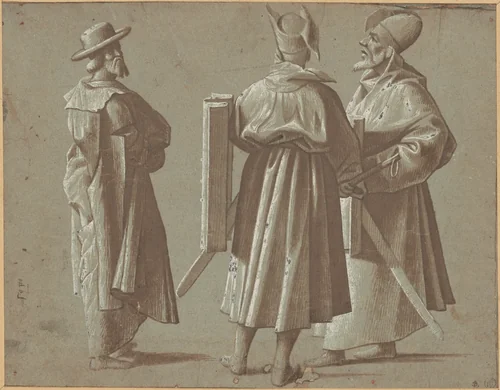
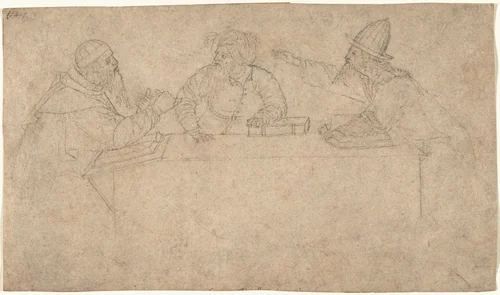
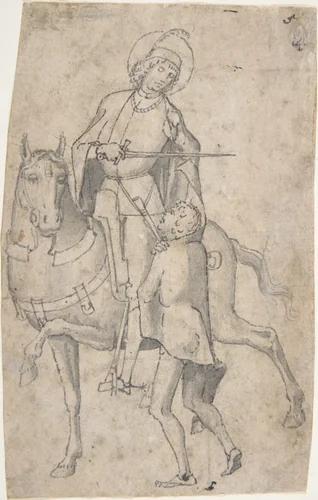
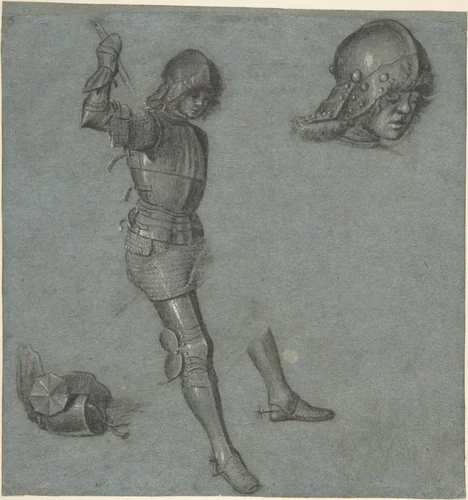
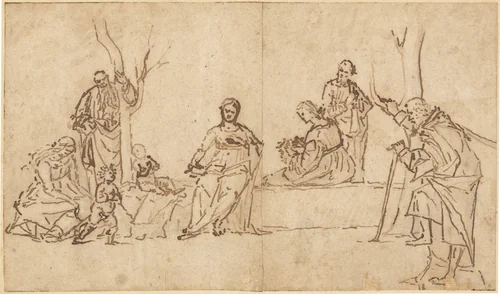
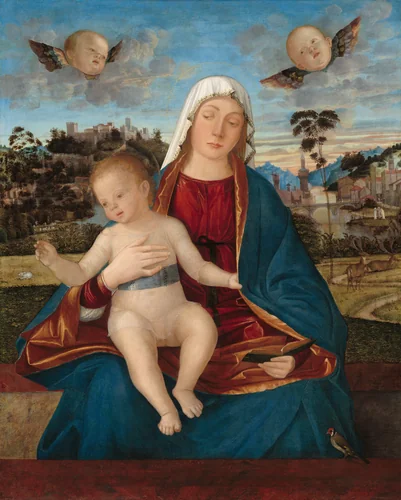
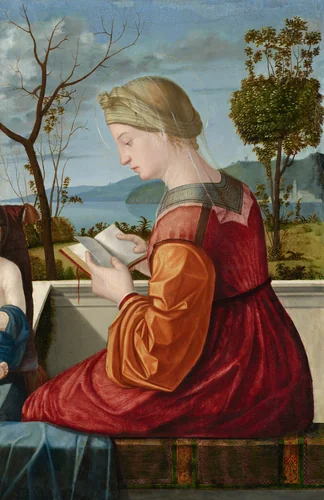
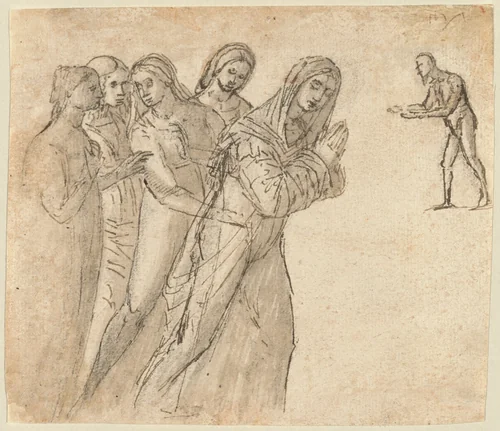
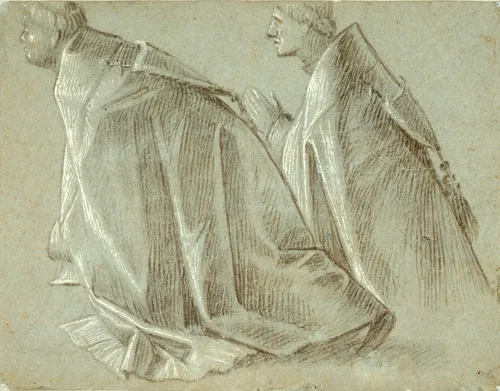
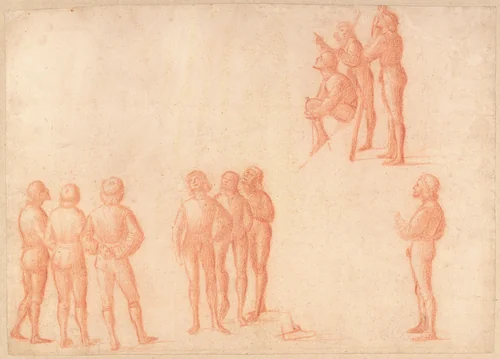
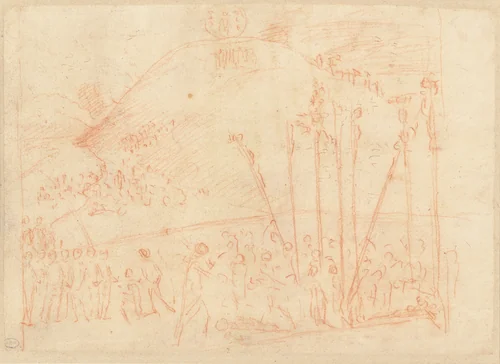
His precise draftsmanship is evident across his surviving corpus of panels and drawings, including Armored Figure on Horseback and the study of Saint Jerome (recto); Soldier with a Spear (verso). Major Vittore Carpaccio paintings and preparatory sketches are now held by leading institutions, including the Art Institute of Chicago and the National Gallery of Art. Due to the wide dissemination of his work, many of his designs are now accessible as downloadable artwork available in the public domain, ensuring that this genuinely museum-quality vision continues to inspire appreciation centuries after their creation.
Source: Wikipedia · CC BY-SA 4.0