Vincenzo Tamagni
Vincenzo Tamagni was a pivotal Italian painter operating within the High Renaissance, whose career spanned the critical transition from the Quattrocento into the full flowering of the Roman style. Born in San Gimignano, his artistic formation was robust, beginning with an apprenticeship under the Sienese master il Sodoma at Monte Oliveto Maggiore. However, Tamagni’s defining professional period came between 1512 and 1516, when he relocated to Rome and worked directly under Raphael, contributing significantly to the fresco cycles within the Vatican Loggie.
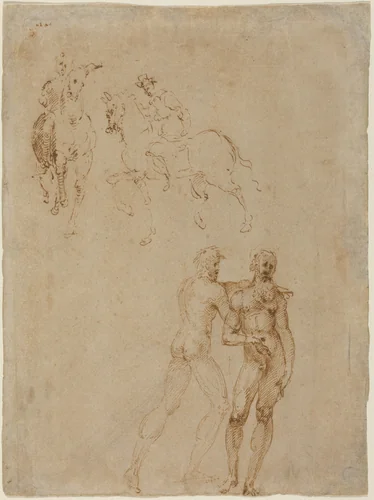
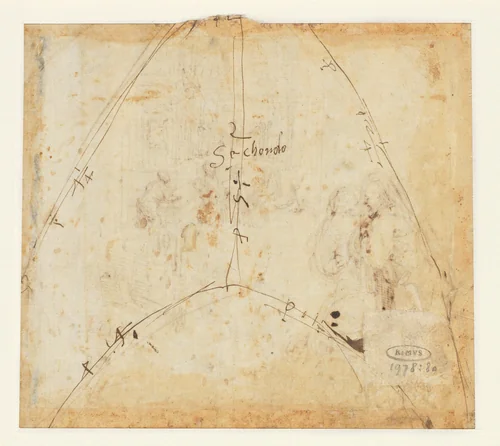
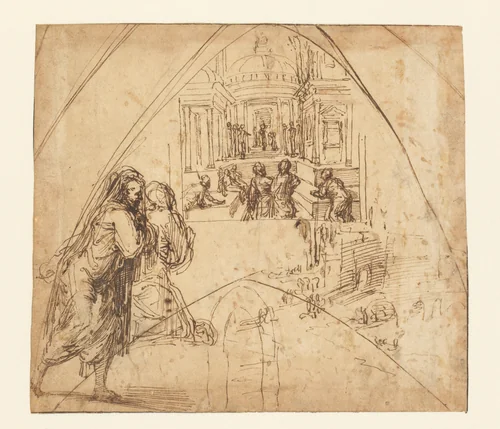
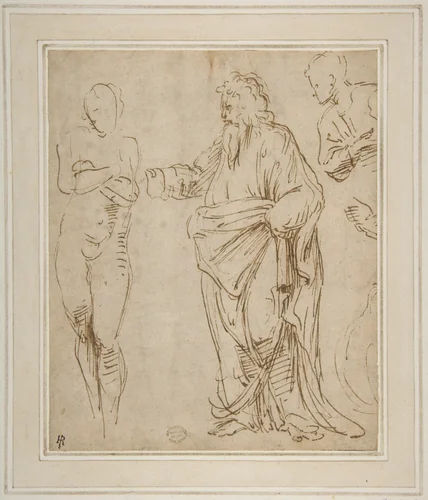
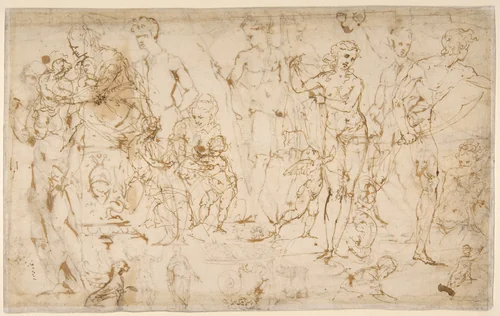
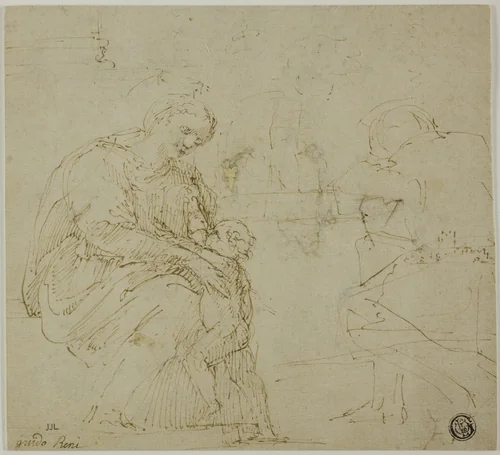
Tamagni served as a key conduit for the Raphaelesque aesthetic. His surviving graphic output, held in major international collections including the Rijksmuseum and the National Gallery of Art, confirms his dexterity as a master draftsman absorbing and disseminating the Roman idiom. Existing studies, such as the detailed Opmeting van een gewelf (Measurement of a Vault) and the dynamic Two Horsemen and Two Male Nudes, demonstrate his proficiency in architectural projection and the heroic figure study. Furthermore, personal drawings by Tamagni, documenting the famous Vatican frescoes, confirm his intimate proximity to the workshop’s methods.
The artist’s ability to capture both monumental compositions and intimate religious narratives, exemplified by works like Creation of Eve and Tempelgang van Maria (The Presentation of the Virgin), ensures continued scholarly interest. Following his formative years in Rome, Tamagni returned to the Tuscan region, focusing his practice primarily on local commissions near Siena. It is here that he produced major altarpieces, including works for the churches of San Girolamo and Sant'Agostino in his native San Gimignano.
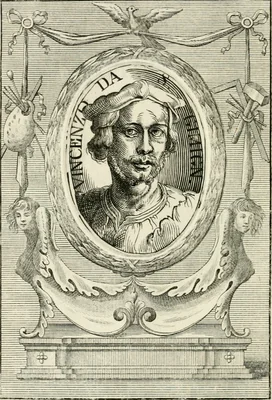
His regional significance was recognized by the art historian Giorgio Vasari, who featured him in Lives of the Artists, referencing him simply as Vincenzo da San Gimignano. While much attention given to the Raphael school often focuses solely on primary figures, Tamagni represents the crucial mechanism by which the Roman High Renaissance vocabulary was meticulously translated and rooted into provincial Italian centers. Researchers and enthusiasts often seek out Vincenzo Tamagni paintings and drawings; much of his graphic work, now in the public domain, is available for comprehensive study, securing his status as a key representative of the Raphaelesque dispersion.
Source: Wikipedia · CC BY-SA 4.0