Vincenzio Vangelisti
Vincenzio Vangelisti (b. Florence) was a pivotal figure in eighteenth-century Italian engraving, known for synthesizing rigorous technical training with the developing sensibilities of the late Baroque and early Neoclassical periods. Though his career is often framed by his activity between 1744 and 1764, his institutional influence extended well into the following century. Seeking advanced tutelage, Vangelisti traveled to Paris in his youth, where he studied under the expatriate Ignazio Hugford and the eminent German master Johann Georg Wille. This dual mentorship equipped Vangelisti with both the Florentine tradition of line and the exacting standards of Northern European printmaking, skills he would later deploy to elevate the status of reproductive engraving in Italy.
The height of his institutional career began in 1766 when Emperor Leopold II of Austria invited him to Milan. Vangelisti was subsequently appointed Professor at the Brera Academy, and in 1790, achieved the rank of first director of the newly instituted School of Engraving founded by the Emperor. In this capacity, Vangelisti shaped the pedagogical methods for an entire generation of Italian printmakers, cementing Milan’s reputation as a center for graphic arts.
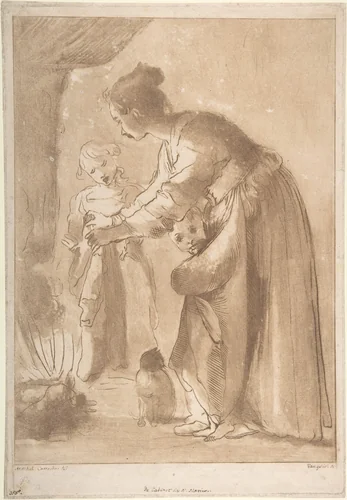
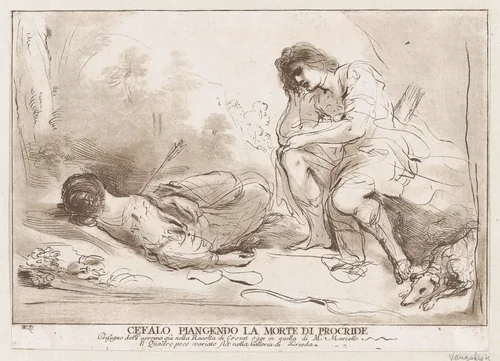
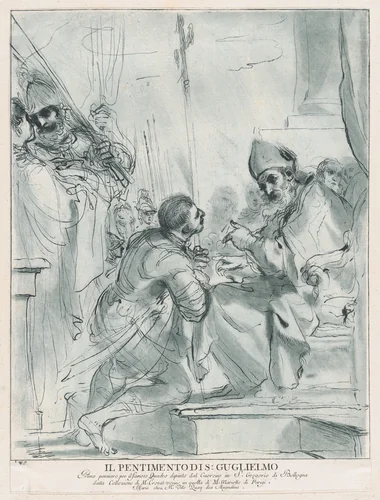
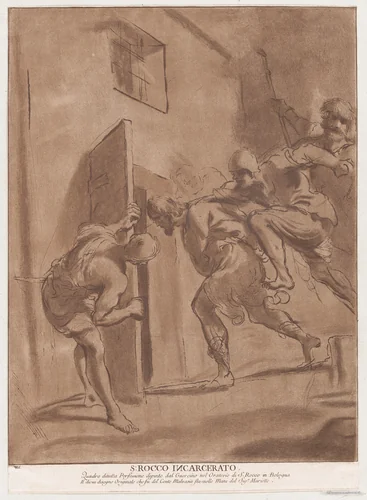
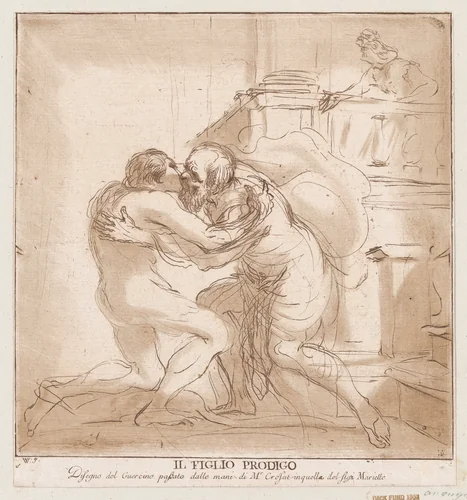
Vangelisti’s surviving corpus, held in major international collections like the Metropolitan Museum of Art, includes devotional and mythological subjects, demonstrating his facility with diverse narratives. Key works include the allegorical Cephalus and Procris, the religious commission Repentance of St. William, and the striking narratives of The Incarceration of St. Roch and The Return of the Prodigal Son. His talent for detailed genre scenes is also evident in A Domestic Scene: Woman Warming Clothes and Children in Front of a Fire.
Vangelisti’s direct lineage of influence is clear: Giuseppe Longhi, who succeeded him as professor, alongside Faustino and Pietro Anderloni, were among his most accomplished students. Their collective success ensured Vangelisti’s methodologies were permanently embedded in the curriculum of the Milanese school. Although much of his existing oeuvre survives as museum-quality impressions, the historical record notes an unsettling coda to his career. Prior to his death by suicide, Vangelisti took the extraordinary step of defacing his remaining copper plates. This singular act of destructive finality ensures that what remains, now often available as high-quality prints for researchers through public domain initiatives, represents only the approved fraction of his output. His legacy rests not only on the surviving Vincenzio Vangelisti prints, but equally upon the influential academic structure he established.
Source: Wikipedia · CC BY-SA 4.0