Veronese
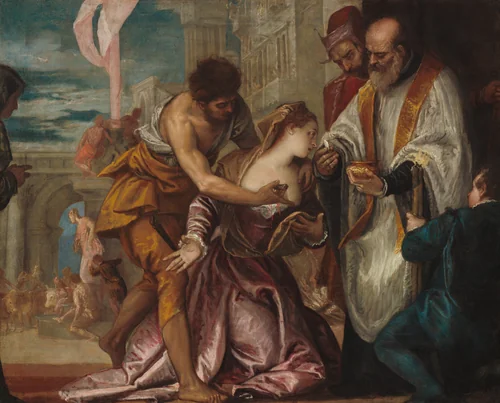
Active primarily between 1570 and 1600, the artist known simply as Veronese (Paolo Caliari) stands as the final great colorist of the Venetian High Renaissance. His work, characterized by dazzling luminosity and architectural grandeur, transformed narrative religious painting into a spectacle that reflected the opulence of contemporary Venetian society. Alongside Titian and Tintoretto, Veronese defined the aesthetic pinnacle of sixteenth-century Venice, prioritizing colore over the rigorous disegno favored by Central Italian schools.
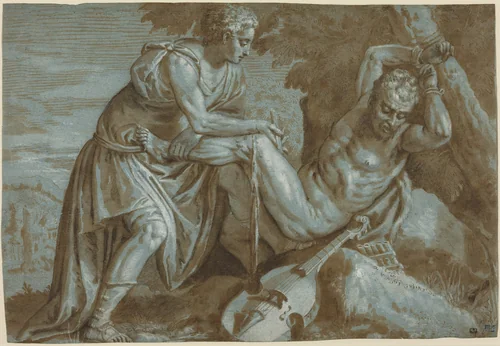
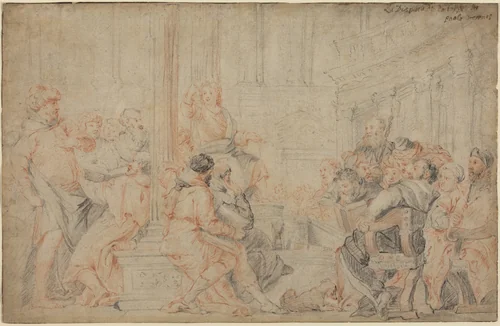
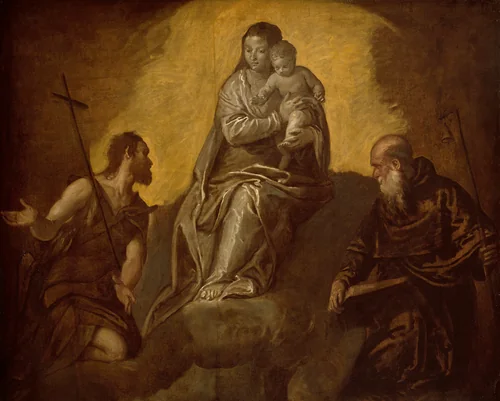
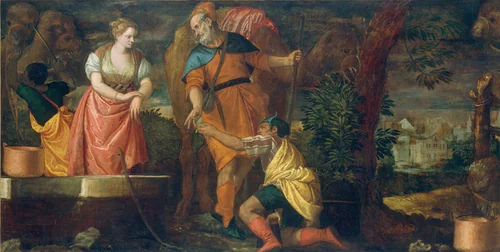
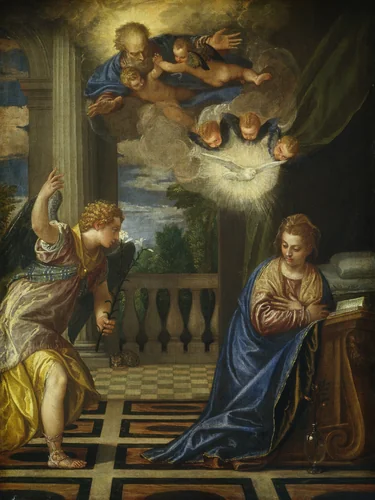
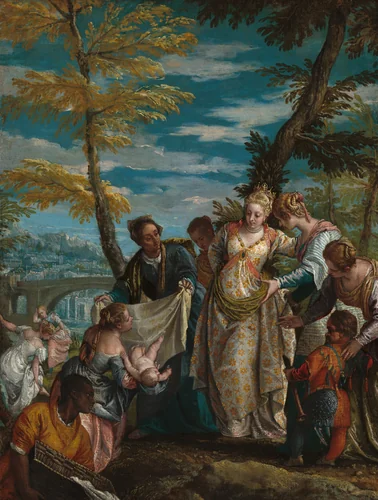
Veronese excelled at interpreting sacred texts through a distinctly secular, celebratory lens. He populated scenes like Virgin and Child with Saints John the Baptist and Anthony Abbot and The Annunciation with rich silks, complex architectural frameworks, and theatrical lighting. Even seemingly quiet moments, such as in Rebecca at the Well, are executed with an inherent sense of monumental staging. His extensive preparatory process is evident in detailed documents such as Studies for Judith and Holofernes, David and Goliath, The Finding of Moses, and Others [recto], confirming a rigorous approach to figure placement and composition that belies the apparent spontaneity of his final canvases.
His lasting innovation lay in integrating figures seamlessly within elaborate, often dramatically receding settings. This aesthetic freedom sometimes led to institutional friction; in a famous incident in 1573, Veronese was questioned by the Inquisition for including inappropriate contemporary details—such as German soldiers and a figure nursing a wound—in a large religious feast painting. He simply preferred visual pleasure over strict historical adherence, asserting his right to the same liberties enjoyed by poets.
The scale and ambition of his major commissions secured his reputation across Europe, and his masterful command of color continues to influence painters centuries later. Examples of his mature period, including The Finding of Moses, are today held in prestigious international institutions such as the National Gallery of Art and the Art Institute of Chicago. Fortunately, much of this celebrated artistic output, including some of the best Veronese paintings, is preserved within the public domain, making high-quality prints and downloadable artwork widely accessible for study and appreciation.
![Studies for Judith and Holofernes, David and Goliath, The Finding of Moses, and Others [recto] by Veronese, drawing, 1582](https://img.artbee.org/9b233440-d9bb-4f35-a1bc-fad97479113e/small.webp)
![Studies for the Raising of Lazarus and Other Compositions [verso] by Veronese, drawing, 1582](https://img.artbee.org/020d9680-865e-4a60-968b-32231400348c/small.webp)