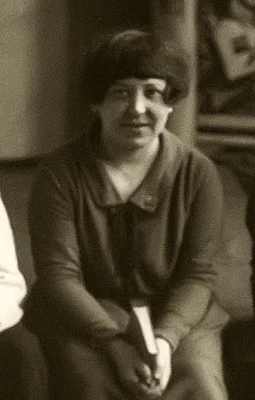
Varvara Stepanova
Varvara Fyodorovna Stepanova (1894-1958) stands as a foundational figure in the Russian avant-garde, defining the aesthetic and functional goals of early 20th-century Soviet art. Operating alongside her husband, Alexander Rodchenko, she was critically associated with the tenets of Constructivism, the movement that radically rejected traditional aesthetic values in favor of a utilitarian, revolutionary approach.
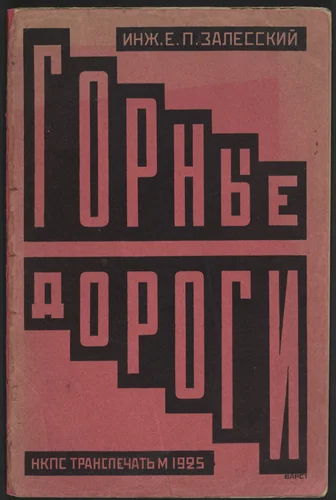
The Constructivist mandate called for art to serve the social purpose of the new state, transforming the artist into a specialist-engineer of material culture. Stepanova embraced this shift completely, moving beyond the traditional media exemplified by her early experimental works. Her practice became astonishingly comprehensive, encompassing poetry, graphic design, propaganda, stage scenery, and particularly, textile designs intended for mass production. This pragmatic expansion demonstrated a belief that the principles governing abstract composition could and should reorganize daily life.
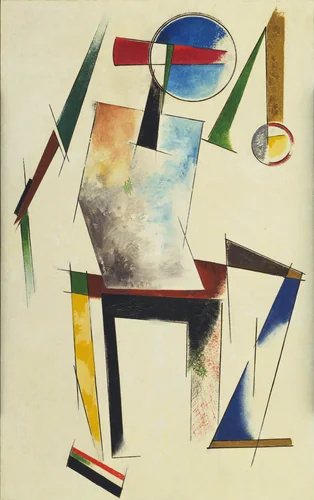
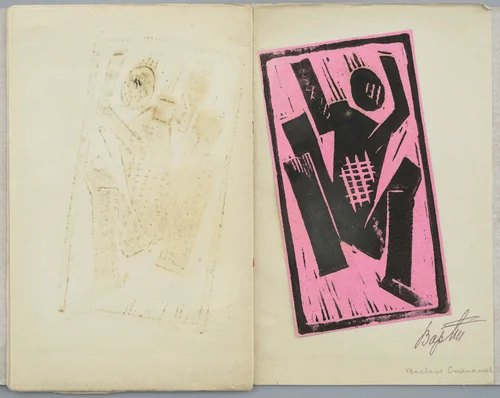
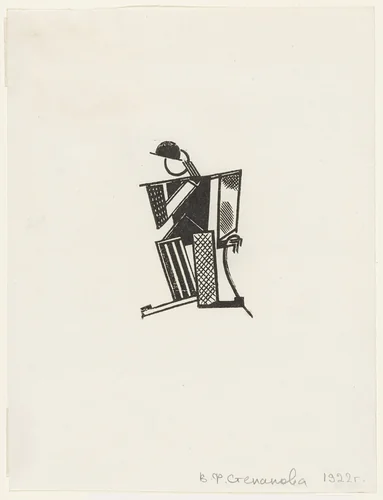
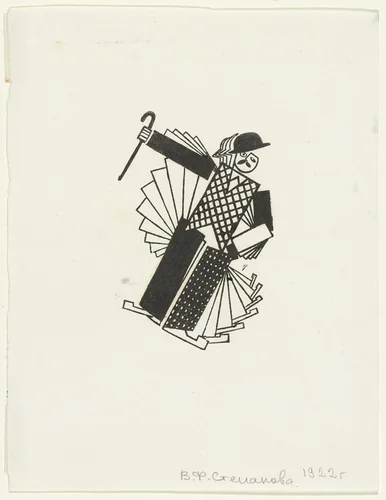
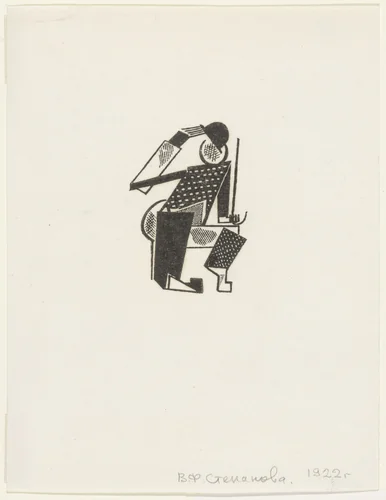
Her intensity during the pivotal years 1918-1920 resulted in crucial contributions to experimental publication, including a small but powerful body of illustrated books and prints. Early works like Bespredmetnye stikhi (Abstract Verse) and the striking volume Gaust chaba provide a crucial window into the rapid evolution from non-objective creation toward functional design. These early achievements are characterized by a profound systematic rigor, reflecting her commitment to geometric abstraction, visible in the few remaining drawings and Varvara Stepanova prints preserved in collections such as the Museum of Modern Art.
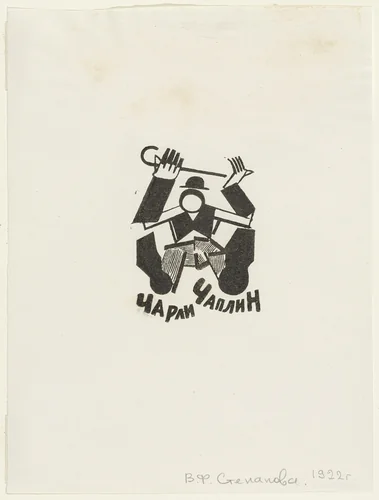
Stepanova’s influence extended far beyond the easel. It is an understated observation that an artist who championed the rejection of subjective decoration ultimately found one of her greatest historical impacts in designing repeating patterns for millions of meters of industrial cloth, essentially clothing the proletariat. Her works, including numerous museum-quality prints and sketches, offer continuing instruction on the integration of form and utility. Today, many seminal examples of her output, furthering the study of Constructivism, are widely available to researchers through downloadable artwork and images now in the public domain.
Source: Wikipedia · CC BY-SA 4.0
![The Literate Will Improve the Farm Economy! Teach Your Children with Gosizdat Textbooks! (Kret’ianskoe khoziastvo uluchshit gramotei! Po uchebnikam Gosizdata uchi detei!) (Poster for the State Publishing House [Gosizdat]) by Varvara Stepanova, design, 1925](https://img.artbee.org/2b1342d0-5ca1-451f-9855-7f5a6f1844d1/small.webp)