Utagawa Yoshifuji
Utagawa Yoshifuji was a significant ukiyo-e master whose career spanned the critical pivot point between the late Edo and early Meiji periods in Japanese history. Active from the 1840s through the 1880s, his extraordinary professional longevity allowed him to capture the seismic cultural and political shifts as Japan began its rapid opening to the West. Though perhaps not as widely cataloged as some of his contemporaries, Yoshifuji’s distinctive visual output is distinguished by a keen observational eye for modern life and the emerging social dynamics of the period. His works, though limited in number, are highly valued and held in prestigious institutions globally, including the Metropolitan Museum of Art, the Art Institute of Chicago, and the Cleveland Museum of Art.
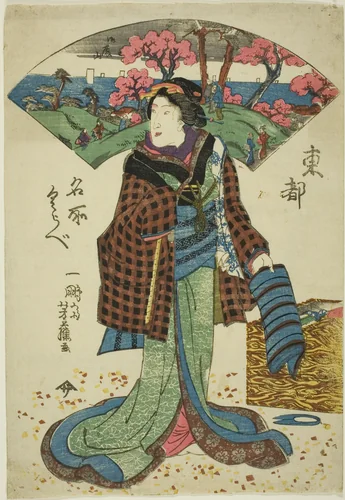
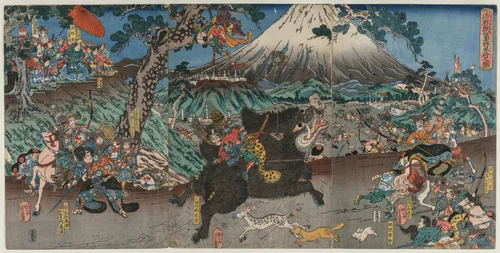
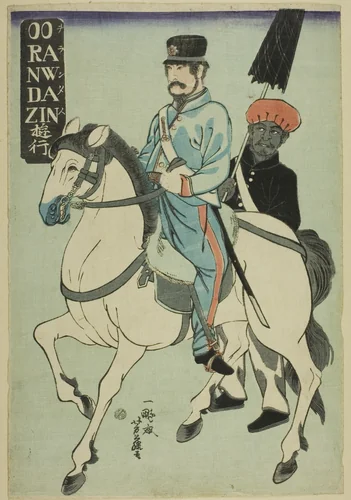
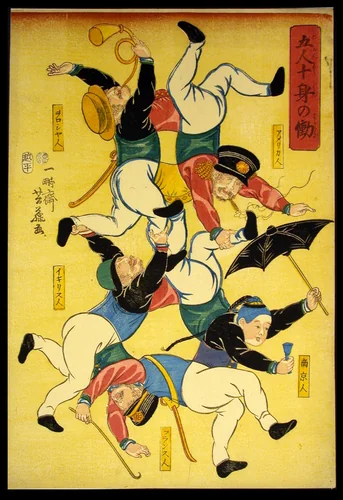
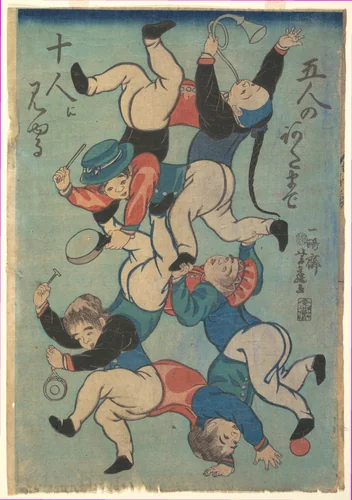
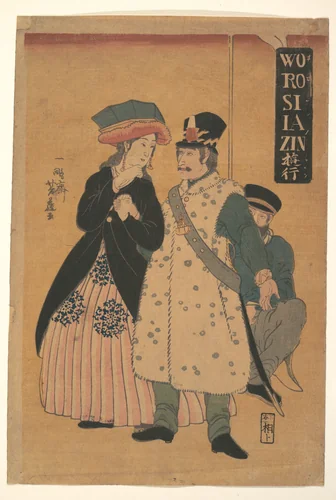
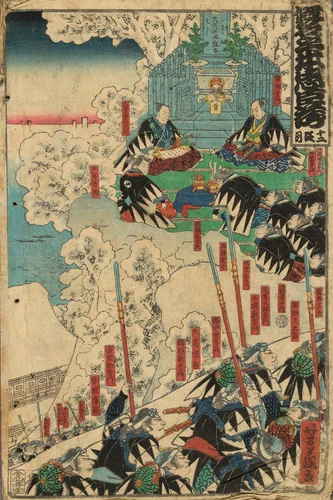
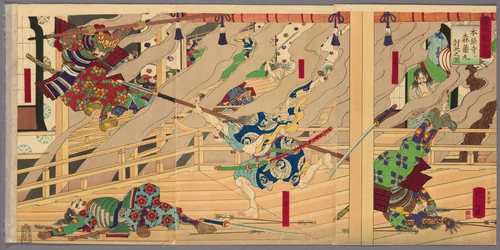
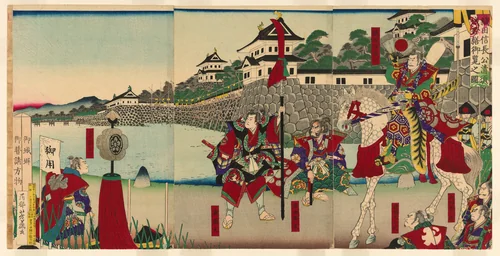
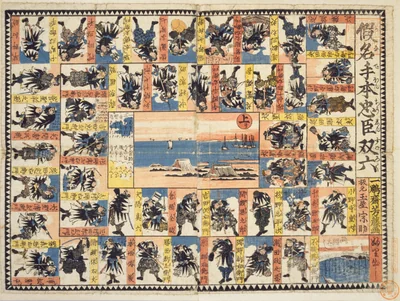
Yoshifuji executed a range of subjects, including depictions of historical narrative, such as Picture of Minamoto no Yoritomo's Hunt on the Slopes of Mount Fuji, but his most compelling output centers on the novelty of foreign interaction and changing urban customs. His work Dutchman Strolling (Orandajin yuko), for instance, is a straightforward yet compelling visual record of a foreign resident navigating the streets of Edo, capturing the exotic curiosity they represented. More telling are the pieces that interact with societal structure. The humorous or perhaps satirical print Five Men Doing the Work of Ten Bodies (Gonin jushin no hataraki) suggests a fascination with efficiency and the changing labor dynamics that characterized Meiji modernization. He also applied his skill to portraiture documenting new roles, such as the print from the series Tôto Meisho Kurabe depicting a woman, apparently a seamstress, an image which highlights his ability to isolate and dignify emerging occupational roles.
The clean composition and assured visual intensity characterizing Utagawa Yoshifuji prints ensure their continued relevance to scholars studying the transition from feudal rule to modern Japan. His command of the medium is evident even in a focused body of work. Today, the enduring quality of these pieces makes them essential examples of museum-quality artifacts from the period. Furthermore, because much of his output now resides in the public domain, Utagawa Yoshifuji prints are increasingly accessible as high-quality prints and downloadable artwork for wider study and appreciation, securing his legacy as a nuanced recorder of 19th-century Japanese life.
Source: Wikipedia · CC BY-SA 4.0