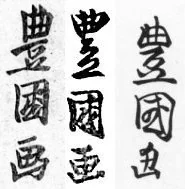
Utagawa Toyoshige
Utagawa Toyoshige (1777-1835) holds a pivotal, though often contested, position within the lineage of the Utagawa school. Operating as a designer of ukiyo-e woodblock prints in Edo, his career spanned the transition between the school’s founding generation and its later, massive commercial successes.
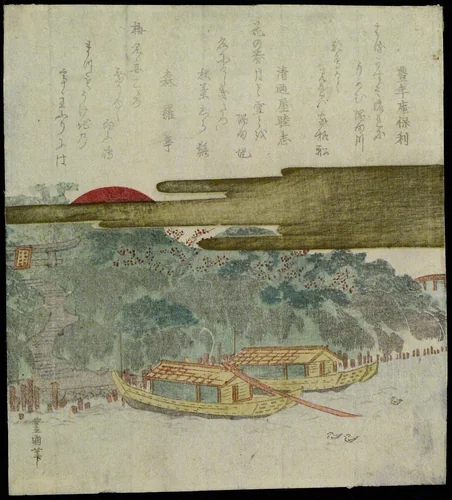
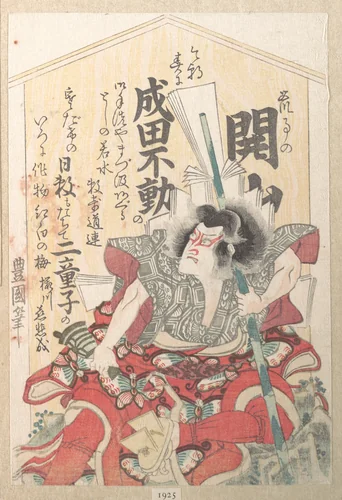
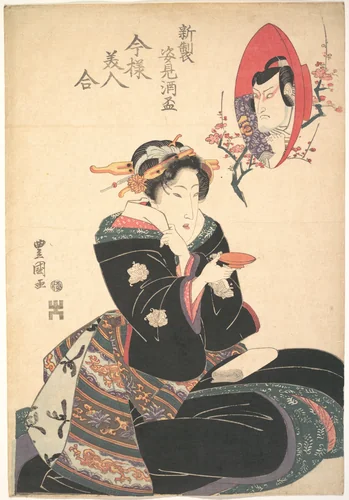
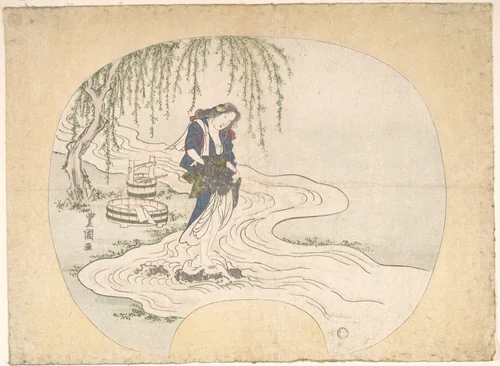
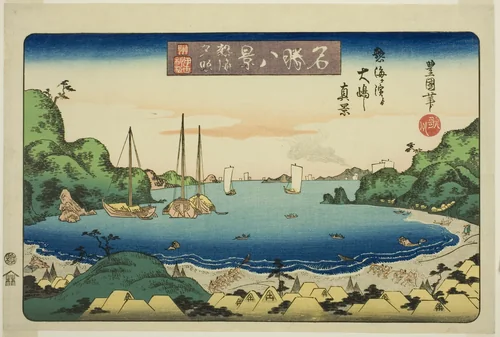
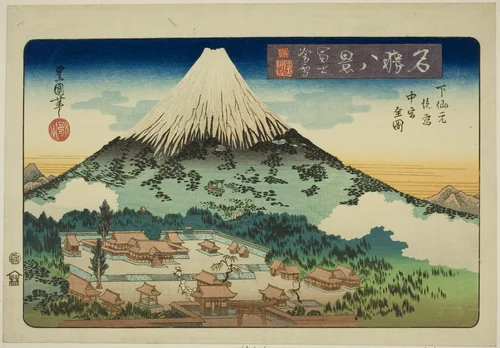
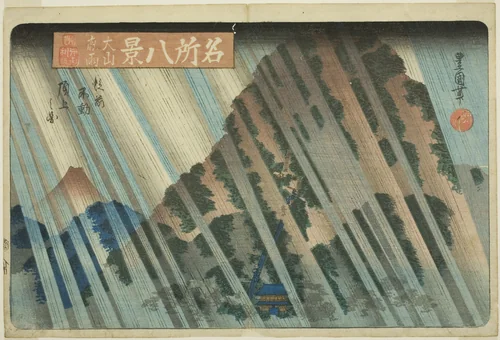
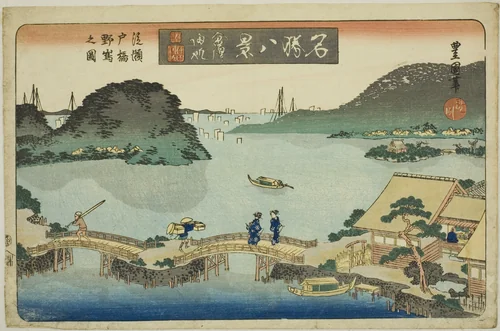
Toyoshige was the pupil, adopted son, and son-in-law of the progenitor, Toyokuni I. This direct familial and artistic connection gave him a unique claim to the school’s artistic mantle. While establishing himself, he worked under his birth name, Toyoshige (豊重), developing a substantial body of work that ranged from sensitive studies of Kabuki theater, such as Kabuki Actor and the intriguing domestic observation, An Actor's Image in a Sake Cup, to detailed landscape studies like Shirahige Shrine at Dawn. His works demonstrate a strong technical mastery, capturing both the dramatic energy of the stage and the quiet dignity of genre scenes, such as A Woman Stands on a Rock in a Stream Washing Clothes.
The formal acknowledgment of his status occurred in 1826, the year after Toyokuni I’s death, when the family granted him the right to assume the master’s name. Working thereafter as Toyokuni II, he committed to preserving the style and prominence of the Utagawa tradition.
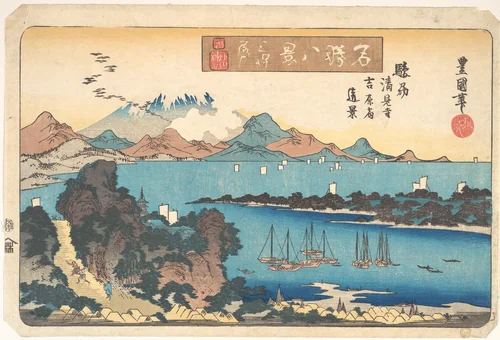
His tenure as Toyokuni II was relatively brief, concluding with his death in 1835. The subsequent succession became one of the Utagawa school’s most complex internal disputes. Ultimately, the family sought to elevate Kunisada, Toyokuni I’s most popular student, to the leadership position in 1844. Although Kunisada refused to formally acknowledge Toyoshige’s right to the second iteration of the name, history recognizes Toyoshige’s foundational role as Toyokuni II, regardless of later internal political maneuvering. Today, collectors value Utagawa Toyoshige prints highly for their refined quality and historical importance. These museum-quality works, including complex scenic compositions such as Sunshu Kiyomi-dera Yoshiwara Shuku En Kei: Raku Gan, ensure his legacy endures, with many works now residing in the public domain and available as high-quality prints.
Source: Wikipedia · CC BY-SA 4.0