Utagawa Toyokuni II
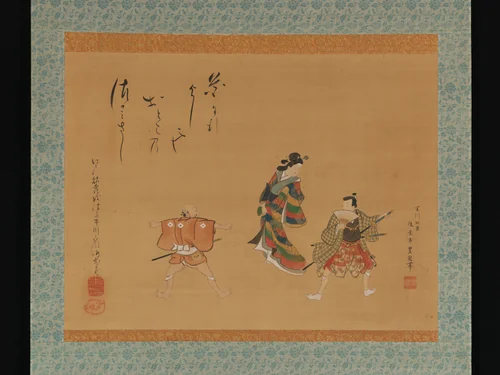
Utagawa Toyokuni II (1777–1835) occupies a crucial, if sometimes historically contested, position within the eminent Utagawa School of ukiyo-e printmaking in Edo. As the pupil, adopted son, and son-in-law of the school’s great master, Toyokuni I, he maintained the lineage through a period of transition, producing celebrated woodblock designs and Utagawa Toyokuni II paintings that are now held in major international collections, including the Metropolitan Museum of Art.
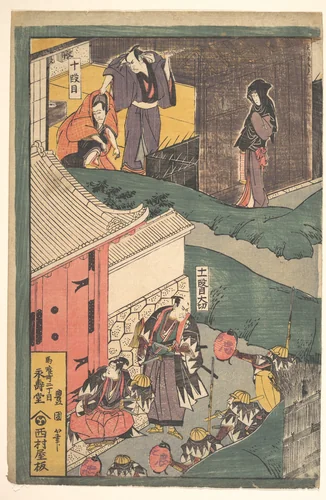
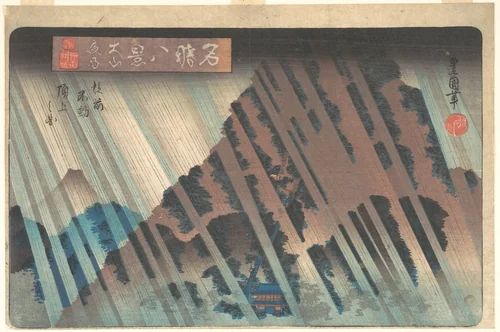
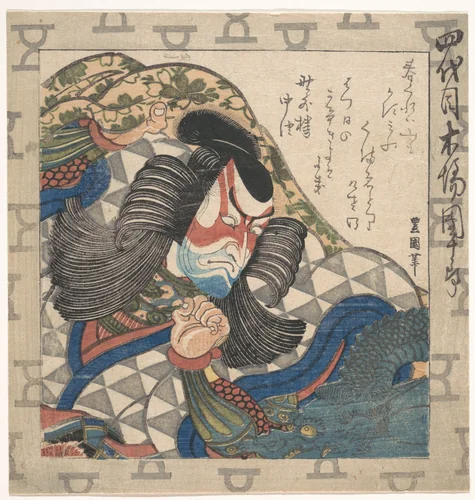
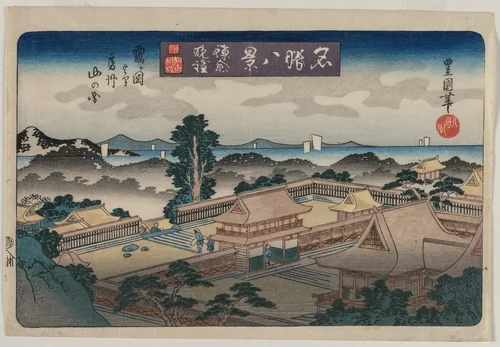
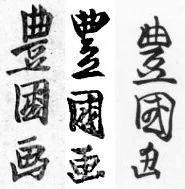
The artist worked for the majority of his active career under the name Toyoshige (豊重). It was only after the death of Toyokuni I that the family sanctioned his inheritance of the master’s title, signing his work as Toyokuni beginning in 1826. His stylistic output was broad, ranging from detailed yakusha-e (actor portraits) to vivid fūkei-ga (landscape views). Notable examples of his mastery over theatrical subjects include the depiction of Ichikawa Danjuro IV in the Role of Kagekiyo and panels from the celebrated The Loyal League (Chushingura) series. Concurrently, he demonstrated a strong command of scenic work, contributing to the popular genre with compositions such as Night Rain at Ōyama, from the series “Eight Famous Views of Kanagawa.”
The high-quality prints executed by Toyokuni II confirm his technical skill and artistic competence, securing the museum-quality status evidenced by institutional holdings worldwide. Yet, the succession plan proved precarious. Following Toyokuni II’s death in 1835, the Utagawa family ultimately persuaded Kunisada, the most famous and prolific of Toyokuni I’s students, to assume the mantle in 1844. This event led to the slight chronological curiosity that defined Toyokuni II's posthumous recognition: though Kunisada never formally acknowledged his predecessor’s right to the name, he is universally referred to today as Toyokuni III.
Despite this dynastic controversy, Toyokuni II effectively preserved and transmitted the aesthetic legacy of the Utagawa School. His works, which include complex narrative scenes like Eight Views of Famous Places: Evening Bell in Kamakura, remain sought after by scholars and collectors. Fortunately, many of his influential prints are now accessible globally as downloadable artwork, often residing in the public domain.
Source: Wikipedia · CC BY-SA 4.0