Utagawa Toyoharu
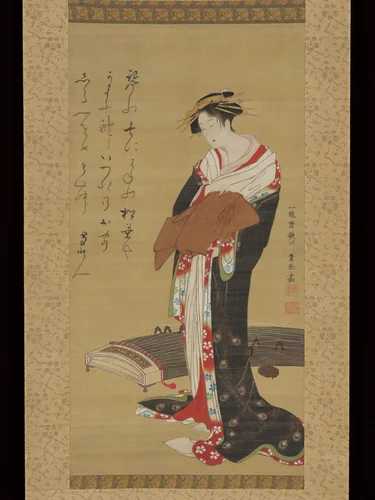
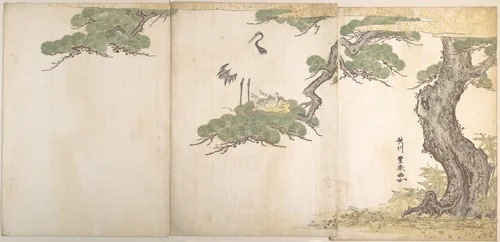
Utagawa Toyoharu (active c. 1734–1767) occupies a foundational position in the history of Japanese ukiyo-e as the originator of the Utagawa school. While only a small corpus of work, consisting of approximately fourteen prints and at least one surviving Utagawa Toyoharu painting, is definitively attributed to him, his historical significance is immense. He is primarily known for pioneering the uki-e genre, a style of "floating pictures" that fundamentally shifted the visualization of space within Edo printmaking.
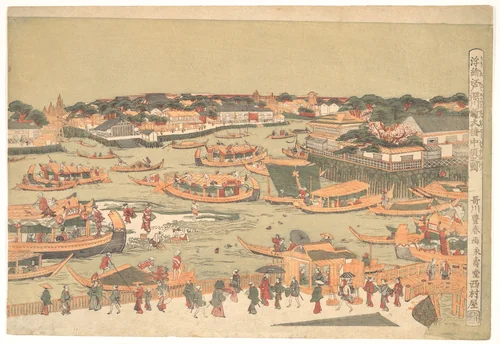
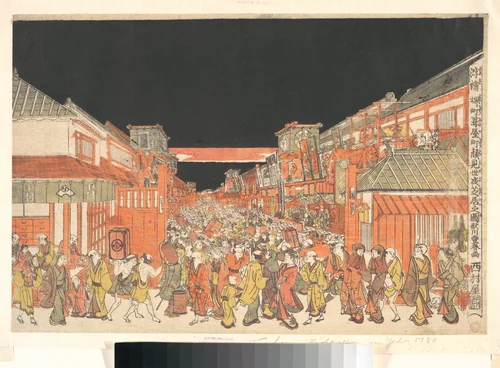
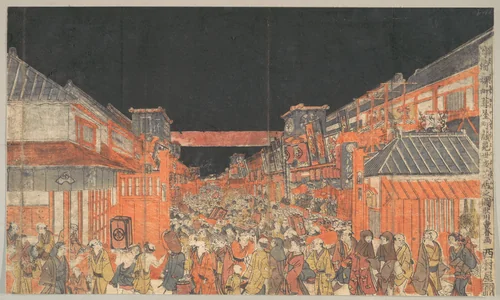
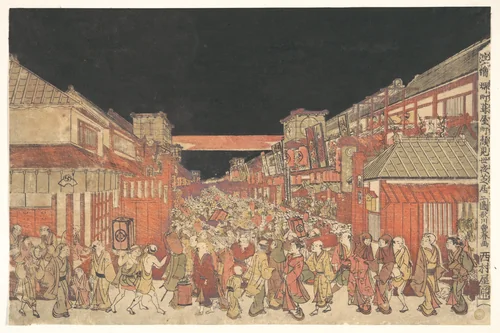
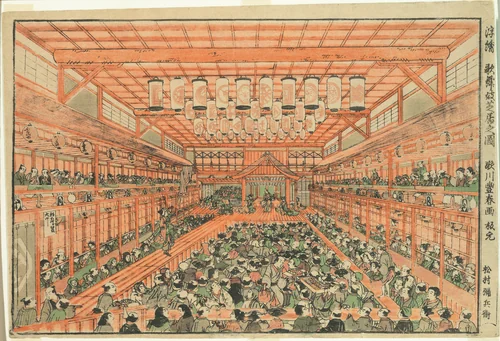
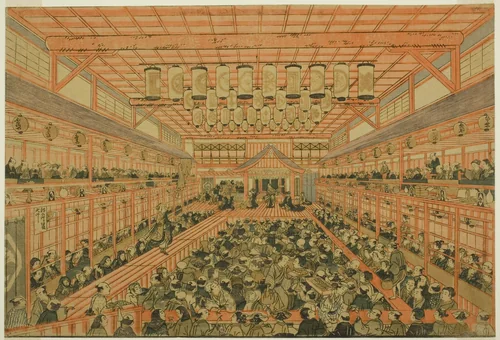
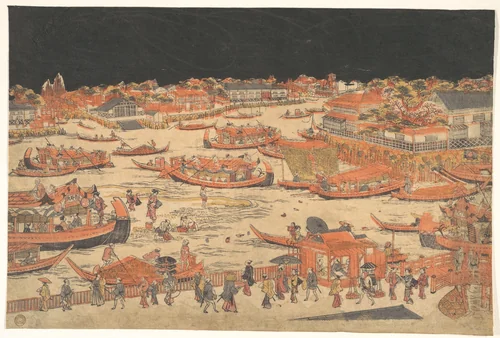
Toyoharu’s innovation lay in the deliberate incorporation of Western-style geometrical perspective. Prior to his works, ukiyo-e often relied on parallel projection or aerial viewpoints, creating flattened yet richly detailed compositions. Toyoharu changed this visual syntax by employing strong linear vanishing points, thereby manufacturing a striking sense of architectural depth and three-dimensionality. This technical shift allowed him to approach grand urban panoramas and domestic scenes with a new spatial logic, evident in key works like Perspective Print: Shinobazu Pond, which draws the viewer deeply into its setting.
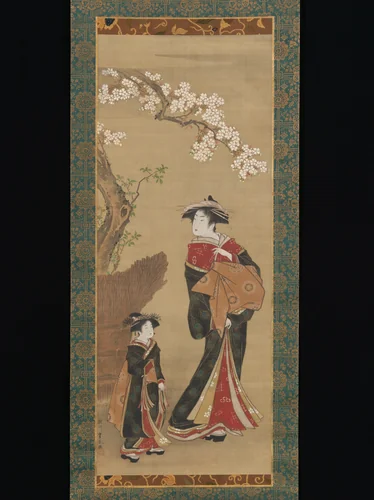
This adoption of linear perspective was less a scientific endeavor than an aesthetic tool, utilized effectively to heighten the drama and realism of otherwise conventional subjects, such as the dynamically staged Battle of Ichi–no–tani, March 21, 1184 or the intimate social observation captured in Mother and Children at the New Year. He was essentially importing the visual grammar of Europe to make the world of Edo feel grander and more immediately present.
The school Utagawa Toyoharu established grew to dominate the artistic output of the 19th century, producing masters such as Kunisada, Kuniyoshi, and Hiroshige. This makes Toyoharu’s foundational role particularly noteworthy; he laid the groundwork for the most popular and commercially successful lineage in late ukiyo-e history. His museum-quality prints are housed in major international repositories, including the Metropolitan Museum of Art and the Art Institute of Chicago. Today, many of his sophisticated high-quality prints and other downloadable artwork reside within the public domain, allowing his influential compositions to be studied and appreciated globally.
Source: Wikipedia · CC BY-SA 4.0