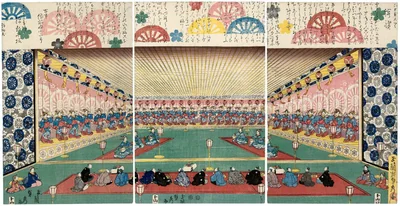
Utagawa Sadahide
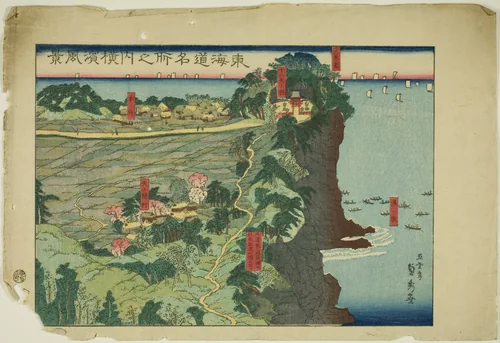
Utagawa Sadahide (1807-c. 1878), also known by the gō Gountei Sadahide, stands as a highly adaptable and commercially successful master within the influential Utagawa school of ukiyo-e printmaking. Active through the critical transition from the isolationist Edo period into the modern Meiji era, Sadahide earned a reputation for technical precision across a remarkably wide range of genres, encompassing historical narratives, warrior scenes, topographical views, and highly detailed maps.
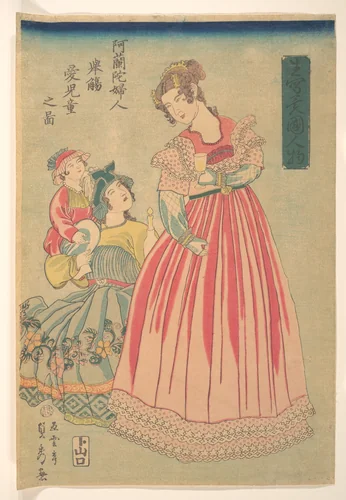
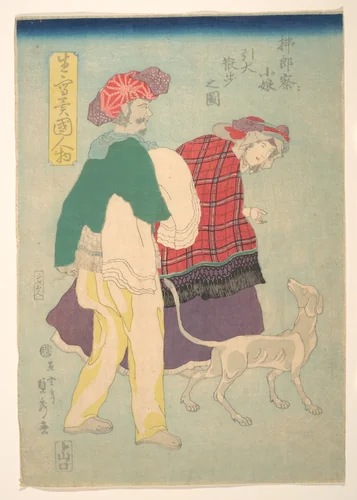
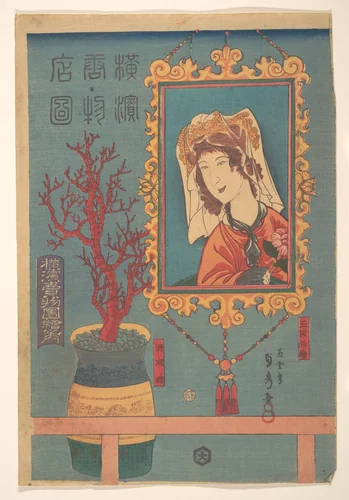
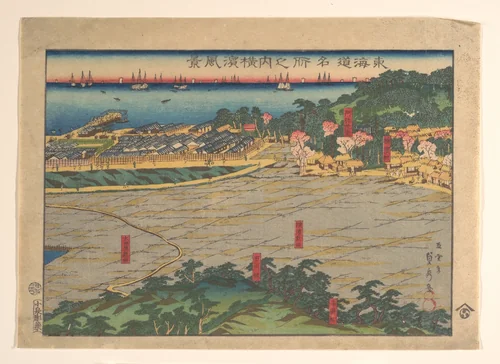
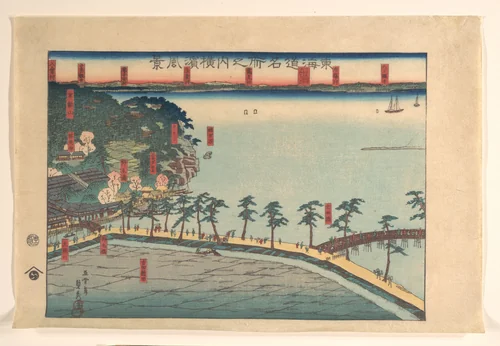
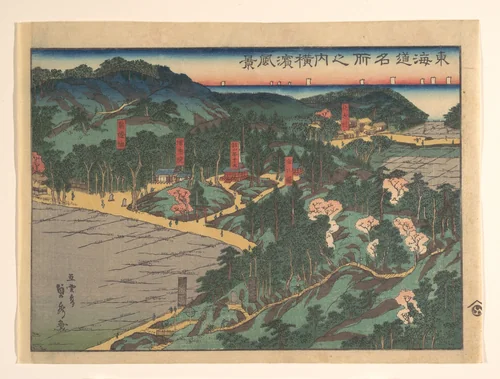
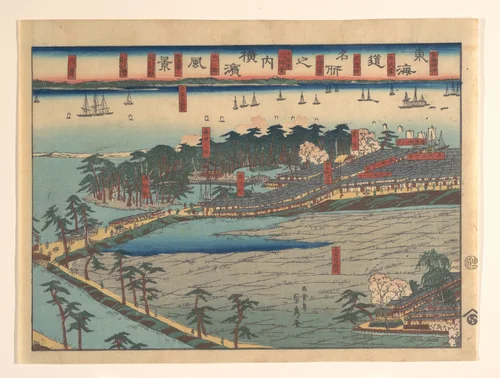
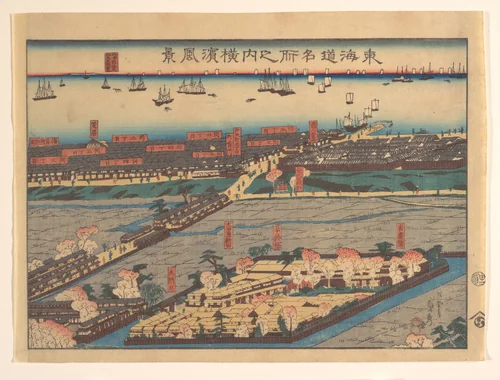
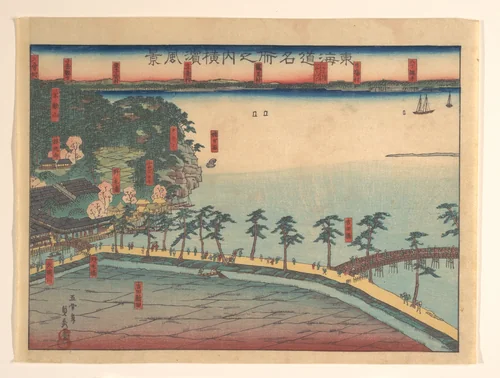
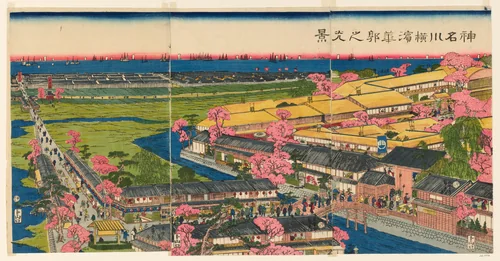
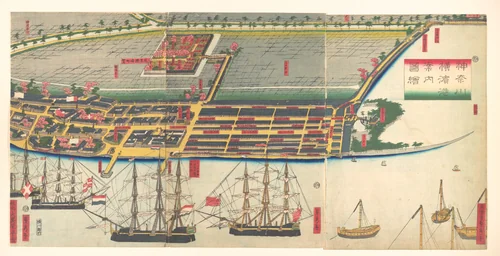
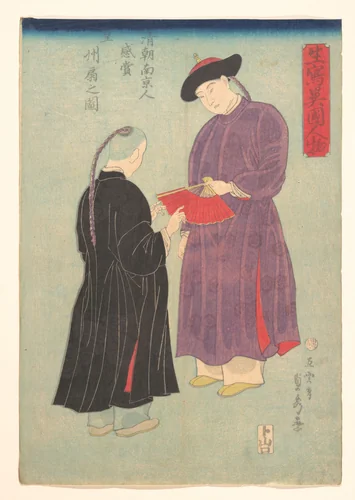
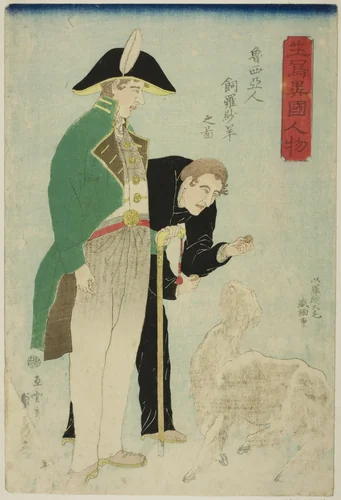
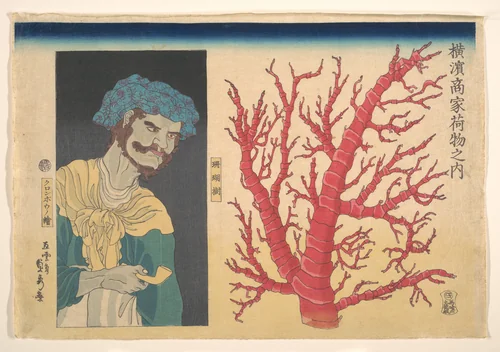
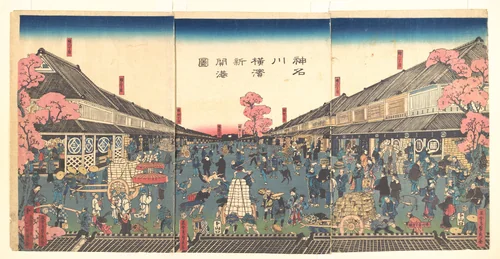
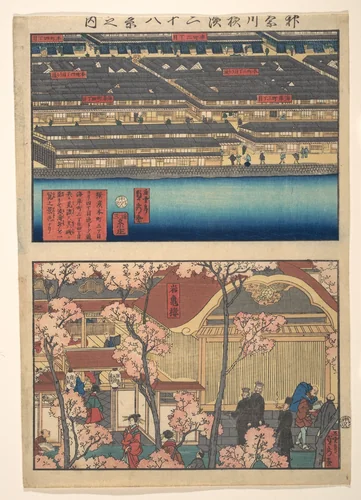
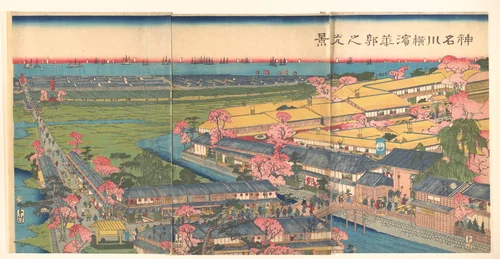
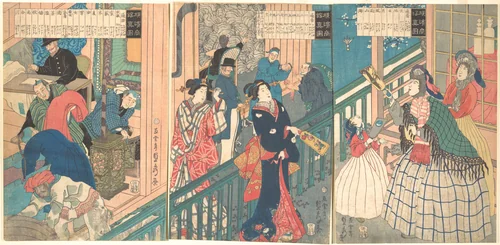
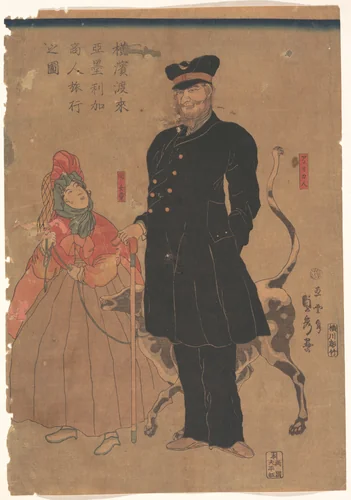
While Sadahide’s early output followed conventional subjects, he achieved peak popularity and critical notice with the emergence of his Yokohama-e series. These detailed and often dramatic renderings of foreign residents, ships, and newly constructed port infrastructure in Yokohama captured the intense curiosity of the Japanese public during the tumultuous 1860s. Series such as Foreign Ships Offshore at Yokohama were immensely profitable, cementing his status as one of the period’s best-selling artists. His skill in rendering large-scale movements and crowded environments is equally evident in ambitious topographical works, including the complex, multi-sheet series documenting Daimyo's Processions Passing along the Tokaido.
Sadahide’s international significance was formally recognized when he was selected as a member of the Tokugawa shogunate’s official delegation to the International Exposition of 1867 in Paris. It is a fitting coda that an artist whose career centered on documenting Japan’s dramatic encounter with the outside world would himself become a visual ambassador for that world overseas.
His ability to produce detailed, information-rich imagery made his works valuable historical documentation, now housed in major institutional collections worldwide, including the Metropolitan Museum of Art and the Art Institute of Chicago. The continued study of his life’s output, frequently available today as museum-quality, high-quality prints and downloadable artwork, confirms Sadahide's pivotal, professional role in charting the modernization of Japanese visual culture.
Source: Wikipedia · CC BY-SA 4.0