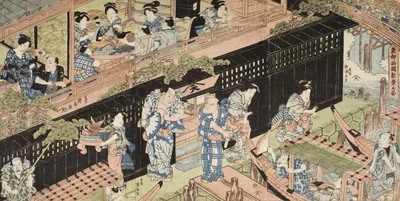
Utagawa Kuniyasu
Utagawa Kuniyasu was an essential contributor to the early 19th-century flowering of the Utagawa school, the dominant force in Japanese ukiyo-e woodblock printing during the Edo period. Active from approximately 1794 until his death around 1827, his career bridged the transition between the elegant, highly stylized forms of classical bijinga (pictures of beautiful women) and the emerging theatrical and social realism that would define the output of later Utagawa masters like Kunisada. Though frequently working alongside the leading print designers of his generation, Kuniyasu maintained a distinctive clarity and restraint in his compositions.
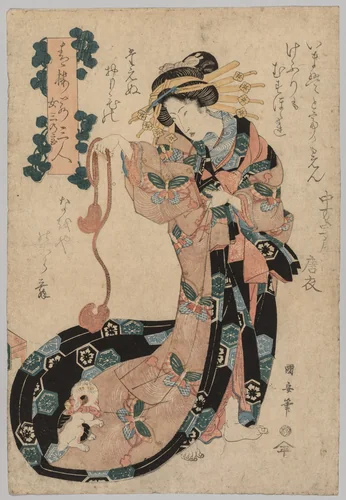
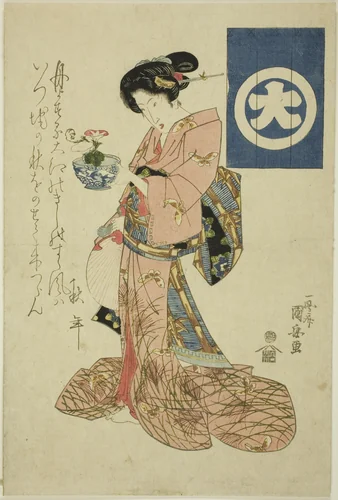
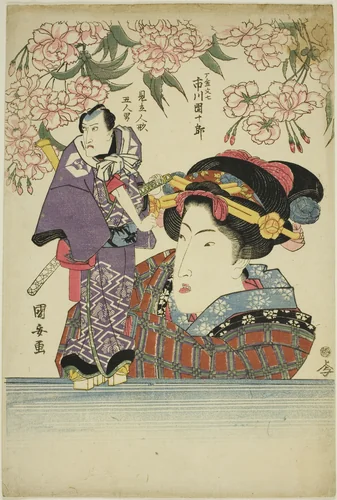
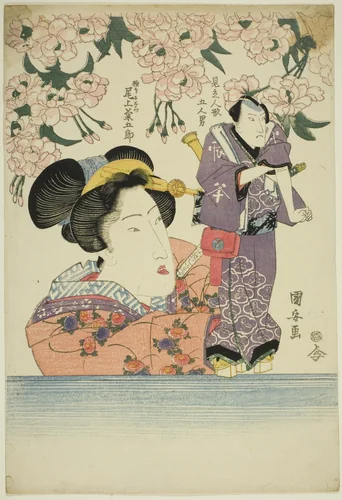
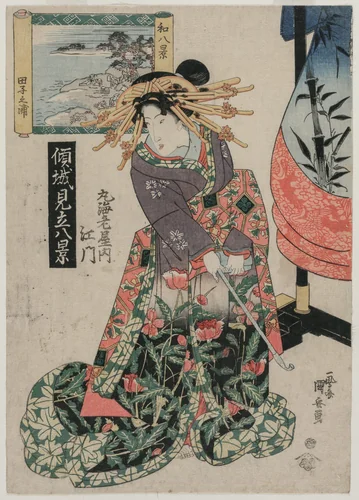
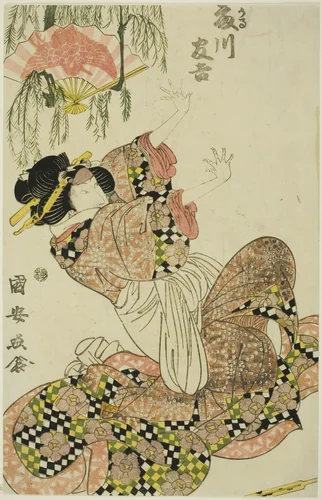
Kuniyasu specialized in the depiction of urban life, focusing primarily on portraiture of celebrated courtesans, genre scenes of domestic intimacy, and occasionally, actor prints. His bijinga compositions are particularly noted for their refinement, often moving beyond simple figure studies to place the subject within a defined emotional or seasonal context. For instance, the print Beauty representing autumn, taken from an untitled series illustrating the four seasons, showcases his skill in integrating pattern and mood, using rich textiles and symbolic settings to define the character.
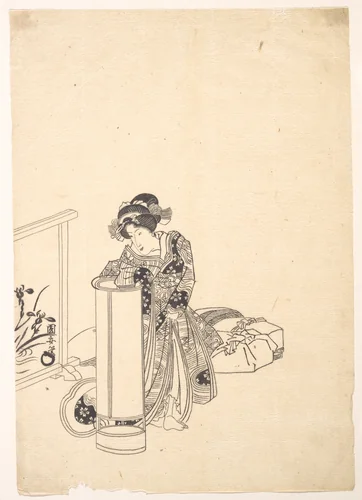
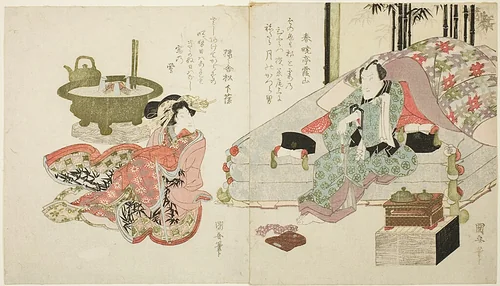
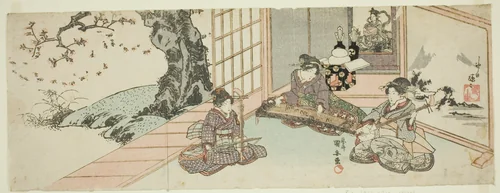
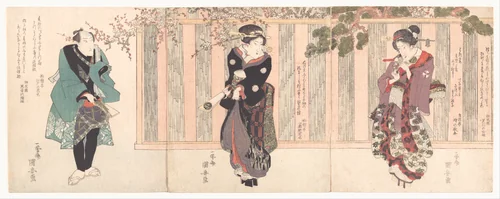
His subjects often convey a quiet, sometimes melancholic, observation of private moments, such as the evocative scene in A Couple in the Bedroom or the detailed social dynamics portrayed in Ladies Playing Instruments. Unlike some of his contemporaries who favored bombastic dynamism, Kuniyasu had a particular aptitude for capturing the subtle quality of light and drapery, evident in pieces like Young Woman Leaning over a Tall Lamp. Kuniyasu’s technical proficiency ensured his continued relevance throughout a period of rapid stylistic change in Edo’s artistic centers.
Though Kuniyasu’s output was not as vast as that of certain peers, his body of work, comprising at least twelve known, high-quality prints of exceptional craftsmanship, is rigorously collected internationally. His prints provide essential context for understanding the aesthetic evolution of ukiyo-e before the Meiji Restoration. Today, his work is held in major institutions globally, including the Metropolitan Museum of Art, the Art Institute of Chicago, and the Cleveland Museum of Art. These museum-quality examples, alongside other important Utagawa Kuniyasu prints, are increasingly available through digital archives, making much of this early 19th-century artistry freely accessible in the public domain for research and appreciation.
Source: Wikipedia · CC BY-SA 4.0