Utagawa Kunisada III
Utagawa Kunisada III (1848-1920) stands as a crucial Meiji era figure, a printmaker who carried the immense weight and heritage of the Utagawa school into the 20th century. His professional identity was forged through one of the most rigorous apprenticeships in ukiyo-e history; starting at the age of ten, he studied directly under the celebrated Utagawa Kunisada I, known as the dominant force of late Edo period woodblocks. Following his senior master's passing, Kunisada III transitioned seamlessly to complete his training under Kunisada II, a demanding tutelage that ensured his technical mastery of the demanding woodblock medium.
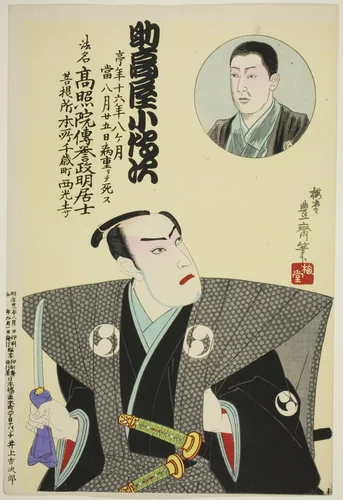
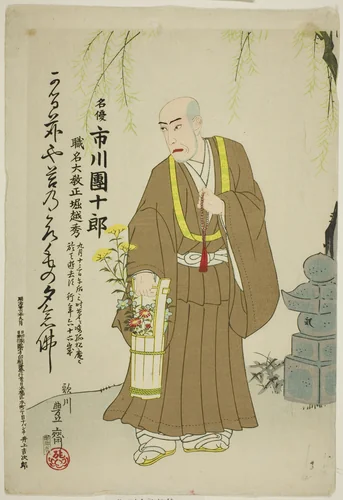
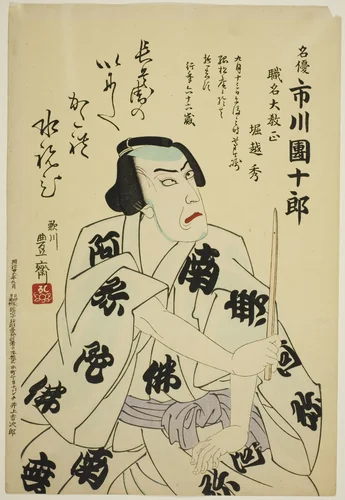
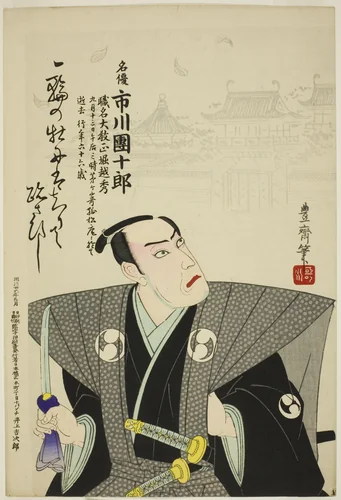
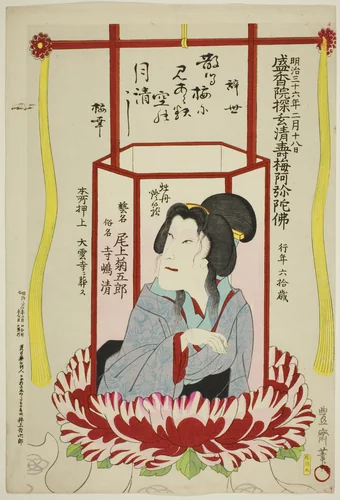
Specializing primarily in yakusha-e or actor prints, Kunisada III’s output evolved rapidly to reflect the profound social and political shifts of the Meiji period. While he remained a prolific depicter of the theatrical world-renowned for poignant works such as his pair of impactful Memorial Portrait of the Actor Ichikawa Danjuro IX prints-his greatest contributions often lay in documenting contemporary events.
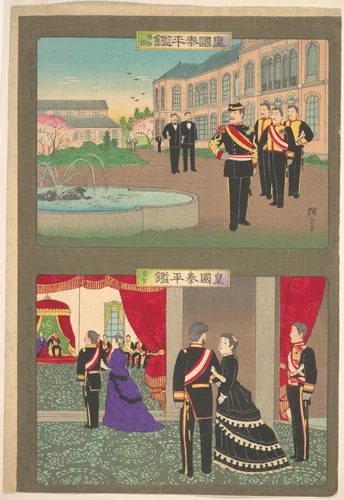
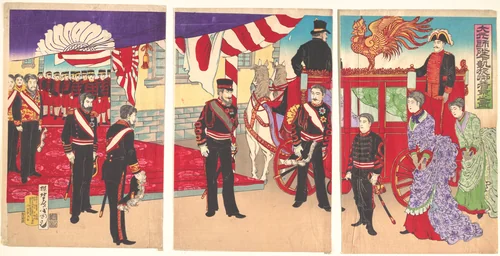
He worked actively between 1887 and 1903, a period marked by Japan’s emergence as a global military power. Kunisada III utilized the popular, multi-sheet format to create visual reportage, recording national pride and political success. Works such as Example of Peaceful Empire – Museum, Congratulatory Palace Visit (Kōkoku Taihei Kagami – Hakubutsukan, Sanga) and the commemorative Arrival of the Emperor at Tokyo after the Victory (Russo-Japanese War) serve as vital documentation of Imperial activity and national consciousness at the turn of the century. It is perhaps telling that an artist so steeped in the ephemeral world of the Kabuki theater became instrumental in shaping the very public visual mythology of a powerful new empire.
Kunisada III’s technical brilliance and timely subject matter ensured that his works transcended the declining domestic woodblock market. Today, Utagawa Kunisada III prints are housed in premier international collections, including the Art Institute of Chicago and the Metropolitan Museum of Art. Researchers and enthusiasts frequently access these high-quality prints and other downloadable artwork, securing his continued relevance as a vital chronicler of Japan's transition into modernity.
Source: Wikipedia · CC BY-SA 4.0