Utagawa Kunisada I
Utagawa Kunisada I, known primarily during his lifetime as simply Kunisada, and later posthumously as Utagawa Toyokuni III, dominated the artistic output of the Japanese ukiyo-e movement throughout the mid-19th century. Active from the 1820s until his death in 1865, he was arguably the most popular, prolific, and commercially potent print designer of the late Edo period. While modern critical assessment often centers on the landscape achievements of Hokusai and Hiroshige, during their concurrent careers, Kunisada’s reputation and financial success far exceeded theirs, cementing his status as the public’s choice.
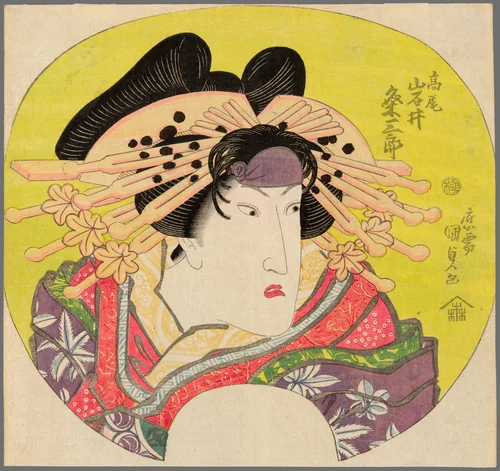
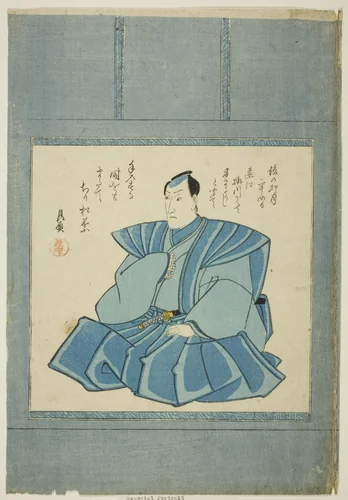
Kunisada’s immense, highly consistent output focused primarily on the celebrities and fashions of the floating world: yakusha-e (actor prints) and bijinga (pictures of beautiful women). His remarkable ability to capture the energy and drama of the kabuki stage allowed him to establish a near-monopoly on actor portraiture. This acute understanding of theatrical dynamics is evident in compositions such as Iwai Kumesaburo II as the Courtesan Takao in Banzei Okuni Kabuki and the poignant Memorial Portrait of the Actor Onoe Kikugoro III. These works, often available as museum-quality reproductions, demonstrate his advanced command of complex multi-figure arrangements and the rich, modern color palettes of the time.
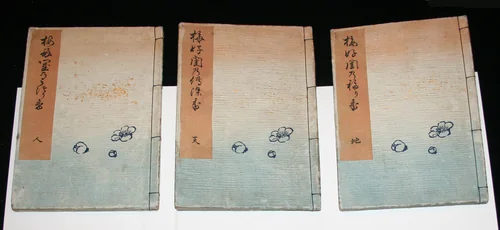
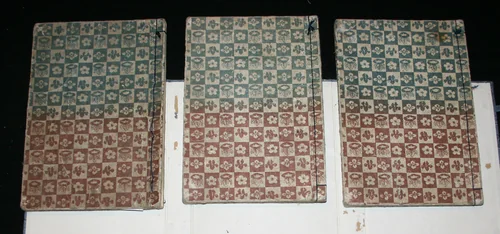
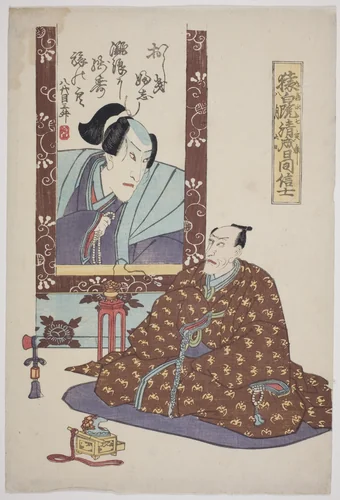
Beyond the stage, he illustrated numerous literary projects and series depicting domestic life, including the detailed book illustrations for works like Umegonomi neya no utsuriga (Lingering plum scent in the sleeping chamber). His relentless focus on contemporary culture and celebrity ensured his market longevity, allowing him to easily transition between the high drama of the stage, as seen in the powerful diptych Memorial portrait: Ichikawa Ebizo V (Danjuro VII) looking up at a painting of the late Danjuro VIII, and intimate genre scenes like Shiki no sugatami.
It is estimated that Kunisada I designed well over 20,000 distinct works, a truly staggering volume of output that suggests he must have kept the entire Edo printing establishment perpetually operating overtime. These Utagawa Kunisada I prints are foundational elements of the genre, and today, works housed in major institutions like the Art Institute of Chicago are frequently available as high-quality prints and downloadable artwork, ensuring that this extraordinarily productive master receives continued, fitting recognition globally.
Source: Wikipedia · CC BY-SA 4.0