Urs Graf
Urs Graf (c. 1485-1511) was a compelling and complex figure in the transition of the Northern Renaissance, operating simultaneously as a highly skilled goldsmith, painter, and printmaker, and a Swiss mercenary. This unusual duality gives his body of work a distinctive, powerful energy. Graf’s historical significance rests less on volume and more on technical daring and innovation, particularly within the field of graphic arts where he helped define the visual language of early sixteenth-century book illustration and single-sheet prints.
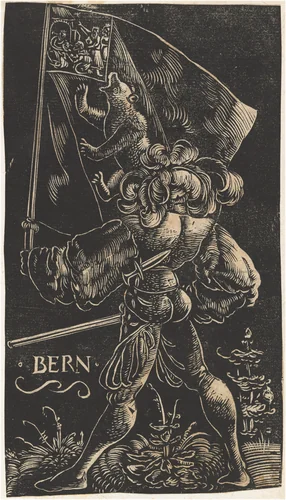
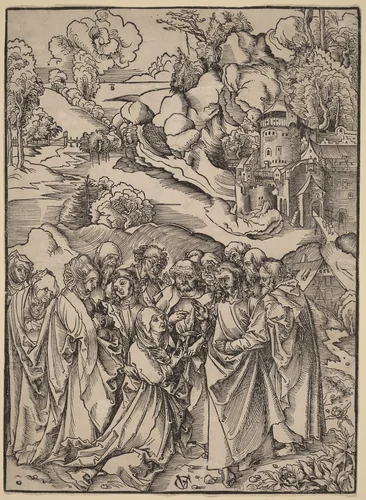
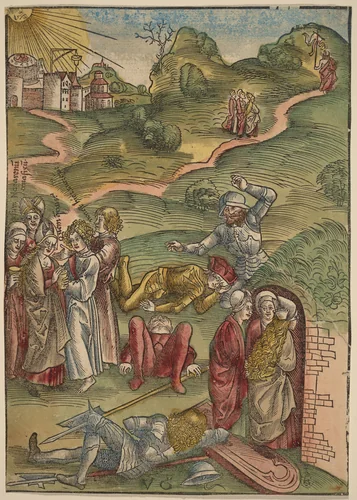
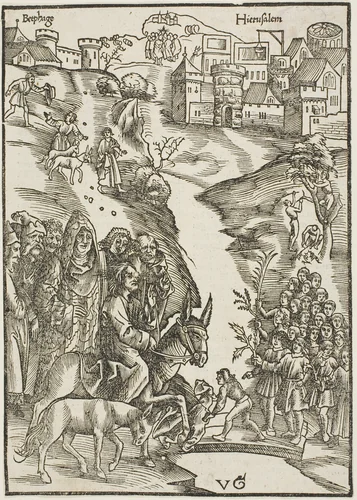
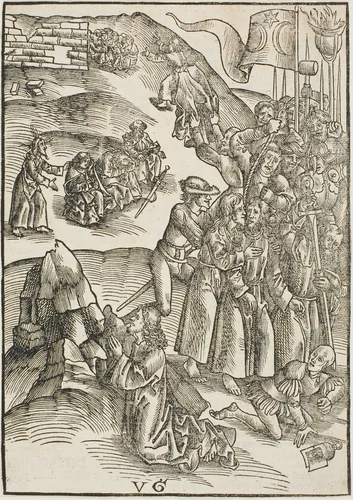
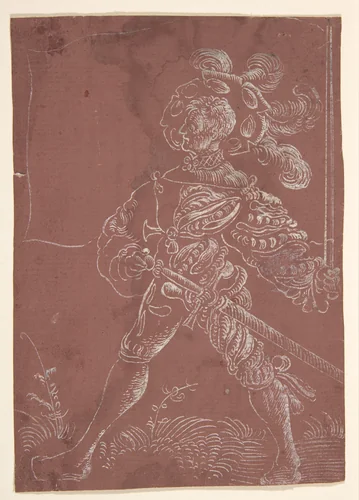
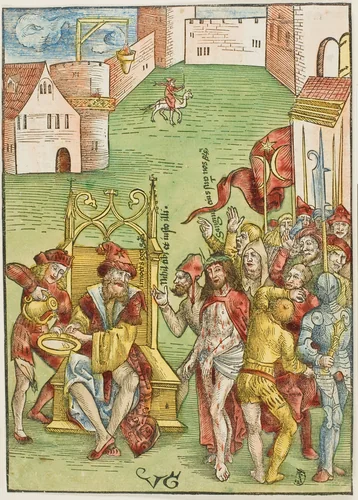
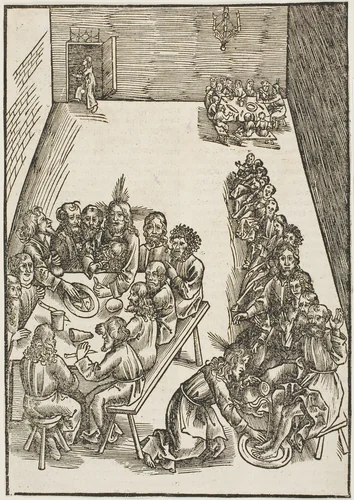
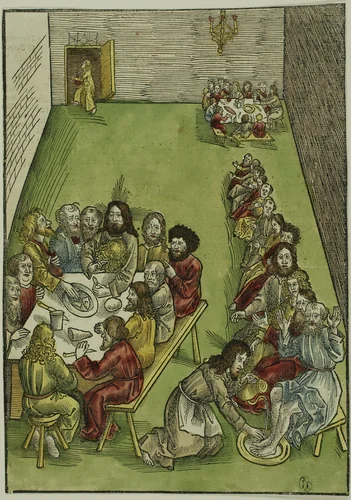
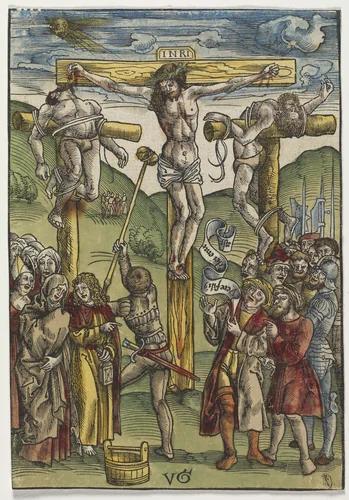
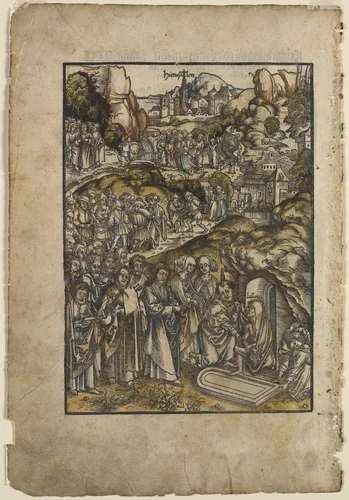
Graf’s most enduring legacy is his pioneering contribution to the woodcut medium. He is widely credited with the invention of the white-line woodcut technique. This innovation fundamentally altered the aesthetic potential of the medium; instead of relying on traditional dark lines drawn upon a light surface, Graf carved white lines into the wood block, allowing the image to emerge dramatically against a field of solid black. This high-contrast approach lent itself to visceral storytelling, exemplified in sequences such as the plates from Passio domini nostri Jesu Christi.
Beyond the white-line woodcut, Graf demonstrated an adventurous spirit regarding new media. He produced a handful of rare etchings, one of which dates from 1513, securing its place as the earliest known dated example of the etching medium. This eagerness to experiment with nascent technologies positioned him at the forefront of graphic reproduction. He also demonstrated a profound originality in his drawing practice. While most Renaissance draughtsmen treated preparatory sketches simply as studies, Graf treated his sophisticated pen and ink works as finished pieces, elevating drawing to an independent art form decades before the trend became widely established.
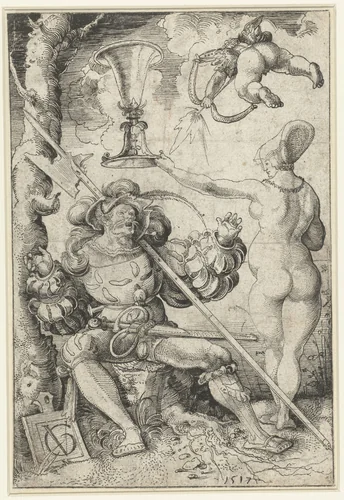
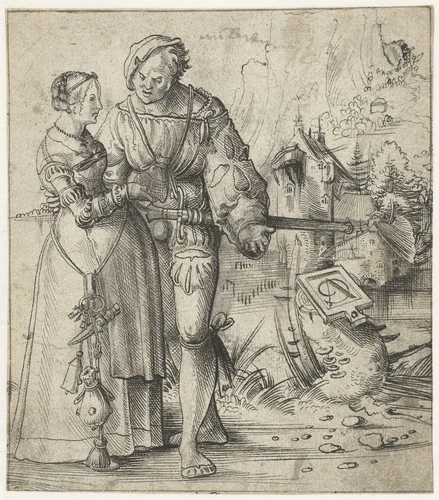
Graf’s output, encompassing influential copies of masters like Albrecht Dürer and highly original compositions such as Krijgsman en jonge vrouw in landschap, established him as a key innovator whose technical ambition matched the intensity of his subject matter. Works by Graf, including significant Urs Graf prints, are held in prestigious international collections, confirming their enduring museum-quality importance. Today, these historical documents of the print revolution are often available through public domain sources, allowing researchers and enthusiasts access to high-quality prints of his pivotal work.
Source: Wikipedia · CC BY-SA 4.0
![The Madonna with Saint Ulrich and Saint Afra [recto] by Urs Graf, print, 1511](https://img.artbee.org/4b266071-fba4-46aa-9ba2-901d0209af5c/small.webp)
![Title Page for a Missal, with Satyr and Putti Border [verso] by Urs Graf, print, 1511](https://img.artbee.org/bd9500a5-512e-4694-8e19-5e52145955cf/small.webp)